 How to Manage Back Pain Naturally: Chiropractic, Osteopathy, Acupuncture & Naturopathic Support
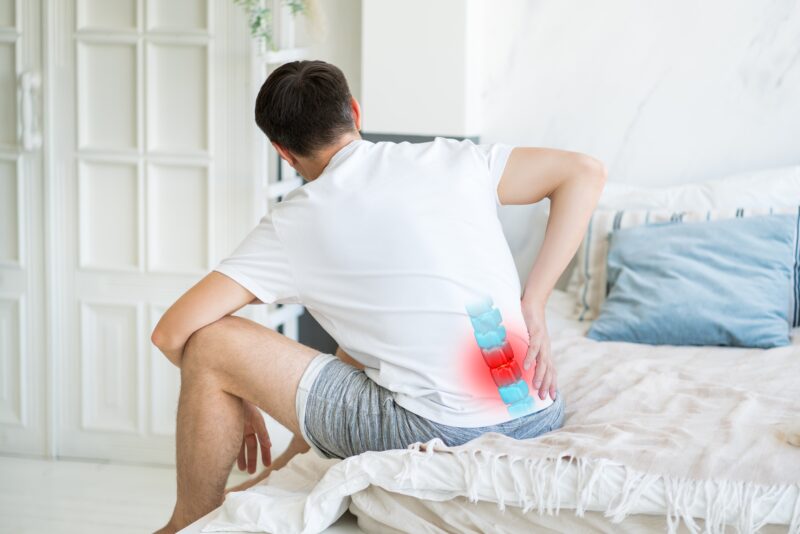
Back pain is one of the most common reasons people seek healthcare — and when it keeps coming back, it’s natural to wonder what else you can do besides temporarily managing the discomfort.
Maybe your back feels stiff when you first get out of bed. Perhaps sitting at your desk all day leaves your lower back aching. Or you may have an old injury that seems to flare whenever you’re particularly active, stressed or sedentary.
For many people, there isn’t one single cause of back pain. Muscles, joints, movement patterns, previous injuries, physical activity, sleep, stress and overall health can all influence how your back feels.
That’s why managing back pain naturally often involves more than one approach.
At Hudson Integrative Healthcare, our chiropractors, osteopathic manual practitioners and naturopathic doctors can approach back pain from different perspectives — from hands-on treatment and rehabilitation to acupuncture, nutrition and lifestyle support.
Why Does Back Pain Happen?
Back pain can have many different causes.

Sometimes there’s an identifiable injury or structural problem. Other times, pain develops gradually without one obvious event.
Factors that may contribute include:
- Muscle strains or tension
- Joint irritation or reduced mobility
- Prolonged sitting or repetitive movements
- Changes in strength or mobility
- Previous injuries
- Lifting or occupational demands
- Sudden changes in physical activity
- Pregnancy and postpartum changes
- Poor sleep
- Stress
- Osteoarthritis and other musculoskeletal conditions
And importantly, an imaging finding doesn’t always tell the whole story.
Changes such as disc degeneration or arthritis can appear on imaging even in people who aren’t experiencing pain. Conversely, someone can have significant back pain without a dramatic finding on an X-ray or MRI.
This is one reason an individualized assessment can be so helpful.
Movement Is Usually Part of the Solution
When your back hurts, resting can seem like the safest option.
A short period of modifying activities may be appropriate during an acute injury, but prolonged bed rest generally isn’t recommended for uncomplicated low back pain.
Instead, gradually returning to comfortable movement and activity is an important part of recovery for many people.
Depending on the cause of your pain, this might include:
- Walking
- Gentle mobility exercises
- Stretching when appropriate
- Progressive strengthening
- Core and glute strengthening
- Returning gradually to normal activities
- Changing positions regularly during the workday
The right exercise isn’t necessarily the same for everyone, which is where an individualized assessment can help.
How Can Chiropractic Care Help With Back Pain?
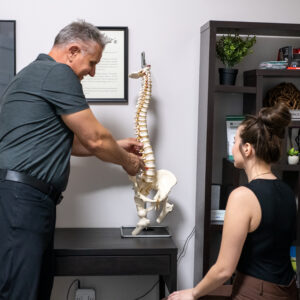 Chiropractic care can involve much more than spinal manipulation.
A chiropractor can assess your spinal and joint mobility, muscle function, strength, posture and movement patterns to determine what may be contributing to your symptoms.
Depending on your assessment and individual needs, treatment may include:
- Joint mobilization
- Spinal manipulation when appropriate
- Soft tissue therapy
- Mobility exercises
- Stretching
- Strengthening and rehabilitation exercises
- Postural or ergonomic recommendations
- Advice about returning to activity safely
The goal isn’t simply to make something “crack.”
It’s to help restore comfortable movement and function while giving you strategies that can help your back tolerate the demands of everyday life.
For someone who spends eight hours at a desk, that may look very different from treatment for someone whose back pain developed after lifting, pregnancy or returning to exercise.
How Can Osteopathic Manual Therapy Help?
 Osteopathic manual practitioners take a hands-on approach to assessing how different areas of the body move and function together.
Sometimes the area that hurts isn’t the only area worth assessing.
For example, lower back discomfort may occur alongside restrictions or tension involving the hips, pelvis or surrounding muscles and connective tissues.
Depending on the individual, osteopathic manual treatment may use techniques intended to:
- Improve joint mobility
- Address muscular and fascial tension
- Improve movement through restricted areas
- Reduce stiffness
- Address compensatory movement patterns
Treatment is individualized based on the practitioner’s assessment rather than applying the same technique to every person with back pain.
What About Inflammation and Lab Testing?
 You’ve probably heard inflammation discussed in relation to pain — but the relationship is more nuanced than simply saying that all back pain is caused by inflammation.
Acute inflammation is a normal part of the body’s response to injury, and certain inflammatory conditions can also cause back pain. Persistent back pain, however, can involve a much more complex interaction between muscles and joints, the nervous system, sleep, stress, physical conditioning, previous injury and other health factors.
This is one area where our naturopathic doctors can add another layer to the assessment of persistent or recurrent back pain, particularly when a patient’s symptoms or health history suggest that something beyond a mechanical issue may be contributing.
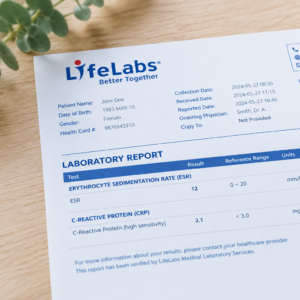
When appropriate, our naturopathic doctors can order laboratory testing through LifeLabs to investigate further. This may include inflammatory markers such as C-reactive protein (CRP) and erythrocyte sedimentation rate (ESR). These are nonspecific blood markers that can help identify measurable systemic inflammation and, when elevated, may be monitored over time alongside symptoms and other clinical findings.
ESR and CRP don’t tell us exactly where inflammation is coming from, and they aren’t routinely necessary for uncomplicated mechanical back pain. However, they can provide useful information when a broader inflammatory process is suspected and help determine whether further medical investigation may be appropriate.
Lab testing is therefore one piece of a much larger picture. When inflammation, nutritional status or other health factors may be contributing to persistent pain, our naturopathic doctors can use the patient’s history, symptoms and appropriate laboratory findings to help guide an individualized treatment plan.
Can Naturopathic Doctors Help Support Back Pain?
 For patients dealing with persistent or recurrent back pain, naturopathic care can complement the hands-on treatment and movement-based care provided by our chiropractic and osteopathic teams.
Rather than assuming that every case of back pain is caused by inflammation — or that a particular food or supplement will eliminate pain — our naturopathic doctors look at the broader factors that may influence inflammation, recovery and musculoskeletal health.
Nutrition is one of those areas.
An anti-inflammatory style of eating generally emphasizes foods such as:
- Vegetables and fruit
- Nuts and seeds
- Legumes
- Whole-food sources of fibre
- Fish and other sources of omega-3 fatty acids
- Extra-virgin olive oil and other minimally processed fats
- Herbs and spices
- Adequate protein
At the same time, reducing a high intake of ultra-processed foods, refined carbohydrates and added sugars can improve overall dietary quality.
For someone living with persistent pain, nutrition isn’t only about reducing inflammation. It’s also about making sure the body has the energy, protein and micronutrients needed to support muscles, bones, connective tissue and recovery.
Depending on the individual, naturopathic care may also address factors such as sleep, stress, physical activity, nutritional deficiencies and appropriate supplementation — all while considering the patient’s medical history, medications and other health concerns.
The goal isn’t a perfect “anti-inflammatory diet” or a long list of supplements. It’s to identify which factors are actually relevant for that individual and create a sustainable plan that supports overall health while the mechanical and movement-related aspects of back pain are being addressed.
What Supplements Can Help With Back Pain?
 This is another area where individualized recommendations matter.
There is research examining several nutrients and natural health products for musculoskeletal pain and inflammation. Depending on someone’s health history, diet, medications and the underlying cause of their pain, a naturopathic doctor may consider nutrients or compounds such as:
- Omega-3 fatty acids
- Curcumin
- Magnesium
- Vitamin D when levels are inadequate or deficiency is suspected
But natural doesn’t automatically mean appropriate for everyone.
Supplements can interact with medications, may not be appropriate during pregnancy or with certain health conditions, and the quality and dose of a product matter.
Our naturopathic doctors can help determine whether supplementation actually makes sense rather than simply creating a long list of “anti-inflammatory” products.
Can Acupuncture Help With Back Pain?
 Acupuncture is another treatment option that may be incorporated into a back pain treatment plan.
During acupuncture, very fine sterile needles are inserted into specific points on the body.
Research suggests acupuncture may provide benefit for some people with chronic low back pain, particularly as part of a broader treatment plan.
At Hudson Integrative Healthcare, our naturopathic doctors who provide acupuncture can incorporate it into an in-clinic naturopathic treatment plan when appropriate.
This means an appointment may combine discussion about factors such as nutrition, lifestyle, sleep or supplementation with hands-on acupuncture treatment.
As with other approaches, acupuncture isn’t necessarily the right treatment for every type of back pain. Your practitioner can help determine whether it is appropriate for you.
Don’t Forget About Sleep and Stress
If you’ve ever noticed that your back feels worse after several nights of poor sleep or during a particularly stressful period, you’re not imagining the connection.
Pain isn’t determined solely by what’s happening in a muscle or joint.
Sleep quality and psychological stress can influence pain perception, muscle tension, recovery and how well we cope with discomfort.
Supporting better sleep, managing stress and maintaining regular movement can therefore be meaningful parts of a comprehensive pain-management plan.
This doesn’t mean that pain is “all in your head.”
It means that pain is influenced by multiple systems in the body — which gives us more than one opportunity to support recovery.
When Should Back Pain Be Assessed Medically?
Most back pain isn’t caused by a dangerous condition, but there are situations where prompt medical assessment is important.
Seek medical attention if back pain is accompanied by symptoms such as:
- New loss of bladder or bowel control
- Numbness around the groin or saddle area
- Significant or progressive leg weakness
- Fever or feeling systemically unwell
- Unexplained weight loss
- Significant trauma
- Severe pain that is rapidly worsening
New or persistent back pain should also be appropriately assessed if you have a history of cancer, significant osteoporosis, prolonged corticosteroid use or other medical conditions that increase the likelihood of a more serious underlying cause.
A Whole-Person Approach to Back Pain
There usually isn’t one perfect stretch, supplement or treatment that fixes every person’s back pain.
For some patients, the biggest piece of the puzzle is improving mobility.
For others, it’s rebuilding strength after an injury.
Someone else may benefit from addressing long hours of sitting, poor sleep or an exercise routine that isn’t working well for their body.
And for patients living with persistent pain, combining several evidence-informed approaches may make more sense than relying on one treatment alone.
At Hudson Integrative Healthcare, our multidisciplinary team can support back pain from several perspectives.
- Our chiropractors can assess joint mobility, muscle function and movement and provide hands-on treatment and rehabilitation.
- Our osteopathic manual practitioners can assess and treat restrictions and compensatory patterns throughout the musculoskeletal system.
- And our naturopathic doctors can look at nutrition, lifestyle, appropriate supplementation and other health factors that may be relevant to persistent pain, with acupuncture available during in-clinic naturopathic appointments when appropriate.
The goal isn’t simply temporary relief.
It’s helping you understand what’s contributing to your symptoms and developing a realistic plan to help you move comfortably, stay active and get back to the things you want to do.
Looking for Natural Support for Back Pain in Stoney Creek?
Our chiropractic, osteopathic manual practitioner and naturopathic doctor teams provide individualized care for patients experiencing back pain, stiffness and other musculoskeletal concerns.
Chiropractic, osteopathic manual therapy and acupuncture appointments are available in person at our downtown Stoney Creek clinic. Naturopathic consultations are also available Ontario-wide by secure phone or video appointment, although acupuncture itself is provided in clinic.
Hudson Integrative Healthcare
7 King St. East, Unit #1
Stoney Creek, ON L8G 1J8
Ready to get started? Book an appointment with the practitioner who best fits your needs, or contact our team if you’re unsure where to begin.