Thyroid Symptoms, Testing & Treatment: What to Know Beyond a TSH Test
Have you suddenly started seeing thyroid health everywhere on social media?
Fatigue. Weight gain. Hair loss. Feeling cold. Constipation. Brain fog. Hormone changes. Difficulty losing weight.
Maybe a post or podcast has made you wonder whether your thyroid could be contributing to how you feel.
Or perhaps you’re already one step further: your family doctor diagnosed you with hypothyroidism and prescribed levothyroxine (often known by the brand name Synthroid®), but you still have questions.
What do my thyroid results actually mean? Should I be testing more than TSH? Do I have Hashimoto’s? Are there things I can do with nutrition or supplements? Is Synthroid my only option? What about Natural Desiccated Thyroid (NDT)?
At Hudson Integrative Healthcare, these are conversations our naturopathic doctors have regularly.
Some patients simply want to know:
“How do I actually check my thyroid?”
Others come to us saying:
“I’m already taking Synthroid, but I still don’t feel like myself. What else should I know?”
Let’s walk through it.
What Does Your Thyroid Actually Do?
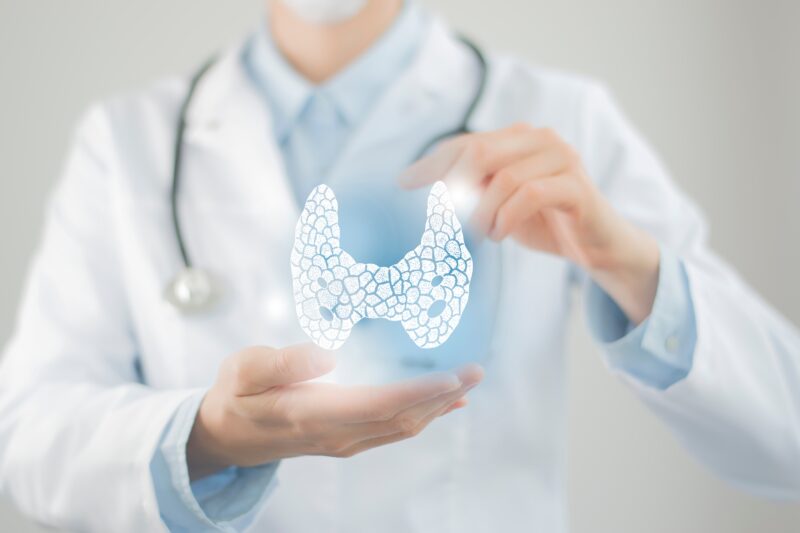
The thyroid is a small, butterfly-shaped gland located at the front of your neck, but the hormones it produces have effects throughout the body.
Thyroid hormone helps regulate metabolism, energy use, body temperature and the function of the brain, heart, muscles and other organs.
When the thyroid isn’t producing enough thyroid hormone, this is called hypothyroidism.
Common symptoms can include:
- Fatigue or low energy
- Feeling unusually cold
- Constipation
- Dry skin
- Hair thinning or hair loss
- Difficulty concentrating or “brain fog”
- Low mood
- Changes in menstrual cycles
- Weight gain or difficulty managing weight
The important caveat is that these symptoms aren’t specific to the thyroid.
Iron deficiency, anemia, sleep problems, stress, perimenopause, nutrient deficiencies and numerous other conditions can cause similar complaints.
That’s why symptoms are a reason to investigate — not a diagnosis on their own.
“My Doctor Checked My Thyroid.” What Was Actually Tested?
For most people, the first thyroid blood test is TSH (thyroid-stimulating hormone).
TSH is produced by the pituitary gland and essentially sends a message to the thyroid telling it how much hormone the body needs.
In primary hypothyroidism, the classic pattern is:
Higher TSH + normal or lower Free T4 = an underactive thyroid.
TSH is considered the primary screening test for hypothyroidism in most patients.
But depending on your symptoms, medical history, medications and previous results, there may be circumstances where your healthcare provider considers additional thyroid testing.
Thyroid Bloodwork You May Hear About
TSH (Thyroid-Stimulating Hormone)
The standard starting point for assessing thyroid function.
Free T4 (FT4)
T4 is the primary hormone produced by the thyroid gland. Free T4 measures the portion available to the body’s tissues.
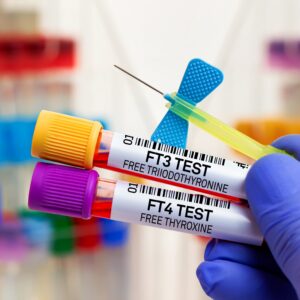
Free T3 (FT3)
T3 is the more biologically active thyroid hormone. Much of the body’s T3 is created by converting T4 into T3. Free T3 isn’t routinely required to diagnose primary hypothyroidism, but it may be considered in certain clinical circumstances and is commonly encountered when researching thyroid health.
Thyroid Peroxidase Antibodies (TPOAb)
These antibodies can help identify whether thyroid autoimmunity, most commonly Hashimoto’s thyroiditis, is contributing to hypothyroidism.
Anti-Thyroglobulin Antibodies (ATG/TgAb)
Another antibody associated with autoimmune thyroid disease that may be considered in selected situations.
Can My Naturopathic Doctor Order a More Comprehensive Thyroid Panel Through LifeLabs?
 Yes.
Yes.
One advantage of working with a naturopathic doctor is that we can review what has already been tested and determine whether additional thyroid markers are appropriate for you.
Our naturopathic doctors can order bloodwork through LifeLabs, including individual thyroid tests as well as bundled thyroid assessment panels.
LifeLabs currently offers three thyroid assessment options for naturopathic patients:
Basic Thyroid Assessment
Includes:
- TSH
- Free T4 (FT4)
- Free T3 (FT3)
- Thyroid Peroxidase Antibodies (TPO)
- Anti-Thyroglobulin Antibodies (ATG)
Enhanced Thyroid Assessment
Includes:
- TSH
- Free T4 (FT4)
- Free T3 (FT3)
- Thyroid Peroxidase Antibodies (TPO)
- Anti-Thyroglobulin Antibodies (ATG)
- Reverse T3
Thyroid Follow-Up Assessment
Includes:
- TSH
- Free T4 (FT4)
- Free T3 (FT3)
LifeLabs currently prices these bundled assessments at a discount compared with ordering all of the included tests individually.
The Basic Thyroid Assessment is discounted approximately 19%, the Enhanced Thyroid Assessment approximately 20%, and the Thyroid Follow-Up Assessment approximately 18% compared with ordering the included tests separately.
That doesn’t mean everyone needs the Enhanced Thyroid Assessment — or even the Basic panel.
More testing isn’t automatically better testing.
Your naturopathic doctor can review your symptoms, previous bloodwork, family history, diagnosis and current thyroid medication and determine which tests are actually appropriate.
What Does Private Thyroid Testing Cost?
Thyroid bloodwork ordered privately through a naturopathic doctor is generally not covered by OHIP.
LifeLabs charges for the individual tests or assessment panel being completed and also applies a documentation fee to privately ordered testing.
Because laboratory pricing is subject to change, our clinic can provide you with current LifeLabs pricing before you complete your bloodwork.
Depending on your extended health benefits, naturopathic laboratory testing may also be eligible for reimbursement under your individual insurance plan.
Already have recent thyroid bloodwork?
Bring it with you.
We don’t want to repeat testing unnecessarily. Your naturopathic doctor can review what has already been completed and determine whether anything additional would actually be useful.
If additional testing is recommended, we can provide you with a LifeLabs requisition to take to a LifeLabs location for your blood draw.
What About Reverse T3?
If you’ve been researching thyroid health online, you’ve probably encountered Reverse T3 (rT3).
Reverse T3 is an inactive metabolite of T4. Levels can change during illness, significant physiological stress and other situations.
This is also an area where social media discussions can move considerably faster than the clinical evidence.
Reverse T3 is not considered a routine diagnostic test for hypothyroidism, and it isn’t generally recommended as a stand-alone marker for determining whether someone has hypothyroidism or deciding which thyroid medication someone should take.
However, Reverse T3 is available through LifeLabs and is included in its Enhanced Thyroid Assessment.
If you’ve already had Reverse T3 tested, or you’ve been reading about it and wondering whether it applies to you, your naturopathic doctor can help put that result into the context of your other thyroid markers, symptoms, health history and current treatment.
What If My TSH Is “Normal” But I Still Don’t Feel Well?
 This is one of the most common reasons people start researching thyroid health.
A normal TSH makes primary hypothyroidism less likely for most people, but it doesn’t mean that fatigue, hair loss, constipation, weight changes or brain fog aren’t real — and it doesn’t tell us what is causing them.
This is where a broader assessment can be valuable.
Depending on the individual, your naturopathic doctor may consider your thyroid history alongside areas such as:
- Iron and ferritin
- Vitamin B12
- Vitamin D
- Menstrual and reproductive hormones
- Perimenopause or menopause
- Blood sugar and metabolic health
- Sleep
- Diet and nutrient intake
- Gastrointestinal health
- Stress and lifestyle factors
- Medications
- Other medical conditions
For example, fatigue, hair loss and feeling cold may prompt a conversation about iron and ferritin in addition to thyroid function. Weight changes and fatigue may warrant looking beyond the thyroid at metabolic health, sleep or hormonal changes.
The goal isn’t to assume every symptom is caused by the thyroid.
It’s to figure out what actually deserves attention.
What Is Hashimoto’s Thyroiditis?
Hashimoto’s thyroiditis is an autoimmune condition in which the immune system reacts against the thyroid.
Over time, this can interfere with the thyroid’s ability to produce adequate hormone and is a common cause of hypothyroidism.
Some patients have been taking thyroid medication for years without realizing that Hashimoto’s was the reason their thyroid became underactive in the first place.
Testing thyroid antibodies — particularly TPO antibodies and, in selected cases, anti-thyroglobulin antibodies — can sometimes help establish whether thyroid autoimmunity is present.
Once Hashimoto’s has been identified, however, the goal isn’t necessarily to repeatedly chase antibody numbers.
The bigger picture includes maintaining appropriate thyroid hormone levels and supporting overall health while addressing other relevant medical, nutritional and lifestyle factors.
I’ve Been Diagnosed With Hypothyroidism and Take Synthroid. What Else Can I Do?
Levothyroxine is synthetic T4 and is the standard first-line treatment for hypothyroidism.
For many patients, it works extremely well.
If your thyroid isn’t producing enough hormone, lifestyle changes or supplements aren’t necessarily a substitute for replacing the hormone your body needs.
But thyroid care doesn’t have to end with receiving a prescription.
A naturopathic assessment can look at your medication response, symptoms, nutrition, relevant deficiencies, autoimmune thyroid disease when applicable, lifestyle factors and whether there are other explanations for symptoms that haven’t resolved.
This distinction matters.
We’re not trying to convince every patient taking Synthroid to stop taking it.
We’re asking:
Are you feeling well? Are your labs appropriately monitored? Do you understand your diagnosis? And is there anything else contributing to your symptoms that hasn’t been addressed?

Can You Support Your Thyroid Naturally?
Yes — but “supporting” the thyroid and replacing a true thyroid hormone deficiency are two different things.
Nutrition matters for normal thyroid physiology.
Nutrients involved in thyroid function include iodine, selenium, iron and zinc, among others. But more isn’t necessarily better.
For example, taking large amounts of iodine because you’ve heard that “the thyroid needs iodine” isn’t automatically beneficial. Excessive iodine can actually worsen thyroid dysfunction in susceptible individuals.
Likewise, someone experiencing fatigue and hair loss who also has low iron stores may need that addressed rather than simply adding a generic thyroid supplement.
This is why we prefer individualized supplementation over a generic “thyroid support” product purchased because it appeared on social media.
Depending on your individual situation, naturopathic thyroid care may involve:
- Reviewing your diet and nutrient intake
- Identifying deficiencies where appropriate
- Discussing evidence-informed supplementation
- Assessing iron and ferritin
- Looking at digestive health
- Supporting healthy sleep
- Reviewing stress and lifestyle factors
- Assessing metabolic health
- Looking at hormonal changes such as perimenopause when relevant
But if your body genuinely requires thyroid hormone replacement, supplements shouldn’t be presented as a replacement for the hormone you need.
Synthroid vs. Natural Desiccated Thyroid (NDT): What’s the Difference?
 This is another question we hear frequently.
Synthroid / Levothyroxine
Levothyroxine contains T4, which is the primary hormone produced by the thyroid.
The body then converts T4 into T3, the more biologically active thyroid hormone.
Levothyroxine is the standard first-line treatment for hypothyroidism and has the strongest evidence supporting its routine use.
Natural Desiccated Thyroid (NDT)
Natural Desiccated Thyroid — commonly abbreviated NDT — is an animal-derived prescription thyroid medication that contains both T4 and T3.
Some patients specifically seek out naturopathic care because they’ve heard about NDT and want to know whether it’s an option.
It can be.
But NDT isn’t simply a supplement or a “natural thyroid booster.”
It is prescription thyroid hormone medication.
That means it needs to be appropriately prescribed, dosed and monitored.
Can a Naturopathic Doctor Prescribe NDT in Ontario?
At Hudson Integrative Healthcare, several of our naturopathic doctors have additional prescribing authority and can assess and prescribe thyroid hormone medications when clinically appropriate.
That means you can come to us if you’re currently taking levothyroxine/Synthroid and want to better understand your thyroid treatment or discuss whether another thyroid hormone replacement approach, including Natural Desiccated Thyroid (NDT), may be appropriate for you.
Our goal isn’t to tell everyone that NDT is “better” than Synthroid.
For many people, levothyroxine is an excellent medication and there may be no reason to change it.
For someone who continues to experience symptoms despite appropriate treatment, has questions about T4/T3-containing therapy, or simply wants to understand the different prescription options available, having that conversation with a qualified prescriber can be valuable.
A prescribing naturopathic doctor can review your previous laboratory results, current dose, symptoms and medical history and discuss the potential benefits, limitations and risks of the available options.
If a medication change is appropriate, follow-up laboratory testing is important to make sure you’re receiving an appropriate amount of thyroid hormone.
Already Taking Synthroid? Please Don’t Stop It on Your Own
This is especially important.
If you’ve been diagnosed with hypothyroidism and prescribed levothyroxine, don’t stop your medication simply because you’ve read that thyroid disease can be treated “naturally.”
Some people genuinely require long-term or lifelong thyroid hormone replacement.
Too little thyroid hormone can cause health problems, and too much thyroid hormone — whether it comes from levothyroxine, NDT or another prescription — can also cause adverse effects.
Instead, bring your medication, previous bloodwork and your questions to your appointment.
We can review where you are now and discuss what — if anything — makes sense to change.
When Should You Consider a Thyroid Assessment?
It may be worth discussing thyroid testing or treatment with a healthcare provider if:
- You have symptoms that could be consistent with hypothyroidism
- You have a family history of thyroid disease
- You’ve previously had abnormal thyroid bloodwork
- You’ve been diagnosed with hypothyroidism but don’t fully understand your results
- You’re taking Synthroid/levothyroxine and continue to experience symptoms
- You’re wondering whether Hashimoto’s may be contributing to your hypothyroidism
- You’ve been reading about T3, T4, thyroid antibodies or Reverse T3 and want help separating useful information from social-media noise
- You’re interested in discussing different thyroid hormone replacement options
- You want to know whether nutrition or supplementation could have a role in your overall thyroid care
Thyroid Testing & Treatment at Hudson Integrative Healthcare
You don’t need to arrive at your appointment already knowing which thyroid tests you need or which medication you want.
That’s our job to help you figure out.
Our naturopathic doctors can review your symptoms, health history, previous thyroid results and current medications; determine whether additional investigation is appropriate; order private thyroid bloodwork through LifeLabs when indicated; discuss nutrition and supplementation; and help you understand the different approaches to thyroid hormone replacement.
For patients who require prescription thyroid hormone, our prescribing naturopathic doctors can also discuss and prescribe options such as Natural Desiccated Thyroid (NDT) when clinically appropriate.
Whether you’ve just started wondering:
“Could this be my thyroid?”
or you’ve been taking Synthroid for years and are wondering:
“Is there anything else I should be doing?”
we can help you better understand your thyroid health, your bloodwork and the treatment options available to you.
Book a Naturopathic Appointment
Naturopathic appointments are available in person at our Stoney Creek clinic or through telemedicine anywhere in Ontario, allowing you to work with one of our naturopathic doctors from home.
Hudson Integrative Healthcare
7 King St. East, Stoney Creek, Ontario
Book an appointment with one of our naturopathic doctors to discuss your thyroid symptoms, laboratory testing, nutrition, supplements and thyroid treatment options.
This article is for educational purposes only and does not replace individualized medical advice. Laboratory testing, supplementation and thyroid hormone treatment should be individualized. Prescription thyroid medication should not be started, stopped or adjusted without appropriate medical supervision.