What Can Osteopathy Help With? 10 Common Reasons People See an Osteopathic Manual Practitioner
Written by Dr. Melanie Hudson, ND
Edited for Hudson Integrative Healthcare
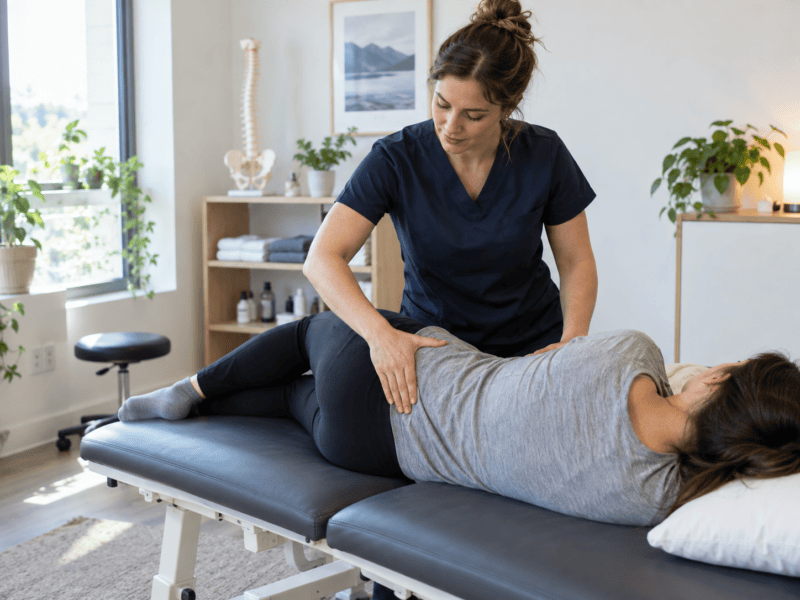
Osteopathic manual therapy is a hands-on approach that looks at how the muscles, joints, fascia and other structures of the body work together.
Rather than focusing only on the area that hurts, an osteopathic manual practitioner may assess movement patterns throughout the body to look for restrictions, compensation patterns and areas of tension that could be contributing to the problem.
People often book osteopathic treatment because something simply does not feel like it is moving well — whether that is persistent lower back discomfort, a stiff neck, limited shoulder movement or tension that keeps returning despite stretching or rest.
At Hudson Integrative Healthcare in Stoney Creek, osteopathic manual therapy is one of the hands-on services available for patients looking for individualized support for musculoskeletal pain, mobility and function.
So what do people actually see an osteopathic manual practitioner for?
Here are 10 of the most common reasons.
1. Lower Back Pain
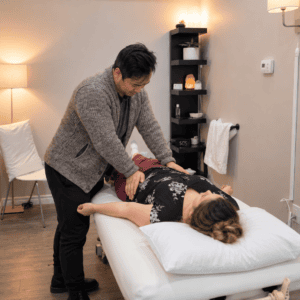
Lower back pain is one of the most common reasons people seek manual therapy.
Sometimes it develops suddenly after lifting, twisting or overdoing an activity. Other times it gradually builds from prolonged sitting, repetitive movement, reduced hip mobility, muscle tension or changes in posture.
An osteopathic manual practitioner may assess not only the painful area itself, but also structures that can influence how the lower back is moving, including the:
- pelvis
- hips
- sacrum
- thoracic spine
- abdominal wall
- surrounding muscles and fascia
Treatment may use gentle mobilization, soft-tissue techniques and other hands-on approaches aimed at improving movement and reducing areas of restriction.
2. Neck Pain and Stiffness
Neck stiffness is common for people who spend long hours:
- working at a desk
- driving
- looking down at a phone
- carrying children
- performing repetitive physical work
Sometimes the neck itself is the primary source of discomfort.
In other cases, restrictions through the upper back, shoulders or rib cage may be contributing to the way the cervical spine is moving.
Osteopathic treatment may therefore look beyond the neck itself and assess the surrounding structures that influence posture and movement.
This broader approach can be particularly helpful when someone feels like their neck is always tight in the same place despite stretching or massage.
3. Sciatica and Leg Pain
Pain that travels from the lower back or buttock into the leg is often described as sciatica.
True sciatica involves irritation or compression of the sciatic nerve or the nerve roots that contribute to it. However, not every pain travelling through the buttock or leg is actually caused by the sciatic nerve.
Tight muscles, joint restrictions and other musculoskeletal problems can sometimes create similar symptoms.
An osteopathic manual practitioner can assess how the lower back, pelvis, hips and surrounding soft tissues are moving and help determine whether mechanical restrictions may be contributing.
Persistent leg weakness, numbness, loss of bladder or bowel control or other neurological symptoms require medical assessment rather than manual therapy alone.
4. Headaches Related to Muscle Tension
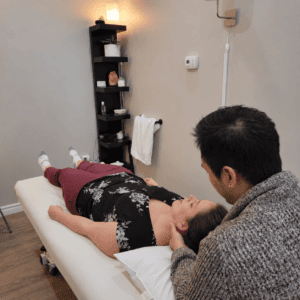
Not all headaches originate in the head itself.
Tension through the:
- neck
- upper back
- shoulders
- jaw
- base of the skull
can contribute to certain headache patterns.
For people whose headaches seem to develop after long periods at a computer, stressful days, jaw clenching or persistent neck tension, addressing the surrounding musculoskeletal system may be helpful.
An osteopathic manual practitioner may assess cervical mobility, upper-back movement, muscular tension and jaw mechanics to identify areas that could be contributing.
New, severe, unusual or rapidly changing headaches should always be medically evaluated.
5. Shoulder Pain and Limited Mobility
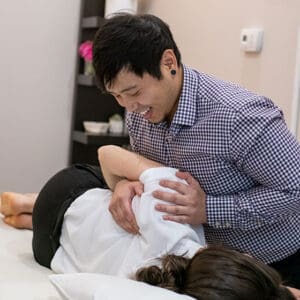
The shoulder is an extremely mobile joint, and that mobility depends on coordinated movement between several structures.
When someone develops shoulder pain or difficulty reaching overhead, behind their back or across their body, the problem may involve more than the shoulder joint itself.
An osteopathic assessment may also consider:
- shoulder blade movement
- upper-back mobility
- rib cage mechanics
- neck tension
- muscular balance around the shoulder
This can be useful for people experiencing repetitive strain, stiffness after injury or persistent limitations in shoulder movement.
6. Hip and Pelvic Discomfort
The pelvis sits at the centre of many movements we perform every day.
Walking, running, sitting, lifting and even standing all require coordinated movement between the pelvis, hips and spine.
When one area becomes restricted, other structures may begin compensating.
People often seek osteopathic treatment for concerns such as:
- hip tightness
- pain around the sacroiliac region
- pelvic discomfort
- stiffness after prolonged sitting
- asymmetrical movement
- discomfort during exercise
Treatment may focus on restoring comfortable movement through the hips, pelvis and lower back while addressing associated muscular and fascial tension.
7. Jaw Tension and TMJ Discomfort
Jaw tension is incredibly common, particularly in people who clench or grind their teeth.
Symptoms can include:
- jaw soreness
- clicking or popping
- headaches
- facial tension
- difficulty opening the mouth comfortably
- discomfort while chewing
The temporomandibular joint — commonly called the TMJ — does not function independently from the rest of the upper body.
Neck tension, posture, muscular imbalance and stress-related clenching can all influence how the jaw feels.
Osteopathic manual therapy may address the muscles and structures surrounding the jaw, neck and upper body as part of a broader approach to TMJ-related discomfort.
Dental assessment may also be important when grinding, bite problems or dental issues are contributing.
8. Sports Injuries and Repetitive Strain
Not every musculoskeletal problem comes from one dramatic injury.
Many develop gradually from repeating the same movement over and over.
This can happen with:
- running
- weight training
- racquet sports
- cycling
- manual labour
- repetitive workplace activities
A small restriction in one area can sometimes cause another part of the body to compensate.
An osteopathic manual practitioner may assess movement throughout the kinetic chain rather than focusing exclusively on the painful structure.
This can be useful both during recovery and when trying to understand why the same area repeatedly becomes irritated.
9. Pregnancy and Postpartum Aches and Changes
Pregnancy creates substantial changes in the musculoskeletal system.
As the abdomen grows and the body’s centre of gravity shifts, the spine, pelvis, hips and surrounding muscles adapt.
Pregnant patients may experience:
- lower back discomfort
- pelvic tension
- hip discomfort
- rib tension
- upper-back stiffness
- postural changes
Manual therapy can often be adapted to accommodate pregnancy comfortably.
The postpartum period creates its own challenges.
Pregnancy, labour, Caesarean birth, feeding positions and repeatedly carrying a baby can all contribute to new patterns of tension.
An osteopathic manual practitioner may work with areas such as the spine, pelvis, hips, abdominal wall and surrounding soft tissues to support comfortable movement as the body adapts after pregnancy.
Postpartum care may also be combined with pelvic-floor physiotherapy or other appropriate healthcare depending on the individual’s needs.
10. Chronic Muscle Tension and Postural Imbalances
Some patients do not have one obvious injury.
Instead, they describe feeling:
- tight
- stiff
- uneven
- restricted
- uncomfortable after sitting
- unable to move as freely as they used to
Modern life gives us plenty of opportunities to develop repetitive movement patterns.
Long hours at a desk, commuting, carrying children, physical work, sports and even our preferred sleeping positions can influence how our bodies adapt.
An osteopathic manual practitioner looks at how different regions are moving together.
Sometimes an area that feels chronically tight is compensating for reduced mobility somewhere else.
Addressing those patterns can be more useful than simply stretching the same uncomfortable muscle repeatedly.
What Does an Osteopathic Manual Treatment Look Like?
Treatment is individualized based on the person’s symptoms, health history and physical assessment.
Techniques may include:
- soft-tissue work
- gentle joint mobilization
- myofascial techniques
- stretching
- muscle-energy techniques
- positional techniques
- other hands-on approaches aimed at improving mobility and reducing restriction
Osteopathic manual treatment is generally performed with the patient lying or sitting comfortably on a treatment table.
The approach may be quite gentle, although the exact techniques used depend on the individual’s needs and tolerance.
Osteopathy Looks Beyond the Painful Area
One of the ideas that distinguishes osteopathic manual therapy is that the location of pain is not always the only area worth examining.
For example:
A person experiencing shoulder discomfort may also have limited thoracic-spine or rib mobility.
Someone with lower back pain may have significant hip or pelvic restrictions.
A person with recurring headaches may have substantial jaw, neck or upper-back tension.
This does not mean that every symptom is caused by a distant structure.
It simply means that movement throughout the body is interconnected, and an osteopathic assessment can look for relationships that may be contributing to the patient’s symptoms.
Osteopathy, Chiropractic or Massage Therapy: Which Should You Choose?
There can be overlap between different forms of manual therapy, and no single approach is necessarily right for every musculoskeletal complaint.
Osteopathic Manual Therapy
Osteopathic manual practitioners often take a broad approach to movement, assessing how different regions of the body may be influencing one another.
Treatment tends to use a combination of joint, muscle and fascial techniques.
Chiropractic Care
Chiropractors diagnose and treat conditions involving the musculoskeletal system and commonly use spinal or joint manipulation, mobilization, soft-tissue techniques, rehabilitation exercises and other approaches.
Chiropractic care can be particularly helpful when joint dysfunction, spinal pain or mobility restriction is a prominent concern.
Massage Therapy
Massage therapy primarily focuses on muscles and other soft tissues and can be particularly useful for muscular tension, soreness, recovery and relaxation.
There can be considerable overlap between these professions.
At a multidisciplinary clinic, the advantage is that patients can be directed toward the practitioner whose assessment and treatment style best fits their concern — and sometimes different practitioners can work together as part of the same treatment plan.
How Many Osteopathic Treatments Will I Need?
There is no universal number.
Some people seek treatment for a recent episode of pain and notice meaningful improvement within a relatively short period.
Others are dealing with long-standing mobility issues, repetitive strain or multiple contributing factors and may require a longer treatment plan.
Your practitioner can usually give you a better idea after assessing:
- how long the problem has been present
- the severity of symptoms
- whether there was an injury
- mobility and movement patterns
- lifestyle and occupational factors
- response to treatment
The goal should be an individualized plan rather than automatically booking an indefinite series of treatments.
When Should You See a Doctor Instead?
Manual therapy is not appropriate for every type of pain.
Medical evaluation may be needed when symptoms include:
- significant trauma
- suspected fracture
- unexplained fever
- unexplained weight loss
- rapidly worsening pain
- progressive weakness
- significant numbness
- loss of bladder or bowel control
- severe or unusual headache
- chest pain
- difficulty breathing
- signs of infection
A good manual practitioner should recognize when symptoms warrant investigation or referral.
Do You Need a Referral for Osteopathic Manual Therapy?
In most cases, patients can book directly with an osteopathic manual practitioner without a medical referral.
However, extended health insurance plans vary.
If you intend to submit your visit through insurance, it is worth confirming whether your particular plan covers osteopathic manual therapy and whether a referral is required.
What Should You Wear to an Osteopathy Appointment?
Comfortable clothing that allows you to move easily is generally ideal.
Your practitioner may ask you to perform simple movements during the assessment so they can observe how different areas of the body are functioning.
Depending on the treatment being performed, you may remain fully clothed for much of the appointment.
Is Osteopathy Only for Pain?
No.
Pain is certainly one of the most common reasons people seek treatment, but others come because they notice:
- decreased mobility
- stiffness
- recurrent muscular tension
- difficulty returning to exercise
- asymmetrical movement
- reduced range of motion
The goal is not necessarily to “fix” every asymmetry in the body.
Human bodies are naturally variable.
Instead, treatment focuses on areas where restriction or dysfunction appears relevant to the person’s symptoms, movement or goals.
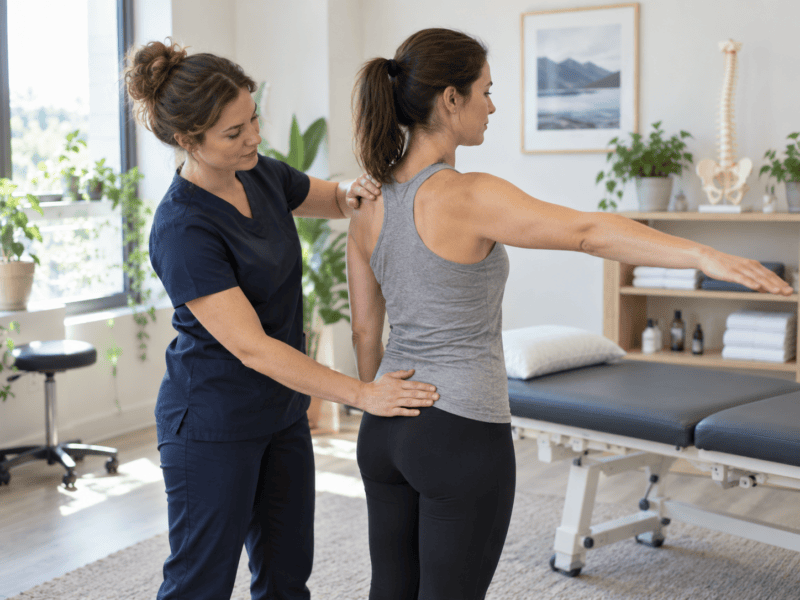
Could Osteopathic Manual Therapy Be Right for You?
Osteopathic manual therapy may be worth considering when pain, stiffness or restricted movement appears to have a musculoskeletal component.
The first visit gives your practitioner an opportunity to understand your symptoms, assess how you move and determine whether osteopathic treatment is appropriate.
Sometimes hands-on treatment is the primary strategy.
In other cases, the best plan may involve a combination of manual therapy, exercise, rehabilitation, lifestyle changes or assessment by another healthcare professional.
The osteopathic manual practitioners at Hudson Integrative Healthcare provide individualized hands-on care for concerns such as back and neck pain, muscle tension, joint restriction, postural strain and other musculoskeletal concerns. Treatment is tailored to the individual’s symptoms, movement patterns and goals. And our multidisciplinary setting allows our osteopathic manual practitioners to work alongside naturopathic doctors, chiropractic care, psychotherapy and other services when a collaborative approach is appropriate.
Appointments are available in person at our Stoney Creek clinic.
Hudson Integrative Healthcare
7 King St E, Unit 1
Stoney Creek, Ontario L8G 1J7
905-662-0045
This article is intended for general educational purposes and does not replace individualized medical assessment or treatment.