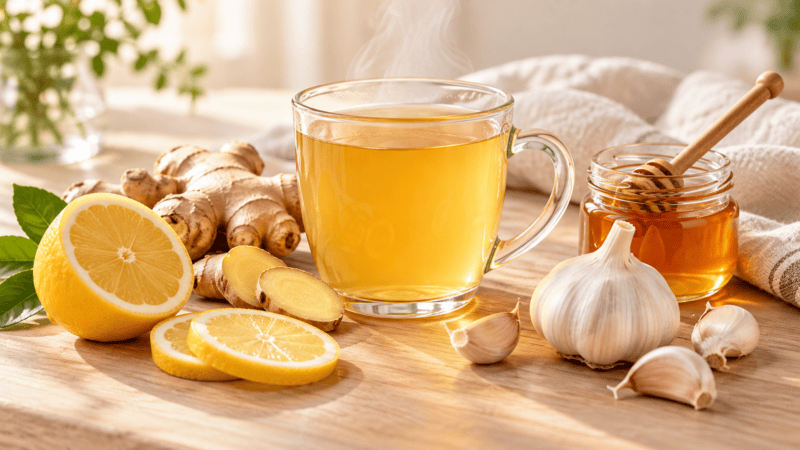
Garlic, Honey, Lemon and Ginger: Traditional Comforts for Cold and Flu Season
Written by Dr. Melanie Hudson, ND
Edited for Hudson Integrative Healthcare
When a scratchy throat, runny nose or cough begins, many of us reach for familiar kitchen ingredients: garlic, honey, lemon and ginger.
These foods have a long history in home remedies and traditional medicine. Modern research gives us additional reasons to be interested—from garlic’s antimicrobial compounds to honey’s ability to soothe a cough.
Each ingredient brings something different. Understanding those differences helps us use them thoughtfully, without expecting a cup of tea or spoonful of honey to do everything.
And despite the popularity of fermented garlic in honey, you do not need to age these ingredients together to enjoy them.
Garlic: traditional use with interesting modern research
Garlic’s medicinal reputation predates our understanding of bacteria and viruses. Historical accounts describe its use across several cultures, including applications for infections and respiratory complaints. That history helps explain its enduring place in herbal medicine, although traditional use alone cannot establish how well a particular preparation works. [1]
One of garlic’s best-known compounds is allicin, which researchers isolated and described in 1944. [2]
What happens when you crush garlic?
An intact garlic clove keeps an enzyme called alliinase separated from a compound called alliin. Chopping, crushing or chewing damages the cells, allowing them to interact and produce allicin.
Allicin is a sulfur-containing compound—not simply “sulfur”—that contributes to freshly crushed garlic’s characteristic smell and biological activity. It is also reactive and changes into other compounds over time. Heat and preparation methods influence the chemistry. [1]
This means fresh crushed garlic, cooked garlic, garlic powder and aged garlic extract are different preparations. Findings about one cannot automatically be applied to all the others.
Is garlic really “nature’s antibiotic”?

Garlic and allicin have demonstrated antimicrobial activity in laboratory experiments. Researchers have investigated effects against bacteria, fungi and other microorganisms. [1,2]
That is scientifically interesting, but a laboratory result does not tell us that eating garlic will deliver an effective antimicrobial concentration to an infected throat, sinus or lung.
Similarly, historical comparisons between allicin and penicillin describe particular laboratory conditions. They do not provide a usable conversion between a clove of garlic and an antibiotic prescription.
Garlic has biologically active compounds worth studying. It should not replace an antibiotic when one is medically indicated. Most common colds are viral, so antibacterial activity is also only one part of the respiratory-health discussion.
What do human studies show?
The evidence is limited, but it is not absent.
A Cochrane review identified one qualifying trial involving 146 participants who took an allicin-containing garlic supplement or placebo for 12 weeks. The garlic group reported 24 cold episodes, compared with 65 in the placebo group. Recovery time once a cold occurred was similar between groups. The reviewers considered the prevention finding promising but concluded that more research was needed. [3]
A separate randomized trial recruited 120 adults to take aged garlic extract or placebo for 90 days. Researchers found changes in certain immune-cell responses and improvements in some measures of illness burden, including fewer days when participants felt unable to carry out their usual activities. The number of participants experiencing a cold or flu-like illness was not significantly different between groups. [4]
These studies give us reasons to investigate garlic further. They do not establish that raw cloves prevent influenza or that starting garlic after symptoms begin will shorten an illness.
Aged garlic extract used in research is also not the same as garlic left in a jar of honey.
How can you use garlic practically?
Garlic can be a flavourful part of soups, sauces, dressings and other meals.
If you enjoy it raw, crush or finely chop a small amount and mix it into food. There is no need to force down raw cloves or tolerate burning in pursuit of a stronger effect. Allowing crushed garlic to stand briefly before cooking gives its enzyme reaction time to occur, but a specific waiting period has not been proven to improve cold outcomes. [1]
Cooked garlic remains a useful food even though its chemical profile differs from raw garlic.
Raw garlic can cause digestive discomfort, and concentrated supplements can increase bleeding risk or interact with medications. Discuss supplements with your practitioner, especially if you take anticoagulants or have surgery planned. [5]
Honey: a soothing option for cough
Honey has a particularly practical role during respiratory illness: helping soothe a cough.
A Cochrane review found that honey probably improves some short-term cough outcomes in children compared with no treatment or placebo. Most studies were brief, so the evidence is strongest for symptom relief rather than changing the course of the infection. [6]
That relief can still matter when coughing interrupts rest.
For adults and children older than one year, a small spoonful of honey or honey stirred into a warm drink can be a simple comfort measure.
Does honey need to be raw or unpasteurized?
You do not need to seek out raw honey to use it as a soothing food. The cough evidence does not establish that unpasteurized honey is necessary or consistently superior. [6]
Honey also has antimicrobial properties under certain conditions, but swallowing it has not been shown to sterilize the airways or cure influenza.
Never give honey to a child younger than 12 months. This includes raw, pasteurized and honey-containing foods. Honey can contain Clostridium botulinum spores, and ordinary pasteurization does not reliably remove this risk. [7]
Why we do not recommend homemade garlic fermented in honey
Garlic submerged in raw honey has become a popular online remedy. Recipes often recommend leaving it at room temperature for several weeks, releasing gas daily and adding a splash of vinegar.
The appeal is understandable: two familiar ingredients, a traditional-looking preparation and an easy daily ritual.
However, neither the potential benefits of garlic nor honey’s cough-soothing effects require this fermentation step.
Food-preservation specialists have noted that there is no validated, research-based home recipe establishing how to ferment garlic in honey safely. Garlic adds moisture to the honey, changing the conditions that normally help honey resist microbial growth. [8]
A casual “squirt” of apple cider vinegar does not establish that the whole mixture—including the garlic—has reached and maintained a safe acidity. Bubbling, a pleasant smell and daily burping do not confirm safety either.
There is also no good clinical evidence that this particular homemade ferment improves immune function or treats respiratory infections better than using the ingredients separately.
Our practical suggestion: enjoy garlic in food and honey separately for comfort. If you combine them for flavour, prepare a small amount for immediate use rather than treating an unvalidated room-temperature ferment as a medicinal staple.
Lemon: flavour, vitamin C and a comforting warm drink
Lemon adds brightness to a warm drink and contributes some vitamin C.
Vitamin C supports normal immune function. Research suggests that regular vitamin C supplementation can modestly shorten colds, although it does not generally prevent them in the wider population. Starting supplementation only after symptoms appear has not shown consistent benefit. A squeeze of lemon should not be equated with the supplement doses used in these studies. [9]
That does not make lemon unhelpful. A drink you enjoy may be easier to sip when your throat is sore or your appetite is low.
Does lemon thin catarrh?
Catarrh refers to mucus and the sensation of mucus collecting in the nose or throat, often with congestion, postnasal drip or frequent throat clearing.
Lemon is sometimes described as “cutting through” mucus. That can be a useful description of how a tart drink feels, but there is not strong human evidence that lemon juice itself acts as a mucus-thinning medicine.
The warm fluid may account for much of the comfort.
In a small study of 30 people with cold or flu-like symptoms, a hot fruit drink improved several self-reported symptoms and the sensation of easier nasal breathing. It did not improve objectively measured nasal airflow. [10]
An earlier small study found that sipping hot water or chicken soup temporarily increased nasal mucus movement. That supports a possible role for warm liquids, without proving that lemon specifically clears mucus. [11]
A fair description is that warm lemon water may soothe the throat and make congestion feel more manageable.
If lemon stings an irritated throat or aggravates reflux, leave it out. Plain warm water, broth or a mild herbal tea may feel better.
Ginger: warmth, digestive comfort and traditional respiratory use
Fresh ginger brings a distinctive warmth to food and drinks. Its pungent compounds, including gingerols and shogaols, have attracted research interest, while ginger itself has a long history in traditional medicine.
Human research is more established for certain types of nausea than for treating colds or influenza. Ginger can also cause heartburn or digestive irritation, particularly in larger amounts. [12]
A mild ginger tea may nevertheless be an appealing comfort measure when you feel chilled or mildly nauseated.
Ginger through a Traditional Chinese Medicine perspective
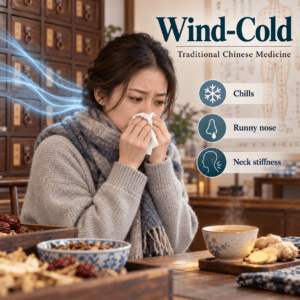
In Traditional Chinese Medicine, fresh ginger is known as Sheng Jiang and is classified as pungent and warming.
It is traditionally used to “release the exterior,” disperse cold and warm the digestive system. Within that framework, it may be selected for a Wind-Cold pattern involving symptoms such as chills, aversion to cold, clear nasal discharge and body aches. [13]
These are traditional descriptions used to guide individualized care. They are not the same as a laboratory diagnosis of a viral infection, and ginger is not automatically the right choice for every respiratory symptom pattern.
For someone who feels chilled and finds warmth comforting, a gently warming drink can fit naturally into supportive care.
What about ginger and circulation?
Ginger is often described as supporting circulation or warming cold hands and feet.
There is some preliminary human research behind the warming discussion. A very small placebo-controlled crossover study involving six women with cold-sensitive extremities found that a ginger-extract drink helped sustain an increase in palm temperature compared with placebo. [14]
This is an interesting finding, but skin temperature is not the same as a comprehensive measurement of circulation. It does not establish that ginger treats vascular disease or persistent circulation problems.
For the blog’s practical purposes, ginger may offer a warming sensation, with early research supporting effects on peripheral skin temperature.
Does ginger have antiviral properties?
A laboratory study found that fresh ginger preparations had activity against respiratory syncytial virus in cultured human respiratory-tract cells. [15]
That helps explain scientific interest in ginger, but a cell-culture experiment is not evidence that ginger tea prevents or treats RSV in a person.
We can appreciate the research while using ginger tea for what it most reliably offers at home: flavour, warmth and comfort.
A simple honey, lemon and ginger drink
You do not need a complicated recipe or weeks of preparation.
Ingredients
- One mug of water.
- Two to four thin slices of fresh ginger.
- A small squeeze of lemon, to taste.
- One teaspoon of honey, if desired and appropriate.
Method
- Add the ginger to the water and gently simmer for five to ten minutes.
- Strain into a mug and allow it to cool to a comfortable drinking temperature.
- Add lemon and honey to taste.
- Sip slowly.
This is a comforting food-based drink, not a standardized treatment dose. Adjust it to your preferences and tolerance. Omit lemon if it irritates your throat, reduce the ginger if it feels too strong, and never include honey for a child under one year.
Garlic can stay in your soup or meal—you do not need to add all four ingredients to the same mug.
Bringing traditional wisdom and research together
These ingredients do not all need to work in the same way to have a place in seasonal self-care.
Garlic offers interesting chemistry, longstanding traditional use and some encouraging—but still limited—human research.
Honey has evidence for short-term cough relief in children old enough to consume it safely.
Lemon adds flavour and some vitamin C, while the warm drink itself may provide comfort.
Ginger brings traditional warming qualities, evidence for some forms of nausea and preliminary research into other effects.
The most useful approach is to choose what suits your symptoms and preferences, alongside rest, adequate fluids and nourishing meals.
Seek medical assessment for difficulty breathing, chest pain, dehydration, marked worsening or other concerning symptoms. People at higher risk of complications should seek advice early when influenza or COVID-19 is suspected, because treatment decisions can be time-sensitive.
Personalized Support for Cold and Flu Season
Our naturopathic doctors can help you review your symptoms, discuss food-based and herbal options, check supplement suitability and recognize when additional medical assessment is needed. Appointments are available in person in Stoney Creek and virtually throughout Ontario.
Hudson Integrative Healthcare
7 King Street East, Unit 1
Stoney Creek, Ontario L8G 1J7
Phone: 905-662-0045
Website: www.hihealthcare.ca
Our friendly reception team is available Monday through Friday, 8:00 a.m. to 8:00 p.m., to help coordinate appointments.
BOOK ONLINE
This article is for educational purposes only and does not replace individualized medical advice, diagnosis or treatment. Foods, herbs and supplements may not be appropriate for everyone. Consult a qualified healthcare professional about persistent symptoms, medication interactions or care during pregnancy, breastfeeding or childhood.
You May Also Enjoy Our Other Related Blogs
- Back-to-School Colds and Flu: Early Signs You May Be Getting Sick
- Immunology 101: Why Kids Get Sick So Often at Daycare
- Virtual Naturopathic Appointments Across Ontario
References
- Borlinghaus J, et al. Allicin: Chemistry and Biological Properties. Molecules. 2014. PMC
- Cavallito CJ, Bailey JH. Allicin, the Antibacterial Principle of Allium sativum. I. Isolation, Physical Properties and Antibacterial Action. Journal of the American Chemical Society. 1944. ACS Publications
- Lissiman E, Bhasale AL, Cohen M. Garlic for the Common Cold. Cochrane Database of Systematic Reviews. 2014. Cochrane
- Nantz MP, et al. Supplementation with Aged Garlic Extract Improves Both NK and γδ-T Cell Function and Reduces the Severity of Cold and Flu Symptoms. Clinical Nutrition. 2012. PubMed
- National Center for Complementary and Integrative Health. The Common Cold and Complementary Health Approaches: What the Science Says. NCCIH
- Oduwole O, et al. Honey for Acute Cough in Children. Cochrane Database of Systematic Reviews. 2018. Cochrane
- Health Canada. Infant Botulism. Canada.ca
- Ask Extension. Fermentation of Garlic: Safety of Garlic Fermented in Honey. 2023. Ask Extension
- National Institutes of Health, Office of Dietary Supplements. Vitamin C: Fact Sheet for Health Professionals. Health Professional Fact Sheet
- Sanu A, Eccles R. The Effects of a Hot Drink on Nasal Airflow and Symptoms of Common Cold and Flu. Rhinology. 2008. PubMed
- Saketkhoo K, Januszkiewicz A, Sackner MA. Effects of Drinking Hot Water, Cold Water, and Chicken Soup on Nasal Mucus Velocity and Nasal Airflow Resistance. Chest. 1978. pubmed.ncbi.nlm.nih.gov
- National Center for Complementary and Integrative Health. Ginger: Usefulness and Safety. NCCIH
- The Hong Kong Polytechnic University. Fresh Ginger: Traditional Chinese Medicine Properties and Uses. herbaltcm.sn.polyu.edu.hk
- Sugimoto K, et al. Hyperthermic Effect of Ginger Extract-Containing Beverage on Peripheral Skin Surface Temperature in Women. Evidence-Based Complementary and Alternative Medicine. 2018. PubMed
- Chang JS, et al. Fresh Ginger Has Antiviral Activity Against Human Respiratory Syncytial Virus in Human Respiratory Tract Cell Lines. Journal of Ethnopharmacology. 2013. pubmed.ncbi.nlm.nih.gov