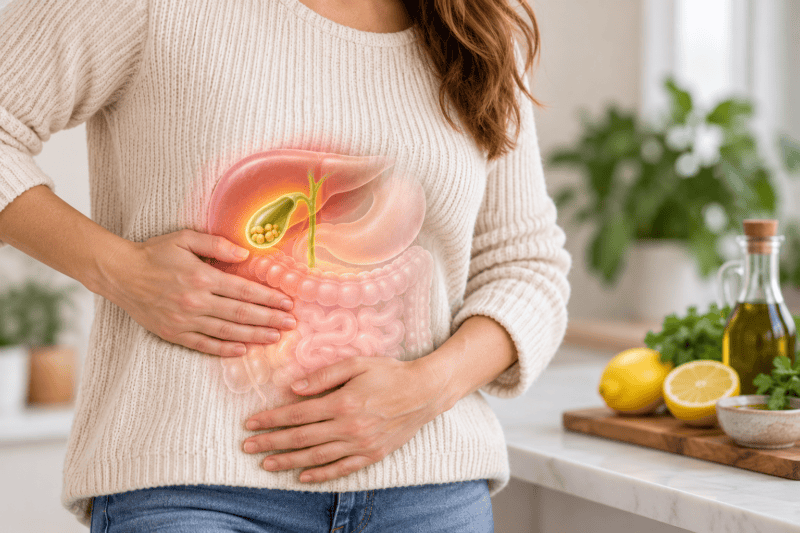
Gallstones: Why They Form, Who Gets Them and How Naturopathic Medicine Can Help
Written by Dr. Melanie Hudson, ND
Edited for Hudson Integrative Healthcare
Gallstones: Why They Form, Who Gets Them and How Naturopathic Medicine Can Help
Gallstones are common, but many people do not realize they have them until an abdominal ultrasound finds them—or until a stone suddenly causes significant pain.
Although gallstones are often associated with fatty foods, their formation is more complicated than simply “eating too much fat.”
Gallstone risk can be influenced by genetics, hormones, pregnancy, body weight, insulin resistance, rapid weight loss, bile composition, gallbladder emptying, diet and even the length of time between meals.
Understanding how the gallbladder normally works can help explain why stones develop, why certain people are particularly susceptible and what can potentially be done to support gallbladder and digestive health.
What Does the Gallbladder Do?
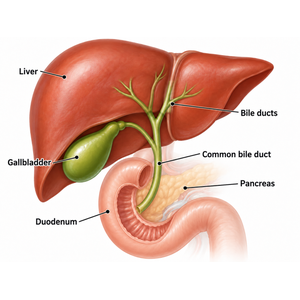
The gallbladder is a small, pear-shaped organ located underneath the liver.
Your liver continuously produces bile, a digestive fluid containing bile acids, cholesterol, bilirubin, phospholipids and other substances.
Rather than all of that bile flowing directly into the intestine as it is produced, the gallbladder acts as a storage and concentration chamber.
Between meals, the gallbladder fills with bile. When you eat—particularly foods containing dietary fat—the small intestine releases a hormone called cholecystokinin, or CCK.
CCK tells the gallbladder to contract, releasing a concentrated amount of bile into the small intestine.
Bile then helps:
- emulsify and digest dietary fats
- support absorption of the fat-soluble vitamins A, D, E and K
- participate in cholesterol metabolism
- influence the intestinal microbial environment
The gallbladder is therefore naturally designed to alternate between filling during periods without food and emptying in response to meals.
What Are Gallstones?
Gallstones, medically known as cholelithiasis, are hardened deposits that develop inside the gallbladder.
They can range from tiny particles resembling grains of sand to stones several centimetres across. Some people have one large gallstone while others develop many smaller stones.
There are two main types.
Cholesterol Gallstones
These are the most common type.
Cholesterol is a normal component of bile. However, when bile contains more cholesterol than can remain properly dissolved, cholesterol can begin to crystallize.
Over time, those crystals can grow into gallstones.
Pigment Gallstones
Pigment stones contain more bilirubin, a substance produced during the normal breakdown of red blood cells.
These stones are more commonly associated with certain liver conditions, biliary infections and disorders involving increased red blood cell breakdown. (NIDDK)
Why Do Gallstones Form?
There is rarely one single cause.
Gallstones generally develop when several factors come together.
1. There Is Too Much Cholesterol in the Bile
If the liver secretes more cholesterol into bile than the bile acids and phospholipids can keep dissolved, the bile becomes supersaturated with cholesterol.
That cholesterol can begin to crystallize.
This helps explain the relationship between gallstones and conditions such as obesity, elevated triglycerides, insulin resistance, diabetes and metabolic syndrome. (NIDDK)
2. The Gallbladder Does Not Empty Completely or Often Enough
Gallstone formation is not only about what is in the bile.
It also matters how long that concentrated bile remains sitting within the gallbladder.
If the gallbladder is not contracting effectively or frequently enough, bile stasis can occur. This gives cholesterol crystals more opportunity to form and grow.
The NIDDK specifically recognizes incomplete or infrequent gallbladder emptying as one mechanism involved in gallstone formation. (NIDDK)
3. Bilirubin Levels May Be Increased
Higher bilirubin concentrations can contribute to pigment stone formation.
This is particularly relevant in certain hemolytic blood disorders, biliary infections and liver conditions. (NIDDK)
Who Is More Likely to Develop Gallstones?
Anyone can develop gallstones, but risk is higher in certain groups.
Factors include:
- being female
- increasing age
- pregnancy
- multiple pregnancies
- estrogen exposure
- family history of gallstones
- overweight or obesity
- insulin resistance or diabetes
- metabolic syndrome
- high triglycerides
- low HDL cholesterol
- rapid weight loss
- repeated weight cycling
- bariatric surgery
- very-low-calorie diets
- diets high in refined carbohydrates and low in fibre
- certain liver diseases
- Crohn’s disease and some other intestinal diseases
- certain hemolytic blood disorders
(NIDDK)
Why Are Gallstones So Common in Women?
Hormones are part of the reason.
Higher estrogen exposure can increase cholesterol secretion into bile, while hormonal changes during pregnancy can also reduce normal gallbladder motility.
Studies have demonstrated that pregnancy can increase fasting gallbladder volume and reduce how completely the gallbladder empties after eating. (PubMed)
This combination—more cholesterol-rich bile plus slower gallbladder emptying—can create an environment more favourable for cholesterol crystals and gallstones to develop.
This is one reason gallstones are particularly common during the reproductive years and following pregnancy.
Can Rapid Weight Loss Cause Gallstones?
Yes.
This is an important—and sometimes surprising—part of gallbladder health.
Having obesity increases the risk of gallstones, but losing weight very rapidly can also temporarily increase the risk.
During rapid weight loss, the liver releases more cholesterol into bile. At the same time, severe calorie restriction can decrease gallbladder emptying.
That combination can promote stone formation. (NIDDK)
In a small clinical trial of people undergoing rapid weight loss, an extremely low-fat diet resulted in significantly poorer gallbladder emptying and more gallstone formation than a diet containing enough fat to produce a strong gallbladder contraction. (PubMed)
This does not mean that dietary fat completely prevents gallstones during weight loss—rapid weight loss itself remains an important risk factor—but it demonstrates why crash dieting and extremely low-fat eating may not be ideal for gallbladder physiology.
What About Ozempic, Wegovy and Other GLP-1 Medications?
Gallbladder health has received renewed attention with the widespread use of medications that produce substantial weight loss.
A large meta-analysis of 76 randomized clinical trials involving more than 100,000 participants found GLP-1 receptor agonist use was associated with an increased risk of gallbladder and biliary disease, including gallstones and cholecystitis. The association was greater in trials using higher doses, longer treatment durations and medications for weight loss. (PubMed)
Rapid weight loss itself likely contributes to some of this risk, although medication-related effects on gallbladder physiology may also play a role.
This doesn’t mean people should avoid medications that may otherwise be medically appropriate. It does mean that new right-upper abdominal pain, nausea or other potential gallbladder symptoms during significant weight loss deserve appropriate assessment.
Does Fasting Affect Gallstone Risk?
This is an interesting area because the gallbladder is fundamentally an organ designed around the fasting-and-feeding cycle.
During an overnight fast, the gallbladder naturally fills and concentrates bile.
That is normal physiology. Bile has not become “old” or toxic overnight and an ordinary overnight fast does not need to be “flushed.”
However, habitually extending fasting for long periods means fewer meal-triggered opportunities for the gallbladder to contract.
A prospective study following more than 4,700 women found that longer overnight fasting periods were associated with a greater risk of hospitalization for gallstone disease. (PubMed)
Another large population study found gallstone prevalence was higher among people whose overnight fasting period exceeded 12 hours. (PubMed)
These are observational associations. They do not establish that skipping breakfast directly causes gallstones.
But they support the biological idea that for someone already susceptible to gallstones, regularly combining:
long fasting periods + very low calorie intake + rapid weight loss + minimal dietary fat
may not provide an ideal environment for normal gallbladder emptying.
Should You Eat Some Fat at Breakfast?
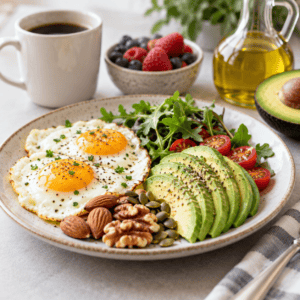
For many people, including some healthy dietary fat with meals is reasonable.
Fat reaching the small intestine stimulates CCK, which encourages gallbladder contraction.
The NIDDK specifically recommends healthy fats such as olive oil and fish as part of a dietary pattern that helps the gallbladder contract and empty regularly. (NIDDK)
Healthy breakfast options might include:
- eggs
- avocado
- nuts or nut butter
- chia, flax or hemp seeds
- full-fat or moderate-fat unsweetened yogurt
- olive oil incorporated into food
- salmon or other fatty fish
This does not mean that everyone needs to eat a high-fat breakfast.
Nor does it mean taking a spoonful of oil every morning will prevent gallstones.
The goal is simply to recognize that normal amounts of healthy dietary fats are part of normal digestive physiology.
Healthy fats also contribute to cell membrane structure, nervous system health, hormone production and absorption of vitamins A, D, E and K.
But Don’t Fatty Foods Trigger Gallbladder Attacks?
They can—and this is where prevention and treatment need to be distinguished.
If a person does not have symptomatic gallstones, normal dietary fat stimulates healthy gallbladder contraction.
If a person already has gallstones, however, a strong gallbladder contraction can sometimes push a stone toward the cystic duct or common bile duct.
That is why biliary colic often occurs after a larger or higher-fat meal.
Someone with known symptomatic gallstones should therefore not deliberately consume large amounts of oil or fat in an attempt to “flush” the gallbladder.
Guidelines recommend avoiding foods that consistently trigger symptoms while awaiting appropriate management. (Nice)
What Does a Gallbladder Attack Feel Like?
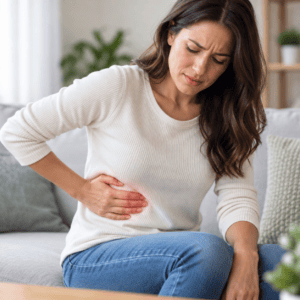
When a stone temporarily obstructs the flow of bile, it can cause biliary colic, commonly referred to as a gallbladder attack.
Typical symptoms can include:
- significant pain in the upper right abdomen
- pain in the upper central abdomen
- pain that develops following a heavier meal
- nausea
- vomiting
- pain lasting from minutes to several hours
Gallbladder attacks commonly occur later in the day or at night. (NIDDK)
Some people also describe pain that seems to travel toward the back or right shoulder blade.
Because upper abdominal symptoms can also come from the stomach, liver, pancreas, intestines and even the heart, symptoms alone cannot diagnose gallstones.
When Are Gallstones an Emergency?
A stone that remains lodged in the biliary system can cause more serious complications, including:
- acute cholecystitis
- common bile duct obstruction
- cholangitis
- pancreatitis
Seek prompt medical care for symptoms such as:
- severe or persistent abdominal pain
- abdominal pain lasting several hours
- fever or chills
- persistent vomiting
- yellowing of the skin or eyes
- dark or tea-coloured urine
- unusually pale stools
These symptoms may indicate obstruction, inflammation or infection and should not be treated at home with supplements or attempts to stimulate bile flow. (NIDDK)
How Are Gallstones Diagnosed?
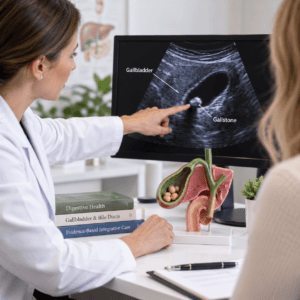
An abdominal ultrasound is generally the first-line imaging test when gallstones are suspected.
Bloodwork may also be used to assess:
- liver enzymes
- bilirubin
- signs of inflammation or infection
- pancreatic enzymes when pancreatitis is a concern
If a common bile duct stone is suspected but ultrasound does not provide enough information, additional imaging such as MRCP or endoscopic ultrasound may be considered. (Nice)
Do All Gallstones Need to Be Removed?
No.
Many gallstones are discovered incidentally when someone has imaging for an unrelated reason.
If gallstones are present but have never caused symptoms, treatment is often unnecessary. (Nice)
However, recurrent symptomatic gallstones are different.
For symptomatic gallbladder stones, laparoscopic cholecystectomy—surgical removal of the gallbladder—is the standard definitive treatment.
Stones lodged within the common bile duct may require removal with a procedure such as ERCP. (Nice)
Can a Gallbladder Cleanse or Flush Remove Gallstones?
“Gallbladder flushes” are commonly discussed online and usually involve consuming a large amount of olive oil, citrus juice, herbs or other substances with the goal of stimulating the gallbladder and encouraging bile or stones to pass.
Many patients ask us about these protocols, and some people do report improvements in digestive symptoms after using various bile-supportive strategies. However, there is currently not good evidence that traditional high-dose gallbladder flushes reliably dissolve or remove established gallstones.
Stone Size and Biliary Sludge Matter — But Not Always in the Way You Might Expect
Before attempting to strongly stimulate gallbladder contraction, it is important to know what is actually present in the gallbladder and biliary system.
An abdominal ultrasound can help identify:
- whether gallstones are present
- approximately how many stones there are
- their size
- whether biliary sludge is present
- whether the gallbladder appears inflamed
- whether bile ducts are dilated or there are other concerning findings
Interestingly, small stones are not necessarily lower risk than large stones. Smaller stones and microlithiasis can more readily migrate from the gallbladder into the bile ducts. Research has associated gallstones smaller than approximately 5 mm with a higher risk of acute biliary pancreatitis.
Biliary sludge can also behave differently from person to person. In some people it disappears when the underlying trigger—such as pregnancy, rapid weight loss or prolonged reduced food intake—resolves. In others it can persist, develop into gallstones or contribute to biliary pain, cholecystitis or pancreatitis.
For this reason, “small” does not automatically mean safe to flush.
Assessment Comes Before Bile Stimulation
Someone who has vague digestive symptoms and has never had their gallbladder assessed is very different from someone whose ultrasound has already documented biliary sludge, multiple small stones, a large immobile stone or evidence of duct obstruction.
At Hudson Integrative Healthcare, our approach is to first understand what is present and whether there are any reasons that aggressively stimulating the gallbladder could be unsafe.
In selected patients, an individualized plan may focus on supporting normal bile flow, gallbladder motility, meal timing and digestion while addressing factors that contributed to bile stasis in the first place. This may look very different from the high-dose oil “flushes” commonly promoted online.
Some patients report symptomatic benefit from more conservative bile- and digestion-supportive approaches, but this should not be interpreted as proof that established stones have dissolved or been expelled.
If gallstones or biliary sludge are suspected, diagnosis comes before trying to stimulate bile flow. Severe pain, jaundice, fever, vomiting or evidence of bile duct obstruction requires medical assessment rather than a home gallbladder cleanse.
How Can a Naturopathic Doctor Help With Gallbladder Concerns?
Naturopathic medicine can be particularly helpful in examining the modifiable health factors surrounding gallstone risk and digestive health, while recognizing when conventional imaging, medication or surgical treatment is necessary.
Looking at the Bigger Picture
Gallstones frequently occur alongside other metabolic or digestive concerns.
Depending on the individual, we may consider factors such as:
- insulin resistance
- blood glucose
- triglycerides and cholesterol
- body composition
- weight-loss history
- dietary patterns
- fibre intake
- meal timing
- fasting practices
- digestive symptoms
- medication use
- pregnancy and hormonal history
- family history
The goal is not simply to focus on the stone itself, but to understand why this person’s biliary system may have become prone to stone formation.
Building a Gallbladder-Supportive Diet
Nutrition recommendations are individualized.
For someone trying to reduce future gallstone risk, this may include:
- increasing vegetables and other fibre-rich foods
- choosing whole grains, legumes, nuts and seeds as tolerated
- reducing excessive refined carbohydrates and sugars
- including reasonable amounts of healthy dietary fats
- avoiding extremely low-fat diets
- avoiding repeated crash dieting
- working toward gradual, sustainable weight change when appropriate
A higher-fibre diet, healthy fats and maintaining a healthy weight are all included in established dietary recommendations for reducing gallstone risk. (NIDDK)
Considering Meal Timing
For someone who is susceptible to gallstones, we may also discuss whether routinely extending the overnight fast is appropriate.
This is not a recommendation that everyone must eat immediately after waking.
Instead, it is about considering the individual’s complete picture.
Someone with no gallbladder risk factors who feels well with intermittent fasting is very different from someone with a strong family history, previous gallbladder sludge, several pregnancies and rapid ongoing weight loss.
What Happens to Digestion After Gallbladder Removal?
You can absolutely live without a gallbladder.
The liver continues to produce bile after cholecystectomy.
The difference is how that bile is delivered.
Before surgery:
Liver → produces bile → gallbladder stores and concentrates it → larger meal-associated release
After surgery:
Liver → produces bile → bile flows more continuously into the intestine
For many people, this transition causes little difficulty.
Others notice:
- bloating
- fullness after fatty meals
- nausea
- increased gas
- food intolerance
- urgency
- loose stools
- diarrhea
- IBS-like symptoms
These symptoms should not automatically be assumed to have one cause.
Supporting Digestion After Cholecystectomy

One of the roles of individualized naturopathic care is determining what type of digestive difficulty is actually occurring.
Depending on a person’s symptoms, dietary intake and medical history, we may consider:
- adjusting the amount of fat eaten at one sitting
- distributing dietary fat more evenly throughout the day
- increasing soluble fibre when appropriate
- supporting digestion with digestive enzymes
- considering ox bile or bile-supportive supplementation in selected patients who appear to have difficulty digesting fats
- evaluating other causes of bloating or altered bowel habits
Ox bile is not something every person without a gallbladder automatically requires.
It is also particularly important to distinguish difficulty digesting dietary fat from bile acid diarrhea.
What Is Bile Acid Diarrhea After Gallbladder Removal?
For some people, the problem after gallbladder surgery is actually too much bile acid reaching the colon, rather than too little bile being available.
Bile acids entering the colon can stimulate water and electrolyte secretion, producing urgency and watery stools.
Post-cholecystectomy bile acid diarrhea is a recognized condition and may require specific medical treatment, including bile-acid-binding medications in appropriate cases. (PubMed)
That means someone experiencing persistent diarrhea after gallbladder removal should not simply assume they need more bile.
In someone whose symptoms are being driven by excess bile acids reaching the colon, adding ox bile may be inappropriate and could potentially aggravate symptoms.
This is a good example of why individualized assessment matters.
Could Gallbladder Removal Affect the Microbiome or SIBO Risk?
This is an emerging and particularly interesting area of research.
Bile acids do considerably more than digest fats.
They also interact with intestinal microorganisms and help shape the environment within the digestive tract.
Before cholecystectomy, the gallbladder stores and concentrates bile and releases a larger amount in response to eating.
After cholecystectomy, bile still reaches the intestine, but the timing and concentration of that exposure are different.
Researchers have found that gallbladder removal can alter both bile-acid metabolism and the composition of the gut microbiome. Systematic reviews and more recent research continue to investigate the implications of these changes, although cause-and-effect relationships in humans are not yet completely understood. (PubMed)
What About SIBO?
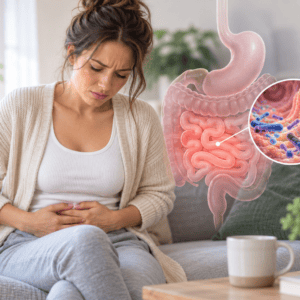
Because bile acids have antimicrobial and microbiome-regulating effects, there is a plausible theory that changing the normal meal-associated pattern of bile delivery could contribute to an intestinal environment that is more permissive to bacterial overgrowth in some susceptible people.
There is some preliminary human evidence supporting an association.
In one study, 46.8% of 62 symptomatic post-cholecystectomy patients had a positive glucose breath test, compared with 26.2% of patients with other functional gastrointestinal disorders and 13.3% of healthy controls. (PubMed)
This does not prove that gallbladder removal causes SIBO.
Small-intestinal bacterial overgrowth is multifactorial and can also involve:
- altered intestinal motility
- impaired migrating motor complex activity
- anatomical changes
- gastric acid suppression
- pancreatic or digestive dysfunction
- previous gastrointestinal surgery
- other medical conditions
However, for a patient who says:
“My digestion has never been the same since my gallbladder was removed,”
and is now experiencing persistent bloating, gas, distension, food intolerance or bowel changes, it can be reasonable to investigate rather than simply telling them that these symptoms are inevitable.
Post-Cholecystectomy Digestive Symptoms Are Not All the Same
This distinction is important.
One person may primarily have difficulty tolerating larger fatty meals.
Another may have bile acid diarrhea.
Another may have developed SIBO or another gastrointestinal disorder.
And another may simply need time and modest dietary adjustments while the digestive system adapts.
Although these people may all describe their symptoms as “IBS since my gallbladder came out,” their underlying physiology—and therefore the appropriate treatment—may be quite different.
The Takeaway
Gallstones are not simply caused by eating fatty foods.
Their development involves an interaction between bile composition, cholesterol metabolism, gallbladder motility, genetics, hormones, metabolic health, body weight, weight-loss patterns and diet.
Regular gallbladder contraction appears to be one part of healthy gallbladder physiology, which is why extremely low-fat diets and prolonged periods without eating may be worth reconsidering in someone who is already prone to gallstones.
At the same time, once symptomatic stones are present, deliberately stimulating the gallbladder is not an appropriate home treatment.
And if the gallbladder has already been removed, persistent digestive symptoms deserve a more individualized approach. Problems with fat digestion, bile acid diarrhea, altered microbiome patterns and SIBO can sometimes produce overlapping symptoms but require very different strategies.
The goal is not simply to “increase bile.”
It is to understand what is happening physiologically for that particular person.
The naturopathic doctors at Hudson Integrative Healthcare offer individualized assessment for gallbladder and digestive concerns, including evaluation of nutrition, meal timing, metabolic health, bowel symptoms and other factors that may influence bile production, digestion and gastrointestinal function. We can also help identify when symptoms warrant laboratory testing, imaging or further medical assessment and provide individualized digestive support before or after gallbladder surgery where appropriate.
Appointments are available in person at our Stoney Creek clinic and through telemedicine across Ontario.
Hudson Integrative Healthcare
7 King St E, Unit 1
Stoney Creek, Ontario L8G 1J7
905-662-0045
This article is intended for general educational purposes and does not replace individualized medical assessment or treatment. Severe or persistent abdominal pain, fever, jaundice, vomiting or other symptoms of possible biliary obstruction require prompt medical assessment.