How to Lose Belly Fat: Understanding Metabolism, Insulin, Hormones and Weight Gain
“I’m gaining weight around my stomach, and I don’t understand why.”
We hear this often from patients at Hudson Integrative Healthcare. Sometimes overall weight has increased. Other times, the number on the scale hasn’t changed dramatically, but where the body is carrying weight has shifted, particularly around the abdomen.
Naturally, the next question is often: How do I lose belly fat?
There isn’t one food, supplement, or exercise that selectively burns abdominal fat. Instead, we look at the factors that can influence body composition and metabolic health, including blood sugar and insulin regulation, thyroid function, hormones, nutrition, exercise, sleep, stress, medications, and lifestyle.
Understanding which of these factors may be relevant to you can help us develop a more individualized—and sustainable—plan.

Why Does Belly Fat Matter?
When we talk about belly fat, we’re generally talking about two different types of fat.
Subcutaneous fat is the softer fat underneath the skin that you can pinch.
Visceral fat sits deeper in the abdomen, surrounding internal organs.
Higher amounts of visceral fat are associated with insulin resistance, type 2 diabetes, cardiovascular disease, fatty liver disease, and inflammation. For this reason, increasing abdominal fat can sometimes be more than a cosmetic concern—it can also be one clue about someone’s metabolic health.
Start With Metabolic Health: Glucose, Insulin and HbA1c
One of the first areas we may investigate in patients experiencing abdominal weight gain is blood sugar and insulin regulation.
Depending on the individual, our naturopathic doctors may discuss ordering: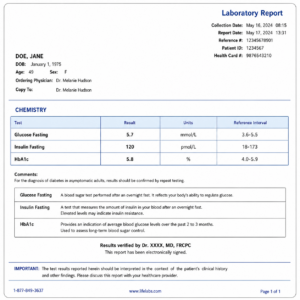
- Fasting Glucose
Fasting glucose provides a snapshot of how much glucose is circulating in your bloodstream after fasting. - Hemoglobin A1c (HbA1c)
HbA1c helps us understand your average blood sugar exposure over approximately the previous two to three months. - Fasting Insulin
Insulin helps move glucose from your bloodstream into your cells, where it can be used or stored.
Sometimes a person’s fasting glucose can remain relatively normal because the body is producing more insulin to keep it there. Looking at fasting glucose, fasting insulin, and HbA1c together can therefore provide additional information about glucose regulation.
Insulin itself isn’t “bad”—it’s essential to life. However, persistently higher insulin levels can favour energy storage and are often part of the metabolic picture we want to understand when someone is struggling with abdominal weight gain.
What Does Sugar Have to Do With Belly Fat?
 A resource we sometimes share with patients is an episode of The Doctor’s Farmacy podcast with Dr. Mark Hyman called “How to Lose Belly Fat.”
In the episode, Dr. Hyman discusses the relationship between rapidly absorbed carbohydrates, blood sugar, insulin, and abdominal fat.
One practical takeaway is to pay attention to two categories that can contribute large amounts of rapidly absorbed carbohydrate:
- Sugar-sweetened beverages and other liquid sugars
- Foods made predominantly from refined grain flours
Think pop, juice, sweetened coffee and tea drinks, pastries, cookies, crackers, white bread, and other highly refined foods.
This doesn’t mean carbohydrates need to disappear from your diet.
Instead, think about quality, quantity, and what you’re eating them with. Pairing carbohydrate-containing foods with protein, healthy fats, and fibre generally slows digestion and can help moderate the rise in blood glucose after eating.
For example, compare:
Toast with jam and a sweetened coffee
with:
Eggs, avocado, vegetables, and a slice of whole-grain toast.
Both contain carbohydrates, but they are very different meals in terms of protein, fibre, nutrients, fullness, and their likely impact on blood sugar.
If you’d like to hear more about this topic, search for The Doctor’s Farmacy – “How to Lose Belly Fat” on your preferred podcast platform.
Could Your Thyroid Be Contributing?
 Thyroid function is another area we consider, particularly when weight gain occurs alongside symptoms such as fatigue, constipation, feeling unusually cold, dry skin, or hair changes.
Thyroid hormones play an important role in regulating basal metabolic rate and how the body uses energy.
We commonly discuss TSH (thyroid-stimulating hormone) as an initial thyroid marker. Depending on symptoms, history, medications, and previous results, additional thyroid testing may also be appropriate.
Most abdominal weight gain isn’t caused by the thyroid alone, but impaired thyroid function can be an important contributing factor in some patients.
Hormones and the Changing Waistline
 Hormonal changes can also influence where the body tends to store fat.
This is particularly noticeable for some women during perimenopause and menopause, when body-fat distribution may shift toward the abdominal area.
At the same time, this stage of life can bring changes in sleep, muscle mass, insulin sensitivity, stress, activity levels, and appetite—so it isn’t always possible to attribute weight gain to one hormone.
Depending on the patient, we may ask about:
- Menstrual-cycle changes
- Hot flashes and night sweats
- Sleep
- Mood
- Energy
- Acne or hair changes
- Libido
- PMS symptoms
- Other symptoms that may provide clues about hormonal health
Rather than assuming belly fat automatically means a “hormone imbalance,” we look at the full clinical picture and determine whether further investigation is warranted.
Sleep and Stress Matter Too
Nutrition and exercise can only tell us part of the story.
Consistently short or disrupted sleep can affect appetite, cravings, insulin sensitivity, energy, and motivation to exercise. Most adults benefit from approximately 7–9 hours of quality sleep per night, although individual needs vary.
Stress can matter as well.
Patients often ask us, “Is cortisol causing my belly fat?”
The relationship isn’t that simple. Chronic stress can affect sleep, appetite, cravings, alcohol consumption, activity levels, and food choices, while stress hormones also interact with glucose metabolism.
Having belly fat does not automatically mean that you have “high cortisol.” Instead, stress is one more piece of the overall picture we consider.
Exercise for Belly Fat: Think Muscle and Metabolic Health
Unfortunately, hundreds of crunches won’t selectively burn abdominal fat.
Exercise is more useful when we think about its ability to support muscle mass, insulin sensitivity, cardiovascular fitness, and overall body composition.
Walk—Especially After Meals
One simple strategy is a 10–15 minute walk after meals when possible. Working muscles use glucose, making post-meal movement a practical way to support glucose regulation while also increasing daily activity.
Strength Train 2–3 Times Per Week
Building and maintaining muscle becomes increasingly important as we age.
A simple full-body strength program could include:
- Squats or sit-to-stands
- Lunges or step-ups
- Rows
- Push-ups or chest presses
- Hip hinges or deadlift variations
- Overhead presses
- Farmer carries
Resistance bands, body weight, dumbbells, or gym equipment can all work.
Include Cardiovascular Exercise
Brisk walking, cycling, swimming, jogging, rowing, and other cardiovascular activities can support heart health, fitness, insulin sensitivity, and energy expenditure.
Train Your Core—Just Don’t Expect Spot Reduction
Planks, side planks, bird dogs, dead bugs, Pallof presses, and carries can strengthen the abdominal and core muscles.
They’re great exercises—but they strengthen the muscles underneath abdominal fat rather than selectively burning the fat on top of them.
Nutrition: Keep the Foundation Simple
 Nutrition doesn’t have to become another complicated diet.
For many patients, we start with a few fundamentals:
Prioritize protein. Include a meaningful source at meals to support fullness and maintain lean muscle mass.
Eat more fibre-rich foods. Vegetables, berries, legumes, nuts, seeds, and minimally processed whole foods can support satiety, digestive health, and glucose regulation.
Reduce liquid sugar. Pop, juice, sweetened coffees, energy drinks, and other sugary beverages can provide a significant amount of rapidly absorbed carbohydrate without much satiety.
Limit highly refined foods. You don’t necessarily need to eliminate carbohydrates. Instead, look at how frequently your diet revolves around sweets, baked goods, refined flour products, and highly processed foods.
Build balanced meals. A practical framework is protein + vegetables/fibre + healthy fat + an appropriate portion of carbohydrate.
Most importantly, choose an approach you can maintain. A highly restrictive diet that lasts three weeks isn’t necessarily more useful than moderate changes you can sustain for years.
Track Your Progress—If You Like Data
For patients who enjoy seeing the numbers, tracking can be extremely useful.
At Hudson Integrative Healthcare, we can help monitor measurements such as body weight and body fat percentage in the office. We’re generally less interested in one isolated number and more interested in what happens over several weeks and months.
Smart Scales at Home
Patients who enjoy tracking may also choose to invest in a smart scale such as RENPHO or Hume Health.
Depending on the device, smart scales can estimate:
- Weight
- Body fat percentage
- Muscle mass
- Visceral fat
- Body water
- Other body-composition measurements
Home body-fat measurements are estimates and can be affected by hydration, meals, exercise, and time of day. They’re most useful for observing trends under reasonably consistent conditions, rather than treating each individual reading as exact.
And sometimes those trends tell us more than weight alone.
If you’ve started strength training, for example, maintaining your weight while gaining muscle and reducing body fat can be meaningful progress—even though the number on the scale hasn’t dropped dramatically.
Food Tracking
Apps such as MyFitnessPal can also be useful for patients who like data.
You don’t have to log everything you eat indefinitely. Tracking for even a week or two can provide insight into your typical:
- Protein
- Fibre
- Carbohydrates
- Added sugars
- Overall calorie intake
- Portion sizes
- Eating patterns
We can then look at this information alongside your measurements, symptoms, activity, sleep, and laboratory results to see where adjustments may be helpful.
For patients who find weighing or food tracking stressful or overly restrictive, we can absolutely take a different approach. Tracking should be a useful tool—not another source of stress.
Regular 15-Minute Check-Ins and B12 Injections
 For some patients working on metabolic health and weight goals, a common booking schedule at our clinic is a brief 15-minute naturopathic appointment every two weeks.
This gives us an opportunity to check measurements, review tracking data, discuss nutrition and exercise goals, and make small adjustments along the way.
Some patients choose to coordinate these appointments with their vitamin B12 injections, when B12 supplementation is appropriate for them.
Vitamin B12 is an essential nutrient involved in:
- Normal red blood cell formation
- Nervous-system function
- DNA synthesis
- Normal energy metabolism
Low or deficient B12 can contribute to fatigue, weakness, neurological symptoms, and difficulty concentrating. Certain people are at greater risk of inadequate B12, including those following vegetarian or vegan diets, people taking certain medications, and those with conditions that interfere with B12 absorption.
When appropriate, an injection provides B12 without relying on gastrointestinal absorption.
B12 injections themselves are not a weight-loss treatment and do not directly burn belly fat. However, identifying and addressing inadequate B12 can be one part of supporting overall health and energy while someone works on their broader goals.
Not everyone needs B12 injections, so your naturopathic doctor can help determine whether they’re appropriate for you.
So, How Do You Lose Belly Fat?
 Rather than looking for the perfect belly-fat-burning food or exercise, a better question may be:
What is influencing my metabolic health and body composition right now?
Depending on the person, that might mean looking more closely at:
- Glucose and insulin regulation
- Thyroid function
- Hormonal changes
- Nutrition
- Muscle mass and exercise
- Sleep
- Stress
- Medications
- Overall lifestyle habits
Frequently, it’s a combination rather than one single cause.
The advantage of gathering information—from bloodwork, symptoms, body-composition measurements, nutrition tracking, and lifestyle habits—is that we can establish a baseline, make targeted changes, and then see whether those changes are actually having an impact.
Concerned About Belly Fat or Unexplained Weight Gain?
If you’ve noticed a changing waistline, unexplained weight gain, difficulty losing weight, or other changes in your metabolic health, a naturopathic assessment can help you look beyond the scale.
At Hudson Integrative Healthcare, our naturopathic doctors can review your symptoms, health history, nutrition, exercise, sleep, medications, and hormonal factors.
When appropriate, we can also discuss laboratory testing such as fasting glucose, fasting insulin, HbA1c, TSH, and other individualized testing, as well as establishing baseline weight and body-composition measurements that we can follow over time.
From there, we can work with you on a realistic, individualized plan and monitor what’s actually changing.
Naturopathic doctor appointments are available in person at Hudson Integrative Healthcare in Stoney Creek and by telemedicine throughout Ontario.
Hudson Integrative Healthcare
7 King St. East
Stoney Creek, Ontario
Book Now