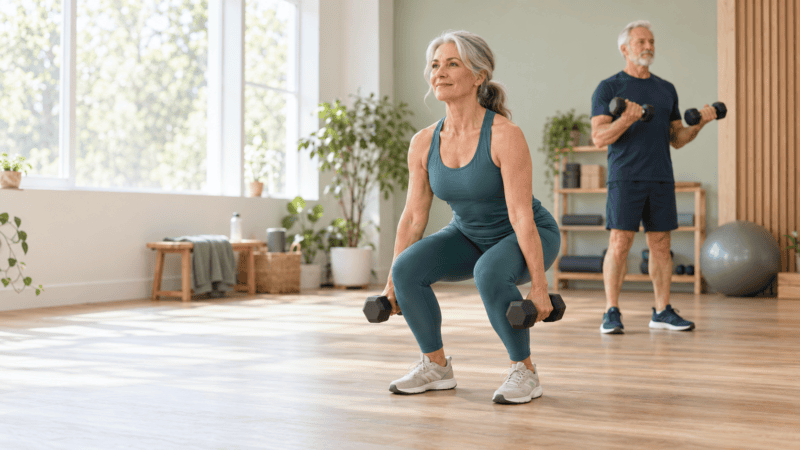
Building Stronger Bones: Weight Lifting, Impact Exercise, and Hormone Therapy
Written by Dr. Melanie Hudson, ND
Edited for Hudson Integrative Healthcare
When was the last time you thought about your bone health?
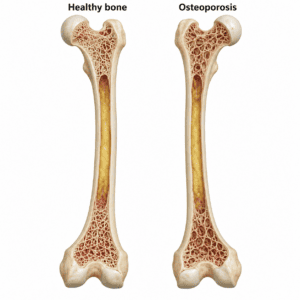
We hear plenty about cardiovascular fitness, cholesterol, and maintaining a healthy weight. Yet the bones supporting us through every walk, workout, and ordinary day often receive little attention until a scan reveals low bone density—or a fracture occurs.
Many health practitioners, including menopause public figure, Dr. Mary Claire Haver, have helped bring this conversation into the spotlight, particularly for women approaching menopause. She encourages earlier attention to bone health through strength training, appropriate impact exercise, nutrition, and assessment of individual risk factors. [1]
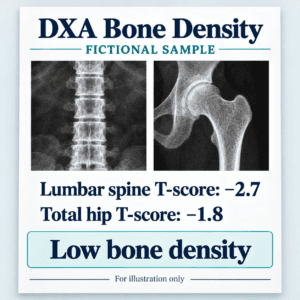
There is good reason to be proactive—and hopeful. Research shows that targeted exercise can help preserve bone and, in some circumstances, produce measurable improvements in bone mineral density. Systemic menopausal hormone therapy also has evidence for preventing bone loss and reducing fractures in appropriate candidates. [2–5]
A comprehensive bone-health plan considers strength, balance, nutrition, hormones, and medical treatment when needed.
Why menopause deserves special attention
As estrogen declines during the menopause transition, bone turnover increases, and bone removal can outpace replacement. These changes may happen without pain or other obvious symptoms.
Haver’s emphasis on prevention is valuable here: bone health deserves attention before a fracture, alongside the other changes women navigate in midlife. [1]
Men need attention to bone health, too. Canadian osteoporosis guidance includes both women and men, and research in older men demonstrates that bones can respond to targeted exercise later in life. [6,7]
Hormone replacement therapy: what does the research show for bones?
Hormone replacement therapy—also called menopausal hormone therapy, or MHT—deserves a meaningful place in this discussion.
Systemic estrogen-containing hormone therapy can prevent bone loss and reduce fractures. Its potential benefits extend beyond relief of hot flashes and night sweats, although suitability depends on symptoms, medical history, and treatment risks. [4]
Measurable improvements in bone density and fractures
The Women’s Health Initiative provides substantial randomized-trial evidence.
In its estrogen-plus-progestin trial, involving 16,608 postmenopausal women, researchers found:
- Total hip bone density increased by 3.7% after three years, compared with 0.14% in the placebo group.
- Over an average 5.6 years, fractures occurred in 8.6% of women receiving hormone therapy, compared with 11.1% receiving placebo.
- The fracture hazard was approximately 24% lower with treatment. The absolute difference was about 25 fewer women experiencing a fracture per 1,000 treated over the study period.
This trial used oral conjugated equine estrogen plus medroxyprogesterone acetate. Despite its bone benefits, the overall balance of health outcomes did not favour that regimen across the full study population. Bone protection must therefore be considered alongside other benefits and risks. [5]
A separate Women’s Health Initiative trial in women who had undergone hysterectomy found that estrogen alone reduced the relative hazard of:
- Hip fractures by approximately 35%.
- Clinical vertebral fractures by approximately 36%.
- Total fractures by approximately 29%.
These findings demonstrate fracture prevention, rather than simply a change in a scan measurement. [8]
How does this apply to treatment today?
Those results come from specific oral hormone regimens. They should not be presented as exact predictions for every estrogen patch, gel, dose, or progesterone combination.
The Menopause Society emphasizes that benefits and risks vary with formulation, dose, route, duration, and timing. For women younger than 60 or within 10 years of menopause onset, without contraindications, the benefit–risk balance is generally favourable for treating bothersome menopausal symptoms and preventing bone loss.
Starting later generally carries potential greater risks, including blood clots, stroke, and coronary heart disease, making individual assessment particularly important. [4]
Canadian osteoporosis guidance recognizes menopausal hormone therapy as an option for selected women who require treatment and prioritize relief of substantial menopausal symptoms. It is not the default treatment for everyone with osteoporosis. [6]
Does bone protection continue after stopping?
Bone protection should not be assumed to persist indefinitely after treatment ends.
In the observational Million Women Study, fracture protection diminished after hormone therapy was stopped, with rates returning toward those of never-users within approximately a year. This finding does not establish the precise course for every individual. [9]
Stopping therapy is an opportunity to reassess fracture risk and consider whether another bone-protective treatment is needed.
How does HRT fit with exercise?

For an appropriate candidate, hormone therapy can address menopausal symptoms while helping preserve bone. Resistance training, balance work, appropriate impact exercise, and nutrition remain important components of care.
The percentages from hormone trials and exercise trials should not be compared as if they were competing treatments in the same experiment. Participants, treatment durations, and outcomes differ.
The goal is to select the combination that fits the person—supporting bone strength, physical function, and long-term wellbeing.
Weight lifting: a foundation for stronger bones
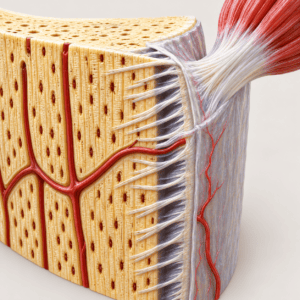
When we lift weights, our muscles contract and pull on tendons, transferring force to the bones where they attach. At some attachment sites, tendon fibres blend with the periosteum—the connective tissue covering the bone—and collagen fibres anchor this connection into the underlying compact bone. These forces create tiny, normal deformations within bone tissue. Bone cells called osteocytes sense this loading and send signals that help osteoblasts, our bone-building cells, lay down new bone. Over time, appropriately challenging resistance training can help maintain or improve bone strength.
Haver highlights this connection in her educational work, encouraging women to lift weights as part of protecting their long-term strength and bone health. [1]
Canadian osteoporosis guidance recommends progressive resistance training at least twice weekly, targeting the major muscle groups, including the abdominal and back extensor muscles. [6]
“Progressive” means increasing the challenge as capacity improves. Depending on the person, this may involve adjusting resistance, repetitions, sets, or movement difficulty.
What can resistance training look like?
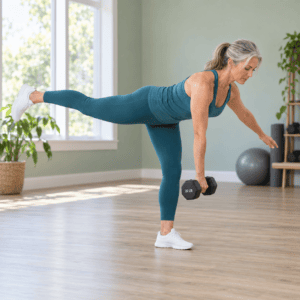
An individualized program might include:
- Squats or sit-to-stand exercises.
- Step-ups or lunges.
- Hip-hinge movements, such as an appropriately taught deadlift.
- Rows and other pulling exercises.
- Push-ups or presses.
- Exercises targeting the back extensors and trunk.
Dumbbells, resistance machines, bands, and body weight can provide resistance. Exercise selection should reflect experience, strength, balance, symptoms, and fracture risk. An exercise professional with osteoporosis training can help guide progression. [6,10]
A single-leg Romanian deadlift, for example, combines resistance with a substantial balance challenge. It is an exercise option, rather than a necessary starting point. A supported or two-legged variation may better fit someone’s current abilities.
Does everyone need to lift heavy?
The LIFTMOR trial provides encouraging evidence for supervised high-intensity resistance and impact training in selected postmenopausal women with low bone mass. It does not mean everyone should immediately attempt heavy lifting independently. [2]
Learning the movement, establishing control, and gradually increasing the challenge are practical steps toward a sustainable program. Previous fractures or high fracture risk warrant particular attention to exercise selection and supervision. [10]
Can exercise actually improve bone density? What does the science say?
Yes. Clinical studies have measured improvements—but the benefit depends on the program, the participants, and the skeletal site being measured.
The evidence also helps distinguish results from strength training combined with impact exercise from those demonstrated with jumping alone.
Strength plus impact training: measurable gains after menopause
The LIFTMOR randomized controlled trial studied 101 postmenopausal women with low bone mass. The intervention involved eight months of supervised high-intensity resistance and impact training, with two 30-minute sessions each week.
Researchers found:
- Lumbar-spine bone density increased by 2.9%, compared with a 1.2% decrease in the comparison group.
- Femoral-neck bone density increased by 0.3%, compared with a 1.9% decrease in the comparison group.
- Physical performance also improved.
These results support the combined program. They cannot tell us how much benefit came from resistance training or impact exercise alone. [2]
Jump training: a measurable benefit at the hip
A systematic review and meta-analysis found an average 1.50% advantage in femoral-neck bone density with jump training compared with non-jumping controls.
Benefits remained statistically significant in both age subgroups:
- Approximately 1.81% in younger adults.
- Approximately 1.03% in older adults.
These are average differences between groups across studies, rather than guaranteed individual improvements. They describe a particular part of the hip; the same result should not be assumed throughout the skeleton. [3]
Brief jumping sessions before menopause
A randomized trial in premenopausal women studied 10 or 20 jumps twice daily, with 30 seconds of rest between jumps, over 16 weeks.
Both jumping programs improved hip bone density compared with the control group.
The brief sessions are encouraging. However, this protocol was studied in premenopausal women and should not be treated as a universal prescription for people with osteoporosis. [11]
Older men can respond, too
A study in older men used a progressive, one-legged hopping program over 12 months. One leg was randomly assigned to exercise, while the other served as the comparison.
Among the 35 men who completed the program, femoral-neck bone density increased by 0.7% in the exercised leg, while decreasing by 0.9% in the comparison leg.
The participants were healthy, community-dwelling older men. The findings demonstrate the potential for bone adaptation later in life, while leaving room for individual assessment before introducing hopping. [7]
Think beyond the bone-density number

In her unPAUSED conversation with orthopaedic surgeon Dr. Jocelyn Wittstein, Haver explores how resistance training, impact exercise, balance, and physical function contribute to long-term independence. Their discussion emphasizes that preventing fractures involves more than improving a scan result. [12]
The long-term Erlangen Fitness and Osteoporosis Prevention Study—EFOPS illustrates this point.
At 16 years, women in a structured, multicomponent exercise program had approximately 49% lower relative risk of low-trauma fractures than the comparison group. Bone density declined in both groups, but the exercise group lost less.
This was a controlled, nonrandomized study involving multiple forms of exercise. It does not show that jumping or weight lifting alone halves fracture risk. It supports a sustained, comprehensive approach. [13]
Walking, heel drops, rebounding, and jumping: building a plan for stronger bones
There is good reason to include exercise in your bone-health plan. The goal is to combine activities that challenge your bones with those that improve strength, balance and everyday function. Walking, heel drops, rebounding and jumping can play different roles, depending on your starting point and fracture risk. Canadian guidance encourages appropriate additional activities alongside progressive resistance, balance and functional training. [6]
You do not need to begin with high jumps or a demanding routine. Start with movements you can perform confidently, then build the challenge gradually.
Understanding impact: what does “times your body weight” mean?
When your foot contacts the ground, the ground pushes back. Researchers measure this as ground-reaction force, often expressed as a multiple of body weight.
Standing still produces a total upward force of approximately 1× body weight, shared between your feet. During walking or landing, that force briefly increases as your body changes speed.
For a person weighing 150 lb, a measured force of 2× body weight represents approximately 300 pounds-force at that moment. This is not equivalent to lifting a 300-lb weight. Landing produces a brief force at the contact surface, while resistance training loads the skeleton through muscle contractions, tendon attachments and joint forces. Forces inside individual bones and joints can differ substantially from those measured at the ground. [20]
The comparisons below come from different studies and are approximate—not personal exercise targets. How quickly a force is applied, its direction, the number of repetitions and the recovery between them also influence the stimulus to bone.
Walking: a valuable foundation
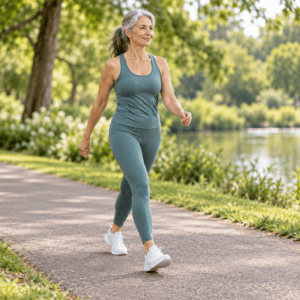
Typical peak force during ordinary level walking: approximately 1.1–1.3× body weight.
For someone weighing 150 lb, that represents approximately 165–195 pounds-force during the higher-load portion of a step. Walking speed and individual movement patterns affect these values. [20]
Walking is an accessible way to stay active and maintain a regular movement routine. If you already enjoy walking, keep it in your week.
For a more complete bone-health program, build on that habit by adding resistance and balance exercises. Walking provides regular weight-bearing activity; progressively challenging your muscles and introducing suitable impact can broaden the demands placed on your skeleton. [6]
Heel drops: an accessible introduction to impact
Heel drops: an accessible introduction to impact
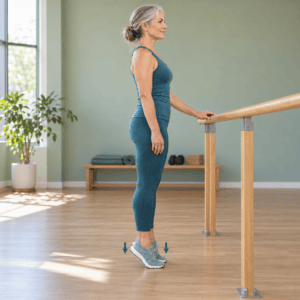
Heel drops involve rising onto the balls of the feet and bringing the heels back down to the floor. They are one way to introduce brief impact without jumping from a platform.
Measured peak force in the heel-drop trial: approximately 2.5–3× body weight.
For someone weighing 150 lb, that represents approximately 375–450 pounds-force, applied briefly. These measurements came from deliberate heel drops, rather than slowly controlled calf raises and lowers. The actual force depends on technique and how the movement is absorbed. [14]
In the 12-month trial of 44 postmenopausal women, researchers studied 50 daily heel drops plus a weekly exercise class. The program did not demonstrate a clear overall bone-density advantage over the comparison exercise program, although researchers reported some evidence of a maintenance effect among women further beyond menopause. That finding is encouraging, but it does not establish heel drops as a stand-alone bone-building treatment. [14]
Heel drops may be a practical starting point within a broader exercise plan. Their role is best considered alongside strength training, balance work and progression appropriate to your fitness and bone health. There is no need to stamp harder to chase a particular force measurement.
Mini-trampolines and rebounding: building strength and confidence
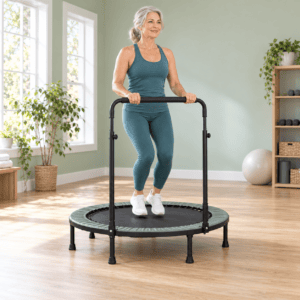
For people who enjoy rebounding, a mini-trampoline can provide an engaging setting for movement, balance and strengthening exercises.
Impact force: variable, with no established single body-weight multiplier for everyday fitness rebounding.
Gentle bouncing with the feet remaining on the mat is different from vigorous jumping. Loading also changes with the rebounder’s stiffness, bounce height and technique.
The flexible surface changes how force develops over time. In a study comparing drop jumps onto a mini-trampoline with a firm surface, the trampoline produced lower measured reaction forces and loading rates under the tested conditions. Those findings cannot be converted into one universal number for a home rebounding session. [21]
Rebounding still involves repeated muscular effort and loading. In a small randomized trial involving older women with osteopenia, a 12-week program combining balance, strength and jumping exercises on a mini-trampoline improved balance, mobility, strength, walking performance and confidence related to falling. These are meaningful outcomes for everyday function. [15]
The study did not establish a clear bone-density benefit compared with the control group. Its short duration and small sample leave questions about longer-term effects unanswered; this should not be interpreted as proof that rebounding cannot help bone density.
The strongest finding was improved physical function. If rebounding is enjoyable and appropriate for you, it can be part of your routine, complemented by progressive resistance training. The study tested a structured exercise program—not simply gentle bouncing. [15]
Jumping and low-step landings: a stronger loading stimulus
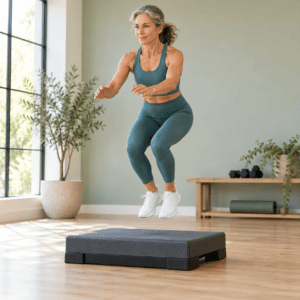
Jumping introduces brief, rapidly applied forces that differ from the loading experienced during ordinary walking. This helps explain the interest in appropriately prescribed impact exercise within bone-health programs.
Jumping onto a platform and jumping down from one are different movements. In Haver’s unPAUSED conversation, Wittstein discusses an eight-inch step-down jump with a rebound, referring to Tracey Clissold’s biomechanics research. [12]
Measured peak force in Clissold’s tested jump-and-rebound landings: approximately 4.6–5.5× body weight.
For someone weighing 150 lb, that represents approximately 690–825 pounds-force, applied briefly during landing. The study involved 21 premenopausal women and measured forces across specific jump-and-rebound conditions. [16]
These measurements demonstrate the substantial mechanical stimulus jumping can provide. They are not a fixed value for every eight-inch step landing or box jump. Jump height, landing technique, the immediate rebound and the surface all affect the result. The study measured forces rather than subsequent bone-density changes, so it helps explain the loading mechanism without predicting how much bone an individual will gain. [16]
You do not need to start with an eight-inch drop. Your starting point may involve building strength and landing control before progressing to small jumps or step landings. Height is only one part of the challenge; technique, balance and your health history also matter.
Start where you are, and progress with purpose
The encouraging message is that you have several ways to work toward stronger bones and better physical function. Walking provides regular weight-bearing movement. Heel drops introduce brief loading pulses. Rebounding can challenge strength and balance. Appropriately selected jumps provide a more substantial impact stimulus.
These activities complement progressive resistance training, which loads bones through muscular effort even when there is little impact at the feet.
Higher impact does not automatically mean a better exercise for you. Choose activities you enjoy, keep resistance and balance training central, and introduce impact at a level you can perform with control.
If you have osteoporosis, a previous fragility fracture—particularly a spinal fracture—or difficulty with balance, a physiotherapist or appropriately qualified exercise professional can help select and adapt the movements. Higher-impact exercise needs individual assessment in people at high fracture risk. [6]
Build an exercise routine you can progress
A practical bone-health plan should consider several complementary components:
- Resistance training: progressively challenge the major muscle groups.
- Balance and functional exercise: practise skills needed for everyday movement.
- Impact exercise, when appropriate: select activities that fit current abilities and fracture risk.
- Regular enjoyable activity: support consistency over time.
Higher-impact exercise is not appropriate for everyone. Canadian guidance notes uncertainty about its safety and effectiveness in people at high fracture risk, including those with previous spinal fractures. [6]
An exercise professional with osteoporosis training can help adapt movements and plan progression, particularly after a fracture or when risk is high. [10]
Give your bones nutritional support

Calcium and vitamin D deserve attention, with supplementation guided by dietary intake and individual needs.
For adults over 50, Canadian recommended calcium intakes are:
- Women: 1,200 mg daily.
- Men aged 51–70: 1,000 mg daily.
- Men over 70: 1,200 mg daily.
These are total daily amounts, including food. Additional calcium supplementation is generally unnecessary when dietary intake is sufficient. [17]
Recommended vitamin D intake is 600 IU daily through age 70 and 800 IU after 70. Health Canada recommends a daily 400 IU vitamin D supplement for adults over 50, alongside vitamin D–rich foods. People at increased risk of deficiency may require individualized supplementation. [18]
Know when assessment and treatment are needed
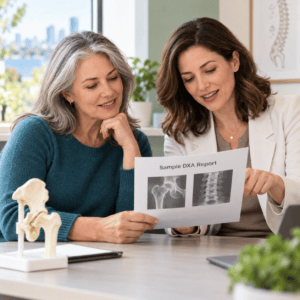
A previous low-trauma fracture, certain medications or medical conditions, and other risk factors can change when bone-density testing is appropriate.
Osteoporosis Canada recommends testing according to age and risk, including assessment of younger adults with conditions associated with bone loss. [19]
For some people, osteoporosis medication is an important part of fracture prevention. Decisions should consider the full clinical picture, including fracture history and estimated future risk. Exercise, nutrition, and menopausal care remain important alongside bone-specific treatment when it is indicated. [6]
Learning resources with Dr. Mary Claire Haver
Read: Osteoporosis: The Silent Threat to Women After 40
Haver’s overview encourages earlier attention to bone health and discusses strength training, impact exercise, nutrition, and individual risk assessment. [1]
Listen: Strong Bones, Strong Body, Stronger Second Half with Dr. Jocelyn Wittstein—Part 2
This unPAUSED episode explores the LIFTMOR and EFOPS research, practical exercise considerations, and the importance of preserving strength and function alongside bone density. [12]
Supporting bone health at Hudson Integrative Healthcare
Questions about bone density often bring together nutrition, menopause, medical history, movement, and confidence about exercise.
Our naturopathic doctors can help review these concerns, assess nutritional needs, and support an individualized plan in collaboration with your other healthcare providers. Where appropriate, this may include discussion of therapeutic supplements, menopausal hormone therapy, exercise guidance and coordination for bone-density testing and medical treatment through a patient’s primary physician.
To book an appointment, call 905-662-0045 or visit www.hihealthcare.ca to book online.
Hudson Integrative Healthcare
7 King Street East, Unit 1
Stoney Creek, Ontario L8G 1J7
Our friendly reception team is available Monday through Friday, 8:00 a.m. to 8:00 p.m., to help coordinate appointments.
This article is for educational purposes only and does not replace individualized medical advice, diagnosis, or treatment. Consult a qualified healthcare professional before starting or changing hormone therapy, or beginning heavy resistance or high-impact exercise—particularly if you have osteoporosis, a previous fracture, pain, or balance concerns.
References
- The ’Pause Life by Dr. Mary Claire Haver. Osteoporosis: The Silent Threat to Women After 40. 2025.
- Watson SL, et al. High-Intensity Resistance and Impact Training Improves Bone Mineral Density and Physical Function in Postmenopausal Women With Osteopenia and Osteoporosis: The LIFTMOR Randomized Controlled Trial. Journal of Bone and Mineral Research. 2018.
- Skeletal site-specific effects of jump training on bone mineral density in adults: a systematic review and meta-analysis. Journal of Sports Sciences. Published online 2024.
- The North American Menopause Society. The 2022 hormone therapy position statement. Menopause. 2022.
- Cauley JA, et al. Effects of estrogen plus progestin on risk of fracture and bone mineral density: the Women’s Health Initiative randomized trial. JAMA. 2003.
- Morin SN, et al. Clinical practice guideline for management of osteoporosis and fracture prevention in Canada: 2023 update. CMAJ. 2023.
- Allison SJ, et al. High impact exercise increased femoral neck bone mineral density in older men: a randomised unilateral intervention. Bone. 2013.
- Jackson RD, et al. Effects of conjugated equine estrogen on risk of fractures and BMD in postmenopausal women with hysterectomy: results from the Women’s Health Initiative randomized trial. Journal of Bone and Mineral Research. 2006.
- Banks E, et al. Fracture incidence in relation to the pattern of use of hormone therapy in postmenopausal women. JAMA. 2004.
- Ontario Osteoporosis Strategy. Exercise Guidelines.
- Tucker LA, et al. Effect of two jumping programs on hip bone mineral density in premenopausal women: a randomized controlled trial. American Journal of Health Promotion. 2015.
- Haver MC, with guest Wittstein J. Strong Bones, Strong Body, Stronger Second Half with Dr. Jocelyn Wittstein—Part 2. unPAUSED. January 22, 2026.
- Kemmler W, et al. Exercise and fractures in postmenopausal women: Final results of the controlled Erlangen Fitness and Osteoporosis Prevention Study. Osteoporosis International. 2015.
- Bassey EJ, Ramsdale SJ. Weight-bearing exercise and ground reaction forces: a 12-month randomized controlled trial of effects on bone mineral density in healthy postmenopausal women. Bone. 1995.
- Posch M, et al. Effectiveness of a Mini-Trampoline Training Program on Balance and Functional Mobility, Gait Performance, Strength, Fear of Falling and Bone Mineral Density in Older Women with Osteopenia. Clinical Interventions in Aging. 2019.
- Clissold TL, et al. Do Bilateral Vertical Jumps With Reactive Jump Landings Achieve Osteogenic Thresholds With and Without Instruction in Premenopausal Women?. Journal of Applied Biomechanics. 2018.
- Osteoporosis Canada. Executive Summary: Clinical Practice Guideline for Management of Osteoporosis and Fracture Prevention in Canada—2023 Update.
- Osteoporosis Canada. Calcium and Vitamin D Supplements.
- Osteoporosis Canada. Bone Mineral Density Testing.
- Stacoff A, et al. Ground reaction forces on stairs: effects of stair inclination and age. Gait & Posture. 2005. See also Cleather DJ, et al. Hip and knee joint loading during vertical jumping and push jerking. Clinical Biomechanics. 2013.
- Özdalyan F, et al. Comparison of the biomechanical parameters during drop jump on compliant and noncompliant surfaces: A new methodological approach. Turkish Journal of Sports Medicine. 2022