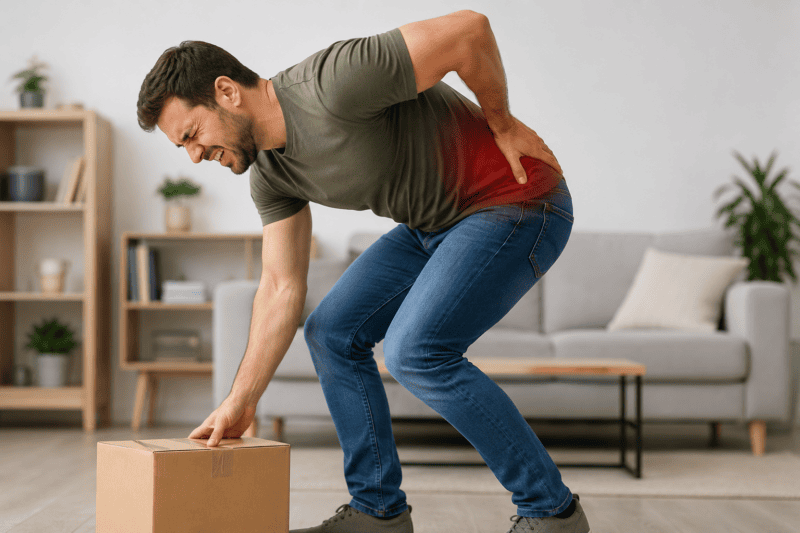
New Lower Back Pain: Is It Sciatica, a Herniated Disc, or Something Else?
Written by Dr. Melanie Hudson, ND
Edited for Hudson Integrative Healthcare
You bend down to pick something up and suddenly feel a sharp pain in your lower back.
Or maybe you wake up with a sore back that wasn’t there the day before. The pain might stay in your back, spread into your buttock, or shoot all the way down your leg.
Naturally, one of the first things many people do is search online:
- Did I pull a muscle?
- Is this sciatica?
- Did I herniate a disc?
- Do I need an X-ray or MRI?
- Should I see a chiropractor, osteopathic manual practitioner, or my doctor?
New lower back pain can be alarming, particularly when it comes on suddenly. However, there are many possible causes, and the location and type of pain can offer useful clues.
The most important first step is figuring out whether your symptoms look like a common musculoskeletal problem that can be assessed conservatively or whether something warrants more urgent medical attention.
First: Lower Back Pain Is a Symptom, Not a Diagnosis
“Lower back pain” simply describes where you hurt. It doesn’t necessarily tell you what structure is responsible.
Pain can arise from muscles, ligaments, joints, discs, nerves, and surrounding tissues. Sometimes several structures are contributing at the same time.
In fact, most episodes of acute lower back pain are considered nonspecific, meaning there isn’t one clearly identifiable damaged structure responsible for the pain.
Some common possibilities include:
- Muscle strain or spasm
- Ligament irritation
- Irritation of joints in the lower spine
- Sacroiliac or pelvic-region dysfunction
- Disc irritation
- A bulging or herniated disc
- Nerve-root irritation
- Sciatica
- Reduced hip or spinal mobility
- Repetitive strain or prolonged positioning
Less commonly, back pain can be related to conditions requiring medical investigation, which is why a good assessment matters.
What Does a Lower Back Muscle Strain Feel Like?

A muscle strain is one of the common possibilities after lifting, twisting, exercising, doing yard work, moving furniture, carrying children, or simply making an awkward movement.
You may experience:
- Aching or tightness across the lower back
- Muscle spasms
- Pain when changing positions
- Pain with bending, twisting, standing, or getting out of a chair
- Tenderness in the muscles
- A feeling that your back has suddenly “seized up”
The pain can be intense even when the underlying injury isn’t serious.
Importantly, how much something hurts doesn’t always tell us how much tissue damage has occurred.
What Is Sciatica?

Sciatica is slightly different.
Sciatica describes a pattern of nerve-related symptoms, rather than one specific injury.
It generally occurs when a nerve root contributing to the sciatic nerve becomes irritated or compressed.
Symptoms may include:
- Pain travelling from the lower back or buttock into the leg
- Burning pain
- Sharp or electric-like pain
- Pins and needles
- Tingling
- Numbness
- Symptoms extending into the calf, foot, or toes
- Occasionally, weakness in the leg or foot
Sciatica commonly affects one side of the body. Symptoms may also become more noticeable with certain movements, coughing, sneezing, bending, or prolonged sitting.
A useful distinction:
Back pain that stays primarily in your lower back isn’t automatically sciatica.
If pain clearly travels into the buttock and particularly down the leg, nerve involvement becomes more suspicious.
However, several different conditions can produce leg pain, so an assessment is still important.
Is Sciatica the Same as a Herniated Disc?
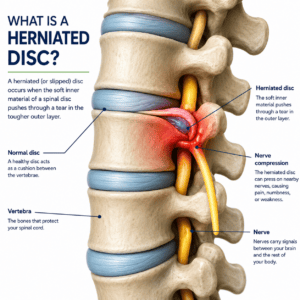
No — although the two are closely related.
This is an important distinction because patients often use the terms interchangeably.
Sciatica is a symptom pattern.
A herniated disc is a structural change that can sometimes cause that symptom pattern.
Between the bones of your spine are intervertebral discs that provide cushioning and help distribute load.
A disc has a softer centre surrounded by a stronger outer layer. With a disc herniation, some of the inner disc material pushes through or into the outer portion of the disc.
If that material irritates or compresses a nearby nerve root, you may develop:
Herniated disc → nerve irritation → sciatica
A lumbar disc herniation can cause lower back pain along with shooting leg pain, tingling, numbness, or weakness.
But here’s an important point:
You can have sciatica without necessarily having a herniated disc.
Other conditions can irritate or compress nerves as well.
And the reverse is also true:
You can have disc changes on imaging without them being the cause of your pain.
This is one reason an MRI isn’t automatically the first step for every new episode of back pain.
Signs That May Make Us Think More About a Disc or Nerve
Although symptoms alone cannot definitively diagnose a herniated disc, certain patterns may raise suspicion.
These can include:
Pain extending below the buttock
Pain travelling down the thigh, calf, foot, or toes is more suggestive of nerve irritation than pain confined to the lower back.
Numbness or tingling
Pins and needles along a particular portion of the leg or foot may correspond with a particular nerve root.
Burning or electric pain
People often describe nerve pain differently from muscular pain.
Instead of simply feeling “sore,” it may feel:
- Electric
- Burning
- Shooting
- Zapping
- Tingling
Certain movements aggravate the leg pain
Bending, sitting, coughing, or sneezing may aggravate symptoms for some people with a disc-related problem.
Muscle weakness
New weakness deserves more attention.
For example, you may notice difficulty:
- Walking on your heels
- Walking on your toes
- Lifting your foot
- Climbing stairs
- Pushing off with one leg
Progressive neurological weakness should be medically assessed promptly.

What If the Pain Is Mostly in My Buttock?
This is another common question.
Pain around the buttock doesn’t automatically mean sciatica.
The lower spine, sacroiliac region, hip muscles, gluteal muscles, and other surrounding tissues can all refer discomfort into this area.
This is where a physical examination becomes particularly helpful.
Instead of trying to diagnose yourself based solely on where you feel pain, a practitioner can look at:
- Where symptoms travel
- Which movements reproduce them
- Hip mobility
- Spinal mobility
- Muscle strength
- Reflexes when indicated
- Sensation
- Neurological signs
- Your recent activities or injuries
- How the symptoms began
The overall pattern is usually more informative than one symptom by itself.
Do I Need an X-Ray or MRI for New Back Pain?
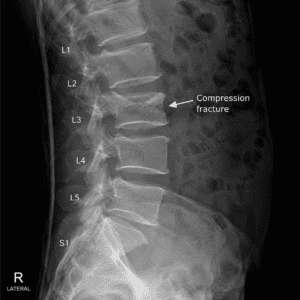
Not necessarily.
People understandably worry that something needs to be “seen” before treatment can begin.
However, clinical guidelines generally recommend against routine imaging for uncomplicated new lower back pain when there are no concerning neurological findings or other red flags.
Your practitioner may instead begin with your history and physical examination.
Imaging becomes more important when there are concerns such as:
- Significant trauma
- Progressive neurological deficits
- Suspicion of fracture
- Suspicion of infection or cancer
- Certain other medical red flags
- Symptoms that aren’t improving as expected
- Findings that may change the treatment approach
MRI is particularly useful when detailed evaluation of discs, nerves, and other soft tissues is required.
So while imaging can be extremely valuable, more imaging isn’t automatically better care.
When New Lower Back Pain IS an Emergency
Most new back pain isn’t an emergency.
However, there are certain symptoms you shouldn’t wait on.
Seek urgent medical assessment or emergency care if significant lower back pain is accompanied by symptoms such as:
- New loss of bladder or bowel control
- Difficulty beginning urination or urinary retention
- Numbness around the groin, genitals, inner thighs, or “saddle” area
- Rapidly progressing leg weakness
- Significant neurological changes
- Major trauma
- Fever or signs of serious infection together with significant back pain
- A history or clinical situation that raises concern for fracture, infection, or cancer
Severe lower back pain travelling into the leg together with new bladder, bowel, sexual-function changes, or numbness around the perineal area requires immediate assessment for cauda equina syndrome, a rare but serious neurological emergency.
When in doubt about a sudden neurological change, seek medical care.
Should I Stay in Bed Until My Back Feels Better?
Usually, no.
When moving hurts, lying still can feel like the safest option. However, prolonged bed rest generally isn’t recommended for uncomplicated lower back pain.
Current guidance encourages people to continue normal activities as tolerated and gradually maintain movement rather than becoming completely inactive.
That doesn’t mean pushing through severe pain or immediately returning to heavy lifting.
It may mean:
- Taking short walks
- Changing positions regularly
- Avoiding long stretches of sitting
- Temporarily modifying aggravating activities
- Using comfortable, gentle movement
- Gradually returning to normal activity as symptoms settle
Your practitioner can help determine what is appropriate for your particular presentation.
Should I See a Chiropractor for New Lower Back Pain?
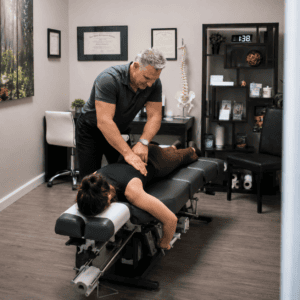
A chiropractor can be a helpful first point of assessment for many musculoskeletal causes of new lower back pain.
Your chiropractor can evaluate how your symptoms started, assess your spine and surrounding joints and muscles, and screen for signs of nerve involvement or findings that suggest you should be referred for medical assessment.
Depending on the findings and your individual needs, chiropractic care may include:
- Joint mobilization or manipulation
- Soft-tissue techniques
- Movement and mobility work
- Exercise recommendations
- Ergonomic or activity modifications
- Strategies for gradually returning to activity
Spinal manipulation is among the non-pharmacological approaches that may be considered for appropriately selected patients with lower back pain.
Treatment should always be adapted to the patient rather than applying the same technique to every sore back.
What About Osteopathic Manual Therapy for Back Pain?

An osteopathic manual practitioner may also be helpful when lower back pain appears musculoskeletal.
Osteopathic manual therapy takes a hands-on approach to assessing how different areas of the body are moving and interacting.
For someone with lower back pain, an osteopathic manual practitioner may consider areas such as:
- Lumbar spine
- Pelvis
- Sacroiliac region
- Hips
- Surrounding muscles and connective tissues
- Rib cage and thoracic mobility
- Overall movement patterns
Treatment may involve gentle manual techniques aimed at improving mobility and reducing musculoskeletal tension or restriction.
If symptoms suggest significant nerve involvement or another condition requiring medical assessment, further evaluation or referral may be recommended.
Chiropractor or Osteopathic Manual Practitioner: Which Should I Book?
For many musculoskeletal complaints, either can be a reasonable place to begin.
There is overlap between the types of problems patients bring to chiropractors and osteopathic manual practitioners, although their assessment and treatment approaches differ.
You may prefer chiropractic care if you’re looking for a practitioner with a particular emphasis on spinal, joint, neurological, and musculoskeletal assessment.
You may prefer osteopathic manual therapy if you’re drawn to a gentler whole-body manual approach that considers how different areas of movement and tension may be interacting.
And sometimes patients benefit from different approaches at different stages of recovery.
If you’re unsure who to book, our clinic team can help direct you based on your symptoms.
New Back Pain? Getting Assessed Early Can Help You Know What to Do Next
One of the hardest parts of suddenly hurting your back is simply not knowing what’s wrong.
- Should you move?
- Should you rest?
- Is it muscular?
- Is it your disc?
- Is that leg pain actually sciatica?
- Do you need imaging?
- Is it safe to wait?
A good assessment can help sort through those questions.
And even when we can’t point to one single structure and say, “That’s exactly what caused it,” we can often determine whether the symptoms fit a common musculoskeletal pattern, whether there are signs of nerve involvement, and what the safest next step should be.
That can be much more useful than spending three days Googling every possible explanation for your back pain.
Looking for Help With Lower Back Pain in Stoney Creek?
At Hudson Integrative Healthcare, our multidisciplinary team provides both chiropractic care and osteopathic manual therapy for patients experiencing lower back pain, stiffness, mobility concerns, and other musculoskeletal complaints.
Whether your pain began this morning or has been bothering you for months, we can help assess what’s happening and determine an appropriate next step.
Hudson Integrative Healthcare
7 King St. East, Unit 1
Stoney Creek, Ontario
Appointments can be booked online with our chiropractor or osteopathic manual practitioners. Direct billing to many extended health insurance providers may also be available depending on your individual plan.
Experiencing new weakness, bowel or bladder changes, numbness in the saddle area, significant trauma, or other concerning symptoms? Seek appropriate urgent medical care rather than booking a routine manual therapy appointment.
A Note About This Article – This article is intended for general health education and does not replace individualized assessment, diagnosis, or treatment from an appropriate healthcare professional. Lower back and leg pain can have many causes, and recommendations depend on your individual symptoms and medical history.
Book Online