 High Cholesterol: Understanding Your Lipid Panel and Cardiovascular Risk
“Your cholesterol is high.”
For many patients, that’s the main message they remember after receiving their bloodwork results. Their family doctor may have appropriately recommended lifestyle changes, monitoring, or cholesterol-lowering medication such as a statin.
However, primary-care appointments have limited time, and patients often leave with more questions:
- Which cholesterol number is actually concerning?
- How high is too high?
- What do my HDL and triglycerides mean?
- Does my family history change my risk?
- Do I need a statin?
- Are there additional tests that could tell us more?
- What can I do with nutrition, exercise, or supplements?
- How will I know whether those changes are working?
At Hudson Integrative Healthcare, our naturopathic doctors frequently help patients understand their cholesterol results, identify additional cardiovascular risk factors, implement nutrition and lifestyle strategies, and track their progress over time.
The goal isn’t to dismiss elevated cholesterol or discourage appropriate medication. Statins and other cholesterol-lowering medications can be extremely important, particularly for people at higher cardiovascular risk.
Instead, we want patients to understand what their results mean, why treatment may be recommended, and what else they can do to support their long-term cardiovascular health.
Your Total Cholesterol Doesn’t Tell the Whole Story
A standard lipid panel usually includes: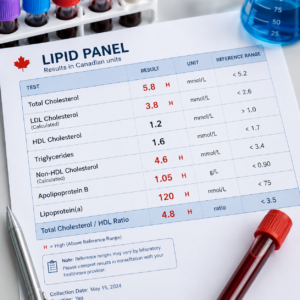
- Total cholesterol
- LDL cholesterol
- HDL cholesterol
- Triglycerides
Many patients focus on total cholesterol, particularly when it appears in red or is flagged as high on their laboratory report.
However, total cholesterol is only one part of the assessment.
- LDL Cholesterol
LDL cholesterol is important because LDL-containing particles play a causal role in the development of atherosclerosis, the process through which plaque accumulates within arteries.
Generally, greater lifetime exposure to elevated LDL increases cardiovascular risk. - HDL Cholesterol
HDL is commonly called “good cholesterol.” While that nickname oversimplifies its role, HDL provides additional information when we’re looking at someone’s overall lipid pattern. - Triglycerides
Triglycerides can also provide clues about metabolic health.
Elevated triglycerides may occur alongside insulin resistance, diabetes, metabolic syndrome, excess alcohol intake, or diets containing large amounts of refined carbohydrates and added sugars. - Total Cholesterol-to-HDL Ratio
We will also review the total cholesterol-to-HDL ratio.
Sometimes a mildly elevated total cholesterol looks somewhat different when considered alongside a favourable HDL level, triglycerides, and overall ratio.
However, there is an important distinction:
Good HDL, low triglycerides, or a favourable cholesterol ratio do not cancel out the risk associated with markedly elevated LDL cholesterol.
Instead of allowing one number to determine the conversation, we interpret the lipid panel alongside blood pressure, blood sugar regulation, smoking, kidney health, family history, age, existing cardiovascular disease, and other relevant risk factors.
A useful question to ask your family doctor is:
“Based on all of my risk factors—not just my total cholesterol—would you consider my cardiovascular risk low, intermediate, or high?”

What If High Cholesterol Runs in Your Family?
Not everyone develops high cholesterol because of their diet.
Some patients have familial hypercholesterolemia (FH) or another strong genetic tendency toward elevated LDL cholesterol.
They may exercise regularly, eat well, maintain a healthy body composition, and still have significantly elevated LDL.
Lifestyle remains important, but it may not be enough to bring genetically elevated cholesterol into an appropriate range.
For these patients, the question becomes less:
“What am I doing wrong?”
and more:
“Given my genetics, what can we do to reduce my lifetime cardiovascular risk?”
This is also where additional testing may provide useful information.
Looking Deeper: ApoB, Lp(a) and Lipid Fractionation
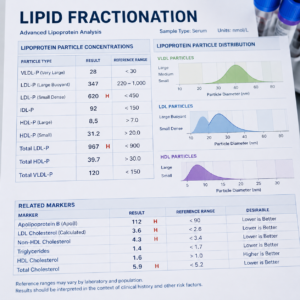 A standard lipid panel is sufficient for many people. However, in selected patients, we may discuss additional testing.
- ApoB
Apolipoprotein B (ApoB) is found on the major lipoprotein particles capable of contributing to atherosclerosis.
Rather than simply measuring how much cholesterol is being carried, ApoB provides information related to the number of circulating atherogenic particles.
This can be particularly helpful when the standard lipid panel and the rest of someone’s metabolic picture don’t seem to match. - Lipoprotein(a)
Lipoprotein(a), or Lp(a), is another important cardiovascular risk factor.
Lp(a) is largely genetically determined and generally changes relatively little in response to nutrition and lifestyle interventions.
An elevated result may therefore identify additional inherited cardiovascular risk and can influence how aggressively a patient’s other modifiable risk factors are addressed. - Lipid Fractionation
In selected higher-risk individuals, we may also discuss lipoprotein fractionation or particle testing for additional information about circulating lipoproteins.
This can be particularly interesting in patients with familial or persistently elevated cholesterol. Their standard lipid panel may continue to flag despite substantial improvements to nutrition, exercise, body composition, and metabolic health.
Advanced testing isn’t necessary for everyone, but it can sometimes add useful information to the broader cardiovascular assessment.
Can We Look for Evidence of Atherosclerosis?
Because one of the reasons we care about elevated LDL is its relationship with atherosclerosis, patients often ask whether we can actually look for evidence of plaque.
Sometimes we can.
The important question isn’t whether every available test should be ordered. Instead, it’s:
“Would additional cardiovascular testing meaningfully change my risk assessment or treatment?”
- Coronary Artery Calcium Scoring
A coronary artery calcium (CAC) score is a specialized CT scan that looks for calcified plaque within the coronary arteries.
In appropriately selected patients—particularly when cardiovascular risk or the decision about preventive medication remains uncertain—a CAC score can sometimes help further stratify risk.
It isn’t necessary for everyone and doesn’t identify every type of plaque. Your physician can determine whether it is appropriate for you. - Carotid Artery Ultrasound
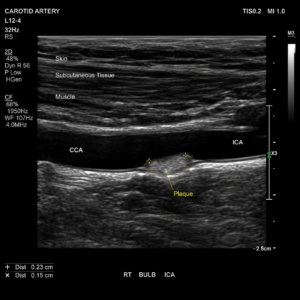
A carotid ultrasound examines the arteries in the neck and can identify plaque and narrowing.
It isn’t recommended as routine screening for every asymptomatic person with elevated cholesterol. However, vascular imaging may be appropriate in particular clinical circumstances.
Patients with concerns about atherosclerosis can discuss with their family doctor whether CAC scoring, vascular imaging, or another form of cardiovascular assessment would actually add useful information in their individual case.
What About a Cardiac Stress Test?
An exercise ECG stress test monitors the heart while exercise progressively increases its workload.
Certain findings may suggest that the heart muscle isn’t receiving adequate blood flow during exertion.
 However, a treadmill stress test doesn’t directly visualize the coronary arteries, and it isn’t routinely performed simply because cholesterol is elevated.
When symptoms, medical history, examination findings, or cardiovascular risk raise concern about coronary artery disease, a physician may determine that stress testing or another cardiac investigation is appropriate.
Concerning findings can sometimes lead to additional cardiac imaging or, in selected circumstances, coronary angiography.
Where Does Thermography Fit?
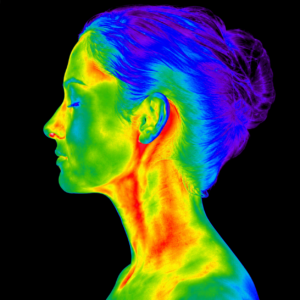 Some patients are also interested in thermography as an adjunctive wellness screening tool.
Thermography uses infrared imaging to identify patterns of heat at the body’s surface. Because skin temperature is partly influenced by superficial circulation, unusual temperature patterns or asymmetries may identify an area that deserves further clinical attention.
However, thermography does not visualize the inside of an artery, determine arterial narrowing, or diagnose atherosclerosis or coronary artery disease.
It therefore does not replace established cardiovascular investigations.
 If an unexpected or suspicious pattern is identified, it can instead provide another reason to discuss the finding with a physician and determine whether validated diagnostic testing is warranted.
At Hudson Integrative Healthcare, thermography is available periodically through a visiting thermography provider. Results can then be considered alongside the patient’s medical history, symptoms, laboratory findings, and other cardiovascular risk factors.
Why Are Statins Recommended?
Statins aren’t prescribed simply to make a laboratory number look better.
Lowering LDL cholesterol with statin therapy has been shown to reduce cardiovascular events, including heart attacks and strokes, particularly in people with established cardiovascular disease or sufficiently elevated risk.
For many patients, a statin is an important and appropriate part of preventive care.
Patients should also understand:
- Why medication is being recommended
- What benefit is expected
- What LDL or ApoB target is being pursued
- What lifestyle interventions should accompany medication
- When bloodwork should be repeated
- How medication effectiveness and tolerability will be monitored
Medication and lifestyle aren’t necessarily competing approaches. For many higher-risk patients, both are appropriate.
Is Your Current Statin Dose Still Appropriate?
Medication should also be individualized and periodically reassessed.
Occasionally, we meet patients who started cholesterol-lowering medication years ago—or whose dose was increased—and haven’t had much opportunity to revisit whether the current medication, dose, and treatment target still make sense for their present cardiovascular risk.
A very low LDL isn’t automatically dangerous. For someone at high cardiovascular risk, a very low LDL may be an intentional and appropriate treatment target.
At the same time, cholesterol-lowering medications can produce side effects in some individuals. Depending on the medication and patient, these can include muscle symptoms, changes in liver enzymes, and a small increase in blood sugar or diabetes risk.
Rather than assuming that a prescription should never change, patients can periodically ask their prescribing physician:
“Is this still the appropriate medication and dose for my current cardiovascular risk?”
and:
“What LDL or ApoB target are we aiming for in my case?”
The goal is to use the appropriate treatment intensity for the individual, balancing proven cardiovascular benefit with tolerability and ongoing monitoring.
Patients should never stop or reduce a prescribed statin without discussing it with the clinician managing their medication.
 Our naturopathic doctors do not advise patients to start, stop, or adjust pharmaceutical medications outside their scope of practice. Instead, we can help you better understand your results, navigate the information available to you, and prepare informed questions to discuss with your prescribing physician.
Nutrition for Cholesterol and Cardiovascular Health
Nutrition remains important whether or not medication is prescribed.
Rather than recommending a short-term “cholesterol diet,” we focus on sustainable eating patterns that may include more:
- Vegetables and fruit

- Legumes
- Nuts and seeds
- Soluble fibre
- Whole grains when appropriate
- Fish
- Olive oil and other unsaturated fats
- Adequate protein
Depending on the patient’s diet and lipid pattern, we may also discuss reducing highly processed foods, added sugars, excess refined carbohydrates, trans fats, excessive alcohol, and excess saturated fat.
If elevated triglycerides, abdominal weight gain, elevated glucose, or other metabolic concerns are present, we may also investigate blood sugar and insulin regulation.
Don’t Forget About Muscle and Exercise
 Exercise supports much more than the cholesterol numbers on your bloodwork.
Regular physical activity can improve cardiovascular fitness, blood pressure, insulin sensitivity, triglycerides, body composition, muscle mass, and metabolic health.
For many patients, we encourage both aerobic activity and resistance training, along with simply moving more throughout the day.
Maintaining muscle becomes particularly important as we age. Skeletal muscle plays a major role in glucose disposal and metabolic health, while strength and cardiorespiratory fitness are important components of healthy aging.
Brisk walking, cycling, swimming, resistance training, and other forms of exercise can all contribute.
The best exercise plan is one that is appropriate for your current health and fitness level—and realistic enough to continue.
What About Supplements for Cholesterol?
 Depending on someone’s laboratory results, cardiovascular risk, diet, health history, and medications, we may discuss options such as:
- Soluble fibre
- Plant sterols
- Omega-3 fatty acids, particularly when elevated triglycerides are present
- Garlic extract, which may provide modest support for cholesterol and cardiovascular health in some individuals
- Red yeast rice extract, which can significantly lower LDL in some patients but requires careful consideration
- Other individualized nutritional interventions
A Note About Red Yeast Rice
Some red yeast rice preparations contain monacolin K, which is chemically identical to the prescription statin lovastatin.
As a result, red yeast rice can have some of the same potential side effects and medication interactions as statin therapy. Product quality and active ingredient content can also vary.
We therefore don’t consider red yeast rice a harmless “natural statin.” If it is used, appropriate product selection, clinical supervision, and monitoring are important.
Garlic extract has also been studied for cardiovascular health and may modestly affect cholesterol or blood pressure in some individuals. However, it can interact with certain medications and isn’t a replacement for indicated cardiovascular treatment.
Supplements should complement appropriate medical care, not replace it.
Track the Numbers and See What Changes
 One of the advantages of ongoing care is that we can establish a baseline, make changes, and then look objectively at what happened.
Depending on the patient, we may track:
- Total cholesterol
- LDL cholesterol
- HDL cholesterol
- Triglycerides
- ApoB or other advanced lipid markers
- Blood pressure
- Glucose and metabolic markers
- Body weight and body composition
- Nutrition
- Exercise
Then we repeat appropriate laboratory testing.
For some patients, lifestyle interventions produce substantial improvements.
For others—particularly those with a strong genetic component—repeat testing demonstrates that cholesterol remains significantly elevated despite excellent lifestyle habits.
That is useful information too.
It allows patients to have a more informed conversation with their family doctor about medication and cardiovascular risk rather than feeling that they simply haven’t “tried hard enough.”
Want to Learn More? Podcasts and Books We Recommend
For patients who enjoy learning about the science behind their health, we often recommend educational podcasts and books featuring physicians and experts discussing cardiovascular and metabolic health in greater depth.
Two resources we frequently recommend are Dr. Mark Hyman’s The Doctor’s Farmacy and The Dr. Gabrielle Lyon Show.
Dr. Mark Hyman – The Doctor’s Farmacy
Dr. Hyman has produced a number of episodes exploring cholesterol and cardiovascular health in the context of insulin resistance, blood sugar, inflammation, nutrition, exercise, ApoB, Lp(a), and advanced lipid testing.
His discussions can be particularly useful for understanding why we sometimes look beyond a single total cholesterol or LDL result when assessing metabolic and cardiovascular health.
Dr. Gabrielle Lyon – Forever Strong
Dr. Gabrielle Lyon, MD, is the author of Forever Strong: A New, Science-Based Strategy for Aging Well and host of The Dr. Gabrielle Lyon Show.
A major theme of her work is what she calls muscle-centric medicine: instead of focusing exclusively on losing body fat or lowering numbers on bloodwork, she emphasizes building and maintaining skeletal muscle as an important part of metabolic health and healthy aging.
Some practical themes from her work that complement cardiovascular care include:
- Maintaining muscle through regular resistance training
- Consuming adequate high-quality protein
- Paying attention to blood sugar, body composition, blood pressure, fitness, and metabolic health
- Considering cardiovascular risk in context rather than focusing on one isolated marker
- Using additional markers such as ApoB and Lp(a) when clinically appropriate
- Building nutrition and exercise habits that can be sustained for decades
Dr. Lyon also hosts conversations with experts specifically addressing cholesterol, cardiovascular risk, dietary fats, protein, metabolic health, and healthy aging.
These resources aren’t substitutes for individualized medical advice. However, for patients who like to understand the why behind their treatment plan, they can be excellent starting points for further education.
Questions to Take to Your Family Doctor
If you’ve recently been told that your cholesterol is elevated, you don’t need to arrive at your next appointment with a page of requests.
Instead, choose a few questions that apply to you:
- Which part of my lipid panel concerns you most?
- What is my overall cardiovascular risk?
- Could genetics or familial hypercholesterolemia be contributing?
- Would ApoB or Lp(a) add useful information?
- Would CAC scoring or another assessment for atherosclerosis change my management?
- Why are you recommending a statin for me specifically?
- What LDL or ApoB target are we aiming for?
- Is my current medication and dose still appropriate?
- When should we repeat my bloodwork?
The goal isn’t to challenge your physician. It’s to better understand your risk and participate in decisions about your health.
High Cholesterol Deserves a Conversation, Not Just a Number
A flagged cholesterol result deserves attention, but it doesn’t tell the entire story.
We want to understand which markers are elevated, how elevated they are, what other cardiovascular risk factors are present, whether genetics are contributing, and whether additional testing would actually change management.
Then we work on the factors that can be modified.
At Hudson Integrative Healthcare, our naturopathic doctors can help you understand your lipid panel, review your nutrition and exercise habits, discuss additional laboratory testing when appropriate, and develop individualized strategies to support cardiovascular and metabolic health.
We can also track your laboratory results over time so you can see the impact of your interventions and arrive at appointments with your family doctor or cardiologist with better information and more specific questions.
Our role is intended to complement your conventional cardiovascular care, not replace it.
Naturopathic doctor appointments are available in person at Hudson Integrative Healthcare’s Stoney Creek clinic and by telemedicine throughout Ontario.
Hudson Integrative Healthcare
7 King St. East
Stoney Creek, Ontario
Book Online