
PMS vs. PMDD: Symptoms, Hormone Testing & Treatment Options
Written by Dr. Madeleine Elton, ND
Adapted and edited for Hudson Integrative Healthcare.
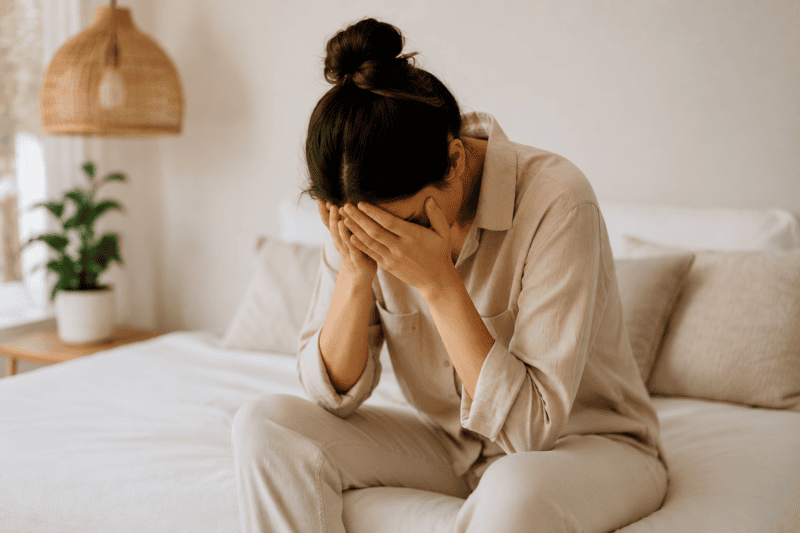
Do you notice that you feel like a different version of yourself in the days or weeks before your period — more irritable, anxious, emotional, exhausted, bloated or simply not quite yourself — only to feel better once your period arrives?
Premenstrual symptoms are common, but for some women they can have a significant impact on mood, relationships, work and everyday life.
Two terms you may have come across are PMS (premenstrual syndrome) and PMDD (premenstrual dysphoric disorder). While they share some similarities, there are important differences between them — including how they are diagnosed and treated.
What is PMS?
PMS refers to a group of physical and emotional symptoms that occur during the luteal phase of the menstrual cycle, typically in the days or weeks leading up to menstruation.
Symptoms can include:
- Irritability or mood changes
- Anxiety or feeling more emotional
- Breast tenderness
- Bloating
- Headaches
- Fatigue
- Changes in appetite or food cravings
- Difficulty sleeping
- Changes in concentration
- Acne
- Feeling more sensitive to stress
Symptoms generally improve within the first few days after menstruation begins.
PMS is common, although estimates vary depending on how PMS is defined and the severity of symptoms included.
What is PMDD?
Premenstrual dysphoric disorder (PMDD) is a more severe condition in which cyclical symptoms — particularly mood symptoms — significantly interfere with daily functioning, work, school or relationships.
Someone with PMDD may experience symptoms such as:
- Significant irritability or anger
- Depression or feelings of hopelessness
- Anxiety or tension
- Significant mood swings
- Feeling overwhelmed or out of control
- Difficulty concentrating
- Low energy
- Changes in sleep or appetite
- Physical premenstrual symptoms
PMDD is less common than PMS and is characterized by symptoms severe enough to significantly interfere with daily life.
One of the most important clues with both PMS and PMDD is timing: symptoms predictably appear during the premenstrual portion of the cycle and improve shortly after menstruation begins.
Do I Need Hormone Testing for PMS or PMDD?
This is one of the most common questions patients ask me:
“Should we test my hormones to see why I feel this way?”
Interestingly, hormone testing is generally not required to diagnose PMS or PMDD.
These conditions aren’t necessarily caused by having “too much” or “too little” estrogen or progesterone. In fact, hormone levels may fall within expected ranges.
Instead, diagnosis relies heavily on your symptoms and when they occur in relation to your menstrual cycle.
For suspected PMDD in particular, prospective symptom tracking is important. This means recording symptoms daily for at least two menstrual cycles rather than trying to remember how you felt several weeks or months ago.
A typical PMDD pattern involves multiple symptoms appearing during the week before menstruation, improving within several days after menstruation begins, and becoming minimal or absent during the week following your period. PMDD also has specific diagnostic criteria regarding the number, type and severity of symptoms.
Bloodwork or other testing may still be appropriate for some patients — but often the purpose is to investigate other conditions that could be contributing to or mimicking premenstrual symptoms, rather than to diagnose PMS or PMDD itself.
If My Hormones Aren’t “Imbalanced,” Why Do I Feel So Different Before My Period?
This is where things get interesting.
PMS and PMDD don’t necessarily mean that your hormones are abnormal. Research suggests that some people may instead be more sensitive to the normal hormonal fluctuations that occur throughout the menstrual cycle, particularly following ovulation.
In PMDD, research has increasingly focused on how the brain and nervous system respond to normal changes in ovarian hormones and their metabolites.
In other words, two women can experience normal cyclical hormonal changes but have very different physical and emotional responses to them.
This is one reason why simply checking estrogen or progesterone on a single day may not provide the answer someone with significant premenstrual symptoms is looking for.
What Role Can Stress and Trauma Play?
The relationship between hormones, the brain and our stress-response systems is complex.
Research has found associations between chronic stress, adverse childhood experiences and an increased likelihood of PMS and PMDD. Some studies suggest that early-life stress may influence systems involved in stress regulation, mood, inflammation and hormonal sensitivity later in life.
However, this does not mean that everyone with PMS or PMDD has experienced trauma, or that trauma is the sole cause of these conditions.
Rather, it is one of several factors that may influence how an individual responds to hormonal fluctuations.
Hormonal transitions — including puberty, pregnancy, postpartum and perimenopause — can also be times when changes in mood or premenstrual symptoms become particularly noticeable.
Understanding the bigger picture can therefore be important when deciding how best to support someone experiencing significant cyclical symptoms.
What Can You Do About PMS or PMDD?
The good news is that having significant premenstrual symptoms doesn’t mean you simply have to put up with them every month.
Treatment depends on the individual, the symptoms involved and their severity. Options may include:
- Nutrition and lifestyle strategies
- Targeted nutritional supplementation when appropriate
- Exercise and sleep support
- Stress-management and nervous-system support
- Psychological therapies and counselling
- Medications when appropriate
- Assessment and treatment of other health conditions that may be contributing to symptoms
For some patients, further laboratory investigation may also be appropriate depending on their health history and symptoms.
The goal is not simply to assume that every premenstrual symptom is caused by a “hormone imbalance,” but to look at your symptom pattern, menstrual cycle, overall health and individual risk factors to determine what may be contributing.
Could Your Symptoms Be PMS or PMDD?
If you consistently notice significant changes in your mood, energy, sleep, cravings, headaches, bloating or other symptoms before your period, start by paying attention to when those symptoms occur.
Tracking your symptoms throughout at least two menstrual cycles can provide valuable information and help identify whether there is a consistent cyclical pattern.
If premenstrual symptoms are interfering with your quality of life, relationships or ability to function normally, it’s worth discussing them with a healthcare provider.
A naturopathic doctor can help review your menstrual cycle and symptom pattern, determine whether additional investigation may be appropriate, and discuss individualized treatment options for PMS or PMDD.
You don’t necessarily need abnormal hormone levels for your cycle to be having a very real impact on how you feel.
Looking for Support With PMS or PMDD?
If premenstrual symptoms are affecting your mood, energy, sleep, relationships or quality of life, a naturopathic doctor can help you take a closer look at your symptoms, menstrual cycle and overall health.
At Hudson Integrative Healthcare, our naturopathic doctors work with women experiencing PMS, PMDD and other menstrual and hormonal health concerns. Your naturopathic doctor can review your symptom pattern, discuss whether additional laboratory testing may be appropriate, and develop an individualized treatment plan based on your health history and goals.
Naturopathic doctor appointments are available in person at our Stoney Creek clinic and by telemedicine throughout Ontario.
Hudson Integrative Healthcare
7 King St. East
Stoney Creek, Ontario
Book an appointment with one of our naturopathic doctors to discuss your menstrual and hormonal health.