
Beyond Good and Bad Cholesterol: Understanding Advanced Cholesterol Testing and Cardiovascular Health
Written by Dr. Melanie Hudson, ND
Edited for Hudson Integrative Healthcare
When was the last time you had your cholesterol checked?
Most people are familiar with the terms good cholesterol and bad cholesterol. Perhaps you’ve had bloodwork completed during an annual physical and were told that your cholesterol was normal, slightly elevated, or something to keep an eye on.
But traditional cholesterol testing is only one part of understanding cardiovascular health.
Additional blood markers can help healthcare practitioners better understand how cholesterol is transported through the bloodstream, how many cholesterol-carrying particles are circulating, and whether inherited or metabolic factors may be contributing to cardiovascular risk.
At Hudson Integrative Healthcare, our naturopathic doctors can help patients explore traditional and advanced cardiovascular blood testing options when clinically appropriate.
Starting With the Basics: What Does a Standard Cholesterol Panel Measure?
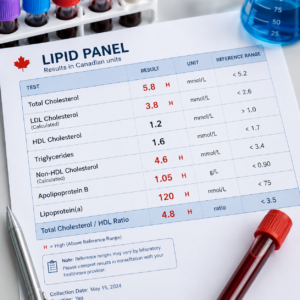
A traditional lipid panel is one of the most common blood tests used to assess cardiovascular health. It typically includes four main measurements.
Total Cholesterol: The total amount of cholesterol circulating in your bloodstream. Cholesterol is essential for cellular function and hormone production, but elevated levels of certain cholesterol-carrying particles can increase cardiovascular risk.
LDL Cholesterol (Low-Density Lipoprotein Cholesterol): Often called bad cholesterol, LDL-C measures the amount of cholesterol carried by LDL particles. Elevated LDL cholesterol is an established causal contributor to atherosclerosis, the process in which plaque develops within artery walls.
HDL Cholesterol (High-Density Lipoprotein Cholesterol): Often called good cholesterol, HDL-C measures cholesterol carried by HDL particles. Although lower HDL cholesterol is associated with cardiovascular risk, simply raising HDL cholesterol has not consistently been shown to prevent cardiovascular events.
Triglycerides: A type of fat circulating in the bloodstream that serves as an energy source. Elevated triglycerides may be associated with insulin resistance, diabetes, metabolic syndrome, alcohol consumption, certain medications, and other metabolic factors.
Non-HDL cholesterol: Non-HDL cholesterol is calculated by subtracting HDL cholesterol from total cholesterol. It represents cholesterol carried by particles associated with plaque development and provides additional cardiovascular risk information without requiring a specialized blood test.
What About the Total Cholesterol-to-HDL Ratio (TC:HDL Ratio)
Another useful measurement calculated from a standard cholesterol panel is the total cholesterol-to-HDL ratio, which compares your total cholesterol level to your HDL (good cholesterol) level.
A lower ratio is generally associated with a more favourable cardiovascular risk profile. In our clinical assessments, we like to see this ratio in the low 3s or below, although individual targets depend on a person’s overall health and cardiovascular risk factors.
As the ratio increases, cardiovascular risk generally increases as well. For example, a ratio of 3.0 is typically more favourable than a ratio of 5.0 or 6.0.
However, the ratio doesn’t tell the whole story. Someone can have a favourable TC ratio while still having elevated LDL cholesterol, ApoB, or lipoprotein(a), which may independently increase cardiovascular risk.
The TC ratio is a useful additional piece of information, but it should be interpreted alongside individual cholesterol measurements and other cardiovascular risk factors rather than used as a standalone assessment.
Moving On To More Advanced Markers:
Apolipoprotein B (ApoB): How Many Atherogenic Particles Are Circulating?

One of the most useful additional cardiovascular markers is Apolipoprotein B, commonly called ApoB.
To understand ApoB, imagine cholesterol travelling through the bloodstream in small transportation vehicles.
A standard LDL cholesterol measurement tells us how much cholesterol is being carried inside certain vehicles.
ApoB helps estimate how many potentially plaque-forming vehicles are circulating.
Each major atherogenic lipoprotein particle, including LDL, intermediate-density lipoproteins, very-low-density lipoproteins, and lipoprotein(a), contains one ApoB molecule.
This means ApoB provides an estimate of the total number of potentially plaque-forming particles.
Why Might This Matter?
Two individuals can have similar LDL cholesterol concentrations but different ApoB levels.
One person may have fewer particles carrying more cholesterol, while another may have a greater number of smaller, cholesterol-depleted particles.
Despite having similar LDL cholesterol results, the second person may have a higher number of particles capable of entering and becoming retained within arterial walls.
This distinction can be particularly useful in individuals with insulin resistance, elevated triglycerides, metabolic syndrome, or type 2 diabetes.
ApoB is increasingly recognized as a valuable marker for refining cardiovascular risk assessment, especially when traditional cholesterol measurements may not fully reflect atherogenic particle burden.
Apolipoprotein A1 (ApoA1): Understanding HDL-Related Particles
Apolipoprotein A1 (ApoA1) is the primary structural protein found in HDL particles and plays a role in cholesterol transport.
Some expanded cardiovascular panels measure ApoA1 alongside ApoB to calculate the ApoB/ApoA1 ratio, which compares proteins associated with potentially plaque-forming particles against those associated with HDL.
Although this ratio may provide additional cardiovascular risk information, ApoB, LDL cholesterol, and non-HDL cholesterol remain more established markers for routine clinical decision-making.
Lipoprotein(a): The Cholesterol-Related Risk Factor You May Inherit
One cardiovascular marker receiving increasing attention is Lipoprotein(a), abbreviated Lp(a).
Lp(a) is an LDL-like particle with an additional protein attached, called apolipoprotein(a).
Unlike many other cholesterol measurements, Lp(a) concentrations are largely determined by genetics.
This means someone can maintain a nutritious diet, exercise regularly, and have favourable traditional cholesterol results while still having an elevated Lp(a) level.
Elevated Lp(a) is associated with an increased risk of atherosclerotic cardiovascular disease and aortic valve stenosis.
Who Should Consider Having Lp(a) Measured?
Canadian cardiovascular guidelines recommend measuring Lp(a) at least once during adulthood as part of cardiovascular risk assessment.
This can be particularly informative for individuals with:
- A family history of premature heart disease or stroke.
- A personal history of cardiovascular disease.
- Cardiovascular events that appear unexpected based on traditional risk factors.
- A desire to better understand inherited cardiovascular risk.
Because Lp(a) is primarily genetically determined and generally remains relatively stable throughout life, frequent repeat testing is not usually necessary.
Identifying elevated Lp(a) does not mean cardiovascular disease is inevitable. Rather, it helps healthcare practitioners and patients determine how carefully other modifiable risk factors, including LDL cholesterol, blood pressure, smoking, and metabolic health, should be managed.
Advanced Lipoprotein Fractionation: Looking at Cholesterol Particle Number and Size
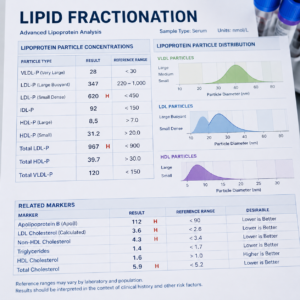 Another option available through LifeLabs is advanced lipoprotein fractionation using nuclear magnetic resonance (NMR) technology.
This testing examines characteristics of the lipoprotein particles circulating in the bloodstream rather than measuring cholesterol concentrations alone.
Depending on the panel, measurements may include:
LDL Particle Number (LDL-P)
Estimates the number of LDL particles circulating in the bloodstream rather than how much cholesterol they contain.
Like ApoB, LDL-P provides information about particle burden, although the two measurements are not identical.
Small LDL Particle Number and LDL Size
These measurements assess the concentration and size characteristics of smaller LDL particles.
Smaller LDL particles are frequently associated with insulin resistance, elevated triglycerides, and metabolic syndrome.
Although these findings may provide additional metabolic context, LDL particle size alone is not an established treatment target.
HDL Particle Number and Size
Provides information about the number and size distribution of HDL particles rather than measuring HDL cholesterol concentration alone.
VLDL Particle Number and Size
Very-low-density lipoproteins transport triglycerides through the bloodstream. Changes in their particle characteristics may accompany insulin resistance and altered triglyceride metabolism.
Does Everyone Need Advanced Particle Testing?
Not necessarily.
For many individuals, a standard lipid panel, an assessment of cardiovascular risk factors, and selected additional markers such as ApoB and Lp(a) provide sufficient information for clinical decision-making.
NMR testing may offer additional insight in selected situations, particularly when traditional cholesterol measurements and other cardiovascular risk indicators appear inconsistent.
The important question is whether the results will meaningfully influence a patient’s management plan.
Beyond Cholesterol: The Role of Inflammation and Blood Vessel Health
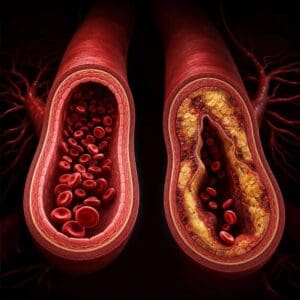
Cholesterol is an important contributor to cardiovascular disease, but it is not the only factor influencing plaque development. The health of the endothelium, the delicate inner lining of our blood vessels, also plays an important role.
A healthy endothelium helps regulate blood vessel dilation, blood flow, inflammation, and clotting.
Factors such as high blood pressure, smoking, elevated blood sugar, insulin resistance, and chronic inflammatory conditions can contribute to endothelial dysfunction.
When ApoB-containing lipoproteins, particularly LDL particles, enter and become trapped within arterial walls, they can undergo changes that trigger an inflammatory response. Immune cells are recruited to the area, where they take up modified cholesterol-containing particles and can become foam cells. Over time, this process contributes to the development of atherosclerotic plaque.
Importantly, cholesterol retention and endothelial dysfunction can reinforce one another. Plaque development does not necessarily require a pre-existing injury to the blood vessel lining.
This is why cardiovascular prevention involves more than managing cholesterol numbers alone. Supporting healthy blood pressure, blood sugar regulation, metabolic health, and avoiding smoking are also important strategies for reducing long-term cardiovascular risk.
Two individuals with similar cholesterol results may have very different cardiovascular risk profiles depending on their overall health and other risk factors.
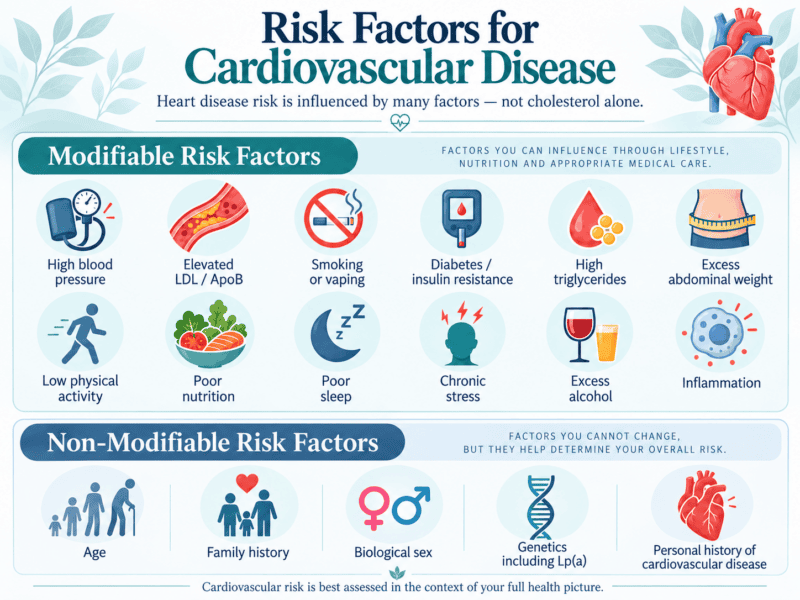
What About Inflammation and Metabolic Health?
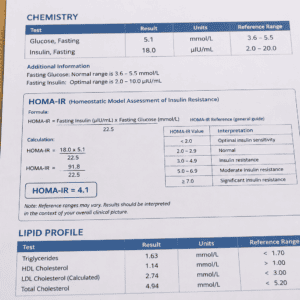
Cardiovascular health involves more than cholesterol transport and particle number. Some expanded cardiovascular blood panels also include markers that help evaluate inflammation, glucose regulation, and other aspects of metabolic health.
C-Reactive Protein (CRP)
CRP is a marker of systemic inflammation that can increase in response to infections, inflammatory conditions, injuries, and other factors.
It is important to distinguish standard CRP from high-sensitivity CRP (hs-CRP). High-sensitivity CRP is designed to detect lower concentrations of inflammation that may help refine cardiovascular risk assessment.
LifeLabs’ current naturopathic requisition offers standard CRP, which should not be considered interchangeable with hs-CRP for this purpose.
Fasting Glucose, Insulin, and HbA1c
These markers provide information about blood sugar regulation and metabolic health.
Fasting glucose and HbA1c are established tools for assessing glycemic status, while fasting insulin may provide additional metabolic context in selected patients.
Homocysteine
Homocysteine is an amino acid influenced by vitamin B12, folate, vitamin B6, kidney function, and other factors.
Elevated homocysteine is associated with cardiovascular risk in observational research. However, lowering homocysteine through supplementation has not consistently been shown to reduce cardiovascular events.
Fibrinogen
Fibrinogen is involved in blood clotting and can increase during inflammation.
Although elevated fibrinogen has been associated with cardiovascular risk, it is not routinely required for cardiovascular screening.
Liver Enzymes and Uric Acid
Liver enzymes and uric acid may provide additional context about metabolic health and associated conditions.
For example, metabolic dysfunction-associated fatty liver disease often overlaps with insulin resistance and adverse cholesterol patterns.
Together, these markers can contribute to a broader understanding of cardiovascular and metabolic health when interpreted alongside a patient’s medical history and other investigations.
What Cardiovascular Testing Options Are Available?

At Hudson Integrative Healthcare, our naturopathic doctors can help patients explore several levels of cardiovascular testing based on their health history, risk factors, and clinical needs.
1. Standard Cholesterol Testing
The most affordable starting point, measuring total cholesterol, LDL, HDL, and triglycerides.
Additional markers, such as ApoB, may be ordered individually when appropriate.
2. Expanded Cardiovascular and Metabolic Testing
Comprehensive panels can include traditional cholesterol measurements, apolipoproteins, blood sugar regulation markers, and indicators of inflammation or metabolic health.
These panels may offer better value than ordering numerous specialized blood tests individually.
3. Advanced Lipoprotein Testing (NMR)
Provides additional information about lipoprotein particle number and size.
NMR testing may be considered independently or alongside expanded cardiovascular testing when a more detailed assessment is clinically warranted.
What Does Cardiovascular Blood Testing Cost?
The cost of cardiovascular blood testing depends on which markers are selected.
Standard cholesterol testing is generally the most economical option around $40. Individual specialized markers involve additional expenses, each marker ranging from $10 to $100. Testing panels group individual markers together to save money and get close to $200.
Our naturopathic doctors can review available options, discuss current LifeLabs pricing, and help determine which investigations may be appropriate for your needs.
Some laboratory testing ordered through naturopathic care involves out-of-pocket expenses, and insurance coverage varies according to individual policies and the type of testing requested.

Who Might Benefit From a More Detailed Cardiovascular Assessment?
A more comprehensive conversation about cardiovascular testing may be worthwhile if you:
- Have a family history of heart attack, stroke, or premature cardiovascular disease.
- Have been told your cholesterol is elevated or difficult to manage.
- Have elevated triglycerides, insulin resistance, or type 2 diabetes.
- Have high blood pressure or other cardiovascular risk factors.
- Have a history of pregnancy-related hypertension or gestational diabetes.
- Want to better understand cardiovascular risk despite seemingly normal cholesterol results.
- Are reviewing your response to nutrition, lifestyle changes, or prescribed cholesterol-lowering treatments.
The appropriate testing strategy depends on your overall cardiovascular risk and whether additional results would change your care.
Let’s Talk About Your Cardiovascular Health
At Hudson Integrative Healthcare, our naturopathic doctors take an individualized approach to cardiovascular and metabolic health.
Whether you’re reviewing previous cholesterol results, exploring additional laboratory testing, or looking for support with nutrition and lifestyle changes, we can help you better understand your cardiovascular health.
Interested in learning more about cholesterol testing and cardiovascular health?
Book an appointment with one of our naturopathic doctors to review your health history, existing bloodwork, and potential testing options. Our team can also discuss laboratory costs and help coordinate appropriate testing through LifeLabs, within applicable professional ordering guidelines.
Hudson Integrative Healthcare
7 King Street East, Unit 1
Stoney Creek, Ontario L8G 1J7
Phone: 905-662-0045
Website: www.hihealthcare.ca
Our friendly reception team is available Monday through Friday, 8:00 a.m. to 8:00 p.m., to help coordinate appointments.

The information provided in this article is intended for educational and informational purposes only and does not constitute medical advice, diagnosis, or treatment. It is not a substitute for individualized care from a qualified healthcare professional. Every person’s health circumstances are unique, and recommendations should be tailored to their specific needs. Always consult your healthcare provider before making changes to your healthcare routine, including medications, supplements, or laboratory testing.