Can a Naturopathic Doctor Help Me Sleep?
Written by Dr. Melanie Hudson, ND
Edited for Hudson Integrative Healthcare
If you struggle to fall asleep, wake repeatedly through the night, or find yourself wide awake at 2 or 3 a.m., you are certainly not alone.
Sleep concerns are one of the most common reasons patients seek naturopathic care.
Some people come to us after struggling with insomnia for months or even years. Others have already spoken with their family doctor and may have been offered a prescription sleep medication but would like to better understand why their sleep has changed in the first place.
Prescription sleep medications can have an appropriate role in medical care. However, many patients are interested in exploring additional strategies rather than relying solely on medication to induce sleep.
That’s where the naturopathic approach can be particularly helpful.
Rather than simply asking:
“What can we give you to make you sleep?”
we also want to ask:
“Why aren’t you sleeping?”
The answer can be very different from one person to another.
What Does Insomnia Actually Look Like?
Insomnia doesn’t always mean lying awake for hours trying to fall asleep.
Different patients experience very different sleep patterns.
You might:
- Have difficulty falling asleep
- Fall asleep easily but wake repeatedly
- Wake consistently around 2–4 a.m.
- Wake much earlier than you want to
- Feel physically tired but mentally “wired”
- Wake with hot flashes or night sweats
- Wake hungry or restless
- Sleep for seven or eight hours but never feel refreshed
- Depend on sleep medications or supplements to fall asleep
- Find that sleep suddenly became more difficult during your 40s or 50s
Understanding your particular sleep pattern is often the first step.
Why Am I Not Sleeping?

There isn’t one single cause of insomnia.
Sleep is influenced by our brain, hormones, nervous system, circadian rhythm, environment, metabolism, medications, mental health and physical health.
A naturopathic assessment may explore factors such as:
- Stress and anxiety
- Circadian rhythm disruption
- Perimenopause and menopause
- Hot flashes and night sweats
- Blood sugar regulation
- Caffeine and alcohol
- Sleep apnea
- Restless legs
- Iron status
- Thyroid function
- Pain
- Reflux
- Frequent urination
- Medications and supplements
- Exercise
- Light exposure
- Screen use
- Work schedules
- Travel and shift work
- Depression or other mental health concerns
This is why simply taking a sedating supplement isn’t necessarily a complete naturopathic approach.
Cortisol, Stress and Your Circadian Rhythm
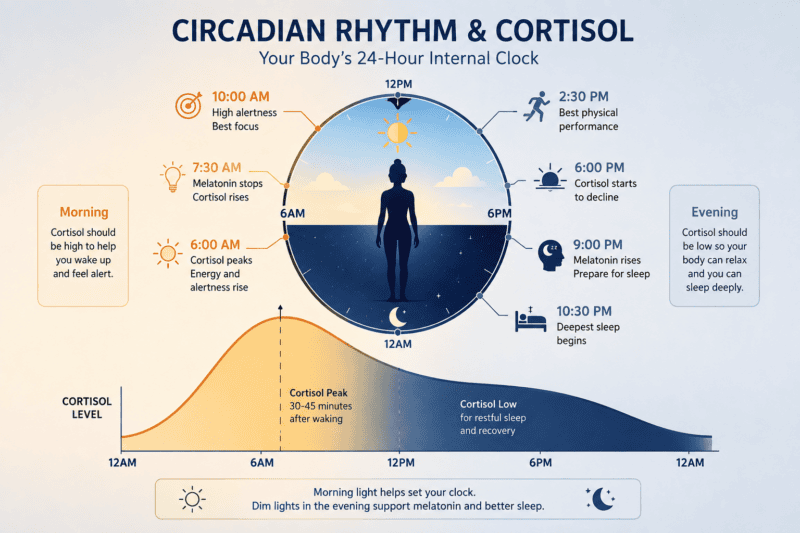
Your body operates on an approximately 24-hour internal clock known as your circadian rhythm.
Cortisol is one of the hormones that follows this daily rhythm.
Normally, cortisol rises toward the morning, helping us wake up and become alert. It generally declines through the evening as the body prepares for sleep.
However, our stress-response system doesn’t operate independently of the rest of our lives.
Chronic psychological stress, irregular sleep schedules, shift work, nighttime light exposure and other factors can influence sleep and circadian timing.
Some patients describe being exhausted throughout the day and then suddenly feeling alert when they finally get into bed.
Rather than simply labelling this as “adrenal fatigue,” we prefer to look more broadly at the hypothalamic-pituitary-adrenal, or HPA, axis, stress response, lifestyle and circadian rhythm.
Treatment may include improving morning light exposure, creating a consistent sleep-wake schedule, addressing stress and changing behaviours that are inadvertently reinforcing insomnia.
Can We Measure Your Cortisol Rhythm?
Sometimes symptoms and history give us a good sense that stress physiology and circadian rhythm may be contributing to poor sleep. In other cases, a naturopathic doctor may recommend testing to get a more objective look at the pattern.
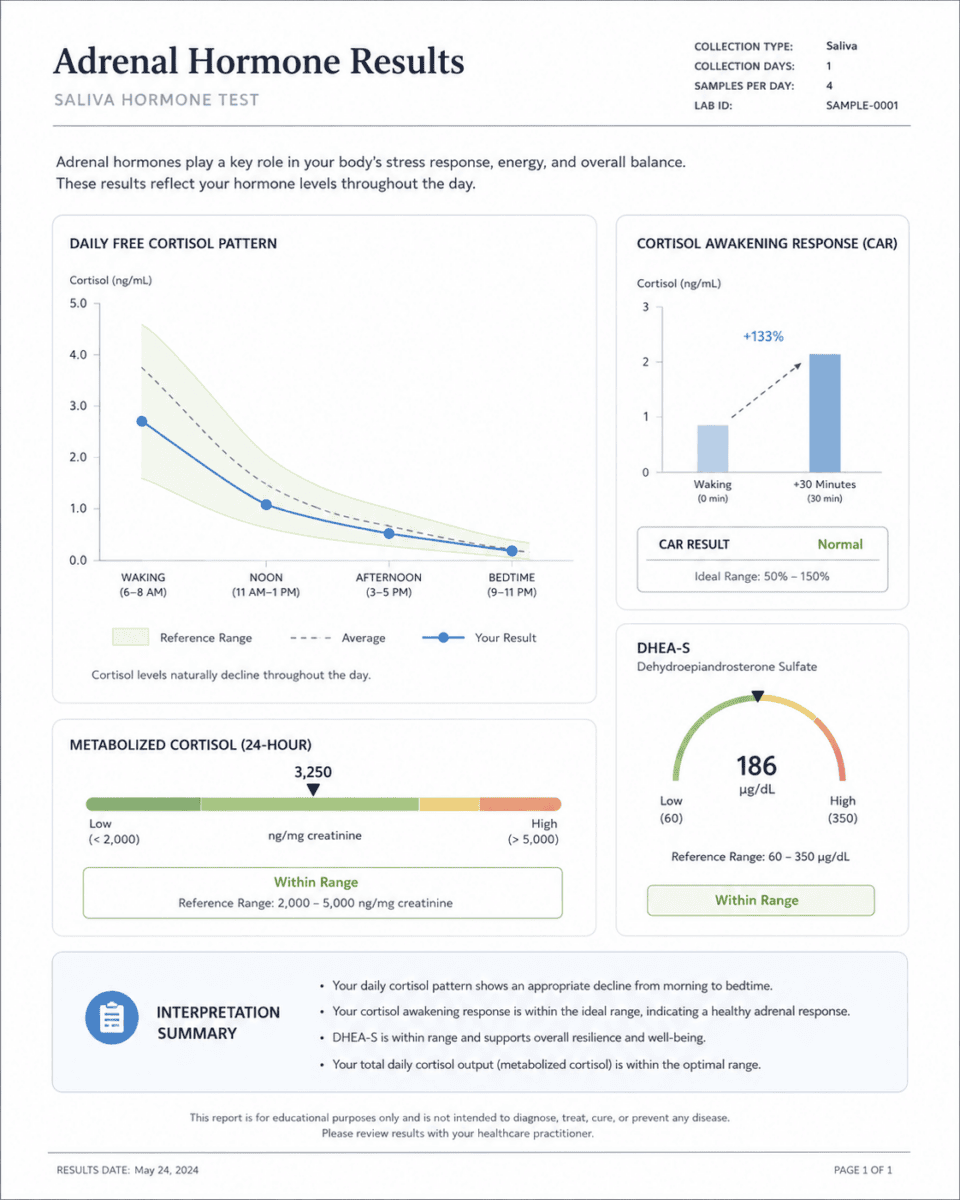
Rather than measuring cortisol only once in the morning, NDs may use a multi-point cortisol test, often collecting saliva at several points throughout the day. Depending on the laboratory and clinical question, specialty urine testing may also be used to assess cortisol and related hormone metabolites.
A typical multi-point assessment may look at cortisol:
- Around waking
- Later in the morning
- During the afternoon
- In the evening or before bed
This allows us to look at the shape of the cortisol curve, rather than one isolated number.
Normally, cortisol is higher around the beginning of the day and gradually declines toward nighttime. In a patient struggling with sleep, we may be interested in whether that expected rhythm appears altered—for example, whether cortisol remains comparatively elevated later in the evening.
Depending on the test being used, we may also be able to assess aspects of the cortisol awakening response, which is the normal increase in cortisol that occurs shortly after waking.
Importantly, these tests are not used to diagnose a vague condition such as “adrenal fatigue.” Instead, when we use them, we view the results as one additional piece of information about HPA-axis activity, stress physiology and circadian rhythm, interpreted alongside the patient’s sleep pattern, lifestyle, symptoms and medical history.
Cortisol also varies from day to day and can be influenced by factors such as poor sleep, acute stress, illness, shift work and certain medications. Therefore, the result isn’t interpreted in isolation.
When symptoms raise concern for an actual adrenal disorder such as adrenal insufficiency or cortisol excess, appropriate conventional medical testing and referral are required.
Morning Light Is More Important Than Most People Realize

One of the simplest ways to support circadian rhythm happens shortly after waking.
Get outside.
Natural outdoor light in the morning provides a powerful signal to the brain that daytime has begun.
Then, as evening approaches, reducing excessive bright light and creating a darker environment helps reinforce the opposite message.
Our bodies evolved with a strong contrast between bright days and dark nights.
Modern life can look very different: dim indoor days followed by bright televisions, phones and overhead lighting late into the evening.
Restoring some of that day-night contrast can be surprisingly helpful.
Could Blood Sugar Be Waking You Up?
Metabolic health can also be part of the sleep conversation.
Some patients who experience disrupted sleep also have symptoms or laboratory findings related to blood sugar regulation or insulin resistance.
Depending on the patient’s overall presentation, a naturopathic doctor may assess:
- Fasting glucose
- Fasting insulin
- HbA1c
- Dietary patterns
- Meal timing
- Alcohol intake
- Protein and fibre intake
- Metabolic health
This doesn’t mean every 3 a.m. awakening is caused by low blood sugar.
However, when a patient’s symptoms and metabolic history suggest blood sugar instability, it can be worth investigating rather than assuming the problem is purely psychological.
Nutrition strategies may include reducing highly refined carbohydrates and sugars, improving protein and fibre intake, and creating meals that support more stable glucose regulation.
Perimenopause: When Sleep Suddenly Changes in Your 40s

This is an important one.
A woman may have slept well throughout most of her adult life and then suddenly find herself waking repeatedly in her late 30s, 40s or early 50s.
Sometimes sleep changes occur even before menstrual periods stop.
During perimenopause, estrogen and progesterone fluctuate considerably. Eventually, ovarian production of these hormones declines as menopause approaches.
At the same time, women may experience:
- Night sweats
- Hot flashes
- Earlier waking
- More frequent nighttime awakenings
- Changes in menstrual cycles
- New or worsening anxiety
- Heart palpitations
- Mood changes
- Difficulty falling back asleep
Sometimes a woman doesn’t even recognize that temperature regulation is part of the problem. She may simply report that she wakes several times each night.
Progesterone and Sleep

Progesterone is particularly interesting when discussing sleep during the menopausal transition.
As ovulation becomes less consistent during perimenopause, progesterone exposure can change substantially.
For appropriate patients, oral micronized progesterone may be considered as part of menopausal hormone therapy.
Research suggests micronized progesterone can improve some sleep outcomes, particularly in postmenopausal women.
At Hudson Integrative Healthcare, patients who are appropriate candidates can see one of our prescribing naturopathic doctors for an individualized assessment of menopausal symptoms and hormone therapy options.
Progesterone isn’t simply a “natural sleeping pill,” however. Hormone therapy needs to be selected based on the patient’s symptoms, medical history, stage of the menopausal transition and overall risk-benefit profile.
Please note naturopathic doctors prescribing rights contains progesterone cream and not oral pills however our prescirbing NDs will refer patients to HRT-prescribing nurse practitioners when a broader scope of practice is needed.
What if Hot Flashes Are Waking You Up?
Sometimes treating insomnia means treating the thing that keeps waking you up.
If a woman is waking repeatedly because of hot flashes or night sweats, simply adding a sedating herb may not address the primary problem.
For appropriate candidates, menopausal hormone therapy—including systemic estrogen—can be considered for bothersome vasomotor symptoms such as hot flashes and night sweats.
Hormone therapy is currently considered the most effective treatment for menopausal vasomotor symptoms.
When those nighttime symptoms improve, sleep may improve as well.
Our prescribing naturopathic doctors can assess whether hormone therapy may be an appropriate option and discuss the benefits, risks and alternatives.
Melatonin: It’s Not Always About Taking More
Melatonin is one of the most familiar natural sleep supplements.
However, melatonin is actually a hormone involved in circadian timing.
That means timing can matter just as much as dose.
Depending on the sleep problem, a naturopathic doctor may consider:
- Immediate-release melatonin
- Lower-dose melatonin
- Sustained-release formulations
- Different timing strategies
Someone who struggles to fall asleep may require a different approach from someone who falls asleep easily but wakes several hours later.
Occasionally, patients ask about low-dose melatonin sprays or other formulations for nighttime waking. These need to be used thoughtfully because taking melatonin during the night may cause morning grogginess and can influence circadian timing.
More isn’t necessarily better.
What About Magnesium?
Magnesium is another popular sleep supplement.
Certain forms, such as magnesium glycinate, are commonly incorporated into naturopathic treatment plans when appropriate.
However, magnesium shouldn’t be presented as a universal cure for insomnia.
Whether it makes sense depends on the individual, their diet, health history, medications, kidney function and other factors.
The evidence for magnesium as a direct treatment for chronic insomnia is also less robust than its popularity on social media might suggest.
We may still use it—but we want a reason for using it.
Nervine and Sedating Herbs

Botanical medicine can also be incorporated into individualized sleep treatment.
Depending on the patient, naturopathic doctors may consider herbs traditionally used to support relaxation or sleep, such as:
- Passionflower
- Lemon balm
- Valerian
- Hops
- Chamomile
- Lavender
- California poppy
Some herbs are more calming or nervine, while others have stronger sedating properties.
The appropriate choice depends on whether someone is anxious, physically tense, mentally overstimulated, struggling to initiate sleep, or waking repeatedly.
Botanical medicines can also interact with prescription medications and aren’t appropriate for everyone, particularly during pregnancy or breastfeeding.
This is another reason that professional guidance can be useful.
Could Low Iron Be Affecting Your Sleep?
Sometimes the problem isn’t insomnia at all.
Restless legs syndrome can make it extremely difficult to settle into sleep.
People may describe:
- An uncomfortable urge to move their legs
- Crawling or tingling sensations
- Restlessness that becomes worse when lying down
- Symptoms that improve temporarily when moving
- Difficulty relaxing their legs at bedtime
Iron status can be relevant in restless legs syndrome.
When symptoms suggest restless legs, laboratory testing such as ferritin and iron studies may be appropriate.
Rather than automatically adding a sleep aid, identifying and addressing the underlying contributor can make a significant difference.
What About Thyroid Testing?

Thyroid function can also influence sleep.
An overactive thyroid can contribute to symptoms such as:
- Difficulty sleeping
- Anxiety
- Heart palpitations
- Feeling excessively warm
- Tremor
- Unexplained weight loss
Thyroid medication dosing can also be relevant in some patients.
Depending on symptoms and medical history, thyroid testing may therefore form part of a broader investigation.
Don’t Forget Sleep Apnea
This is an important condition not to miss.
Obstructive sleep apnea causes repeated interruptions in breathing during sleep.
Possible clues include:
- Loud snoring
- Gasping or choking during sleep
- Witnessed pauses in breathing
- Morning headaches
- Dry mouth on waking
- Frequent nighttime urination
- Daytime fatigue
- Poor concentration
- Waking despite apparently getting enough hours of sleep
Someone with sleep apnea may spend eight hours in bed and still wake exhausted.
Suspected sleep apnea requires appropriate medical assessment and may warrant referral for a sleep study.
Natural sleep supplements are not a substitute for diagnosing and treating sleep apnea.
Alcohol Can Help You Fall Asleep—and Still Make Sleep Worse
This surprises many patients.
Alcohol can initially feel sedating, which is why some people use a glass of wine as a nighttime sleep aid.
But sedation isn’t the same thing as healthy sleep.
As alcohol is metabolized, sleep can become more fragmented later in the night.
If someone says:
“I fall asleep immediately, but I’m awake at 2 or 3 a.m.”
alcohol intake and timing are worth discussing.
Exercise Helps More Than Just Your Metabolism

Regular physical activity can support sleep quality as well as cardiovascular, metabolic and mental health.
That might include:
- Walking
- Resistance training
- Cardiovascular exercise
- Yoga
- Recreational sports
- Regular outdoor activity
Timing can be individualized.
Some people sleep beautifully after evening exercise. Others find vigorous late-night exercise leaves them feeling stimulated.
Again, the goal is to understand the individual rather than create rigid rules.
Sleep Hygiene Matters—but It Isn’t the Whole Treatment
You’ve probably heard the usual sleep advice:
Don’t drink caffeine late in the day.
Put your phone away.
Keep your bedroom dark.
Go to bed at the same time.
These recommendations can absolutely help.
A healthy sleep routine may include:
- Maintaining a relatively consistent wake time
- Getting outdoor light in the morning
- Keeping the bedroom cool and dark
- Reducing stimulating activities before bed
- Limiting late caffeine
- Limiting alcohol
- Creating a relaxing bedtime routine
- Exercising regularly
- Avoiding long or late naps when they interfere with nighttime sleep
- Using the bed primarily for sleep and intimacy
However, sleep hygiene alone isn’t considered adequate treatment for chronic insomnia.
Someone with longstanding insomnia may need a more structured behavioural approach.
What Is CBT-I?
Cognitive Behavioural Therapy for Insomnia, or CBT-I, is one of the most evidence-supported treatments for chronic insomnia.
It involves much more than simply telling someone to turn off their phone.
CBT-I can incorporate strategies involving:
- Stimulus control
- Sleep scheduling
- Addressing unhelpful beliefs about sleep
- Relaxation strategies
- Behavioural changes that strengthen sleep drive
Current clinical guidelines recommend CBT-I as a first-line treatment for chronic insomnia.
A naturopathic doctor may recommend or refer patients to professionals specifically trained in CBT-I, like our registered psychotherapists, when appropriate.
Sleep Drive: Why Spending More Time in Bed Can Sometimes Backfire
When someone isn’t sleeping well, their natural instinct is often to try harder to sleep.
They may:
- Go to bed at 8 p.m.
- Sleep in whenever possible
- Nap during the afternoon
- Spend ten hours in bed hoping to get seven hours of sleep
- Lie awake in bed for long periods
Unfortunately, these behaviours can sometimes weaken the association between bed and sleep and reduce the body’s natural sleep pressure.
A structured insomnia treatment plan may therefore focus not only on relaxation, but also on strengthening sleep drive and re-establishing the relationship between bedtime and sleep.
What if I’m Already Taking a Prescription Sleep Medication?
Prescription sleep medications—including benzodiazepines and other hypnotic medications—can have an appropriate role in healthcare.
However, some patients seek naturopathic care because they would like additional strategies or would eventually like to discuss reducing their reliance on medication.
This should be done collaboratively and safely.
Benzodiazepines should not be abruptly discontinued after regular use.
If medication reduction is appropriate, tapering should be discussed with the prescribing healthcare professional.
Naturopathic care can work alongside conventional medical care rather than requiring patients to choose between the two.
What Testing Might a Naturopathic Doctor Consider?

Not every patient with insomnia needs extensive laboratory testing.
Testing should be driven by symptoms and medical history.
Depending on the individual, a naturopathic doctor might consider:
- CBC
- Ferritin and iron studies
- TSH and other thyroid testing when indicated
- Fasting glucose
- Fasting insulin
- HbA1c
- Vitamin B12
- Vitamin D
- Other laboratory investigations based on the clinical picture
Hormonal assessment may also be considered when symptoms suggest perimenopause or another endocrine concern.
The goal isn’t to order every possible test.
It’s to ask:
“Is there something contributing to this person’s sleep problem that we’re currently missing?”
How Can a Naturopathic Doctor Help With Insomnia?
A naturopathic approach to sleep may combine several strategies.

Depending on the individual, your treatment plan could involve:
- Identifying your specific insomnia pattern
- Reviewing medications and supplements
- Assessing caffeine and alcohol
- Improving circadian rhythm
- Increasing morning light exposure
- Addressing stress-response patterns
- Improving blood sugar regulation
- Investigating iron or thyroid concerns when appropriate
- Addressing perimenopause or menopause
- Treating hot flashes and night sweats
- Discussing menopausal hormone therapy when appropriate
- Improving sleep hygiene
- Strengthening sleep drive
- Incorporating CBT-I principles or referral
- Individualizing melatonin timing and formulation
- Considering magnesium
- Using appropriate nervine or sedating herbs
- Improving exercise and daytime movement
- Screening for signs of sleep apnea or restless legs
- Referring for additional medical assessment when necessary
In other words, we aren’t simply trying to replace a prescription sleeping pill with a natural sleeping pill.
We’re trying to understand why sleep has become difficult and address as many of those contributing factors as possible.
The Bottom Line
Sleep is complicated.
Insomnia may be related to stress, circadian rhythm, menopause, hot flashes, metabolic health, restless legs, thyroid function, medications, alcohol, sleep apnea, behavioural patterns—or several of these at the same time.
That’s why the treatment that works beautifully for one person may do very little for someone else.
Melatonin, magnesium and botanical medicines can certainly have a place in naturopathic care.
But they are only part of the picture.
For some patients, the most important intervention may be morning light.
For another, it may be treating night sweats.
For another, it may be addressing restless legs and iron status.
And for someone with chronic insomnia, structured behavioural treatment such as CBT-I may be one of the most important tools available.
The goal isn’t simply to sedate you.
It’s to help your body regain the ability to sleep well.
Looking for Natural and Integrative Support for Sleep?
At Hudson Integrative Healthcare, our naturopathic doctors work with patients experiencing insomnia, frequent nighttime waking, stress-related sleep concerns, perimenopausal and menopausal sleep changes, and other factors that may interfere with restorative sleep.
We can help assess your sleep pattern, lifestyle, nutrition, medications, hormonal symptoms and relevant laboratory markers, then develop an individualized treatment plan.
For appropriate patients experiencing perimenopausal or menopausal symptoms, appointments are also available with our prescribing naturopathic doctors to discuss menopausal hormone therapy options.
Naturopathic doctor appointments are available in person at Hudson Integrative Healthcare, 7 King St. East in Stoney Creek, Ontario, as well as by telemedicine throughout Ontario.
This article is for educational purposes only and is not intended to diagnose or treat insomnia or another medical condition. Supplements, botanical medicines, melatonin and hormone therapy should be individualized with an appropriate healthcare professional. Do not abruptly discontinue prescription sleep or anxiety medications. Persistent insomnia, suspected sleep apnea or other concerning symptoms should receive appropriate medical assessment.