
Could I Be in Perimenopause? Symptoms, Hormone Testing & Treatment Options
You’re 38, 42 or 46 and something feels different.
Maybe your periods are suddenly coming closer together. Or they’re farther apart. Perhaps one month is unusually heavy and the next is light. You’re waking at 3 a.m., feeling more anxious before your period, noticing breast tenderness, struggling with headaches or wondering why your usual routine suddenly isn’t working for your body.
Then you start seeing posts about perimenopause everywhere.
And naturally, you wonder:
“Could this be happening to me already?”
At Hudson Integrative Healthcare, we see many women in their late 30s and 40s asking exactly that question.
The answer isn’t always found in one hormone test.
Understanding perimenopause often means looking at the pattern: your age, menstrual cycles, symptoms, health history, period-tracking app, lifestyle and, when appropriate, laboratory testing.
What Is Perimenopause?
Perimenopause means “around menopause.” It’s the transitional stage leading up to menopause, during which ovarian hormone production begins to change.
Menopause itself is technically one point in time. It is reached after 12 consecutive months without a menstrual period, assuming there isn’t another explanation for the missing periods.
Perimenopause happens before that.
Importantly, your ovaries don’t simply stop producing estrogen and progesterone overnight.
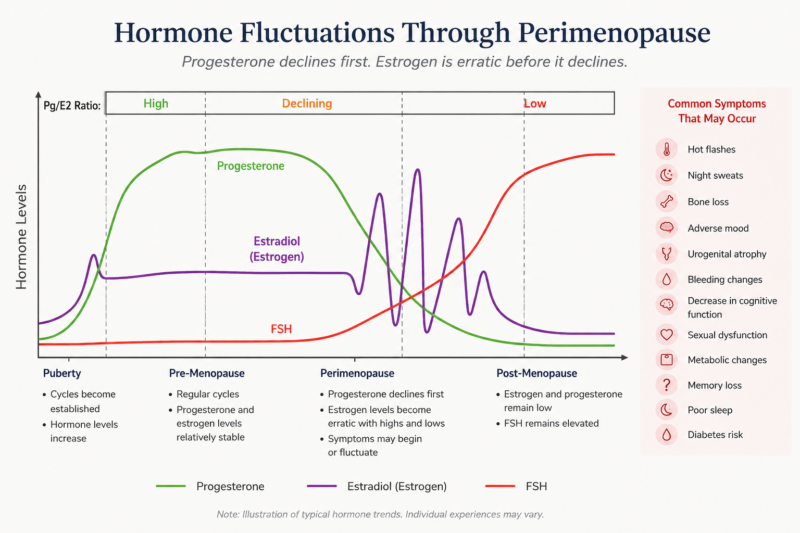
Hormone levels can fluctuate considerably throughout the transition. Consequently, your symptoms and menstrual cycles can fluctuate too.
One month may feel completely normal. The next may not.
What Age Does Perimenopause Start?
Many women begin noticing changes sometime in their 40s, although the timing varies considerably.
That’s why we regularly hear:
“I’m only 40. Isn’t that too young?”
Not necessarily.
However, symptoms suggestive of declining ovarian function at a younger age deserve a more careful assessment.
If menstrual cycles become irregular or stop before age 40, for example, we don’t want to simply assume it’s ordinary perimenopause. Premature ovarian insufficiency (POI) and other causes need to be considered.
Similarly, women between 40 and 45 who develop menopausal symptoms may benefit from a somewhat different assessment than someone who develops classic symptoms at 48.
What Are the First Signs of Perimenopause?
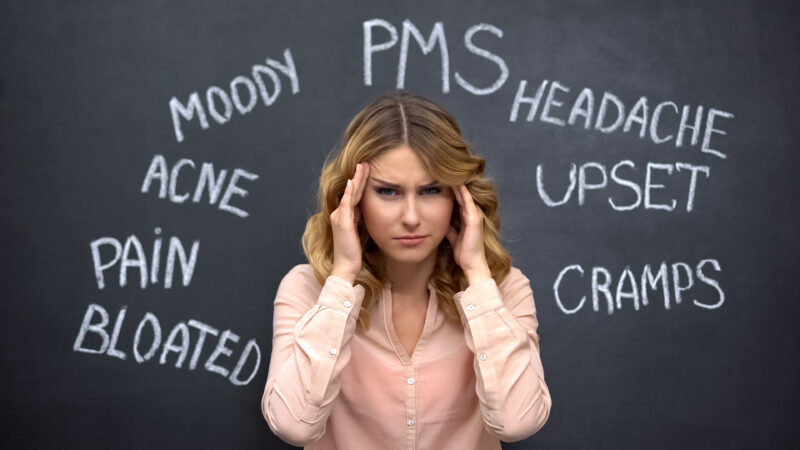
For many women, the first clue isn’t a hot flash.
Early changes can be surprisingly subtle.
You might notice:
- Your menstrual cycle becoming shorter or longer
- Periods becoming heavier or lighter
- Changes in PMS
- Breast tenderness
- Mood changes or increased irritability
- Anxiety
- Difficulty sleeping
- Waking during the night
- Headaches or migraines changing
- Fatigue
- Brain fog or difficulty concentrating
- Changes in libido
- Vaginal or urinary changes
- Changes in body composition or weight
- Eventually, hot flashes or night sweats
Not every woman experiences the same symptoms, and symptoms can change as the transition progresses.
That’s one reason tracking patterns over time can be so useful.
Your Period-Tracking App Can Tell Us More Than You Think
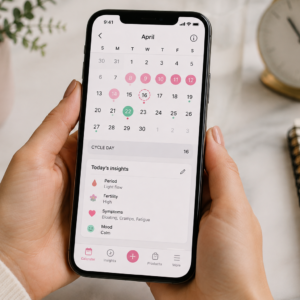 If you’ve been tracking your periods on your phone for the past year or two, bring that information to your appointment.
We love data.
Your naturopathic doctor may look at:
- Average cycle length
- Whether cycles are becoming shorter or longer
- How much cycle length varies month to month
- Missed periods
- Changes in menstrual flow
- Spotting
- PMS symptoms
- Headaches or migraines
- Sleep changes
- Hot flashes and night sweats
- Other symptoms in relation to different parts of your cycle
In fact, tracking your period and symptoms for several months can provide a much clearer picture than trying to remember everything during an appointment.
Can You Test for Perimenopause?
This is probably one of the most common questions we hear.
Yes and no.
There are hormone tests that can provide useful information in the right clinical situation. However, there isn’t one blood test that definitively says:
“You are 37% of the way through perimenopause.”
Hormones fluctuate during this stage, sometimes considerably.
Therefore, one perfectly normal hormone result doesn’t necessarily rule out perimenopause. Likewise, one unusual result doesn’t automatically establish exactly where you are in the transition.
For otherwise healthy women over 45 with typical symptoms and menstrual changes, major clinical guidelines generally recommend diagnosing perimenopause based on the clinical picture rather than routine hormone testing.
However, testing can be useful when you’re younger, your symptoms are atypical, another condition needs to be ruled out, or your healthcare provider needs additional information.
What Hormones Might We Test?
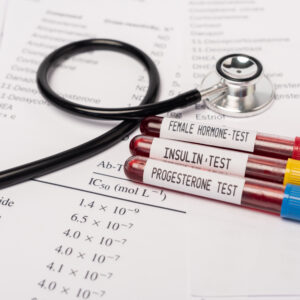
Depending on your age, menstrual cycle, symptoms and medical history, your naturopathic doctor may consider bloodwork such as:
FSH – Follicle-Stimulating Hormone
FSH is produced by the pituitary gland and signals the ovaries to develop follicles and produce estrogen.
As ovarian function changes approaching menopause, FSH may rise.
However, FSH can fluctuate during perimenopause. Therefore, we don’t interpret one FSH result in isolation.
Estradiol
Estradiol is the predominant form of estrogen during the reproductive years.
One of the confusing things about perimenopause is that estrogen doesn’t necessarily just decline in a straight line.
Levels can fluctuate.
That means symptoms can also change from month to month.
LH – Luteinizing Hormone
LH is another pituitary hormone involved in ovulation and ovarian function. It may sometimes be included as part of a broader hormone assessment.
Other Bloodwork
Not every symptom in your late 30s or 40s is perimenopause.
Depending on your symptoms, we may also consider other investigations, such as thyroid testing, iron and ferritin, vitamin B12, vitamin D, blood sugar or other relevant markers.
For example, fatigue, hair changes, heavier periods and brain fog could have more than one possible explanation.
Our job is not simply to label everything “perimenopause.”
It’s to look at the whole picture.
When in My Cycle Should Hormones Be Tested?
 This depends on what we’re trying to assess.
In some patients who are still menstruating regularly, our naturopathic doctors may choose to assess hormones such as FSH, LH and estradiol during the early follicular phase — near the beginning of the menstrual cycle.
Timing can provide useful context when interpreting reproductive hormone results.
However, laboratory results are only one part of the assessment.
We combine them with your age, menstrual history, symptoms, cycle-tracking information, medications, health history and the clinical question we’re trying to answer.
Why Can Perimenopause Feel So Unpredictable?
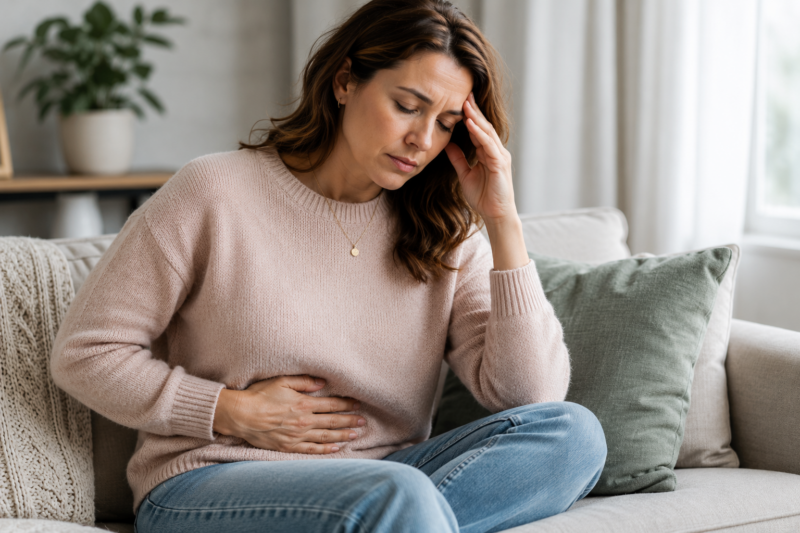 Ovulation becomes less predictable as women move through the menopausal transition.
Some cycles may still be ovulatory, while others may be anovulatory, meaning an egg isn’t released.
Progesterone is primarily produced after ovulation.
Therefore, when ovulation becomes less consistent, progesterone exposure can also become less consistent.
Meanwhile, estrogen can fluctuate.
This changing relationship between estrogen and progesterone may contribute to changes in bleeding patterns and symptoms.
You may hear this described online as “estrogen dominance.”
That phrase is widely used in integrative health but isn’t a formal medical diagnosis. When we use it conversationally, we’re generally describing a symptom pattern occurring when estrogen exposure is relatively greater than progesterone exposure — not necessarily that a woman’s estrogen level is simply “too high.”
That distinction is important.
What Can You Do Naturally for Perimenopause?
 Treatment depends on your symptoms and where you appear to be in the transition.
There isn’t one “perimenopause supplement” that every woman needs.
Our naturopathic doctors start with fundamentals such as:
- Nutrition
- Protein and fibre intake
- Exercise, including resistance training
- Sleep
- Alcohol intake
- Stress management
- Metabolic health
- Nutrient deficiencies
- Digestive health when relevant
From there, botanical medicines or nutritional supplements may be considered based on the individual.
What About Chaste Tree?
Chaste tree (Vitex agnus-castus) is one botanical medicine that naturopathic docto

rs may consider for certain menstrual or premenstrual symptom patterns.
However, herbs aren’t automatically appropriate simply because someone is in her 40s.
The right approach depends on symptoms, medications, health history and what appears to be happening with the menstrual cycle.
This is one reason we prefer individualized recommendations rather than having every woman purchase the same “menopause support” supplement.
What About “Estrogen-Clearing” Supplements?
This is another area where the stage of the transition matters.
Earlier in the menopausal transition, some women experience significant hormone fluctuations alongside symptoms such as breast tenderness, heavier bleeding or worsening premenstrual symptoms.
Depending on the individual, we may discuss nutrition and supplements aimed at supporting normal estrogen metabolism.
However, more estrogen clearance isn’t always better.
As ovarian estrogen production eventually declines, the clinical picture changes.
If you’re developing hot flashes, night sweats, vaginal dryness or other symptoms associated with lower estrogen exposure, aggressively trying to “clear estrogen” may no longer make sense.
In other words, the plan you used at 39 may not be the plan you need at 47.
Perimenopause evolves, and your treatment may need to evolve with it.
Why Do Hot Flashes Start?
 Hot flashes are one of the best-known symptoms of the menopausal transition.
Changes in estrogen signalling affect the temperature-regulating centres of the brain. As estrogen levels decline and fluctuate, the body’s thermoregulatory system can become much more sensitive to small changes in temperature.
The result can be sudden heat, flushing, sweating and sometimes chills afterward.
Once hot flashes and night sweats enter the picture, our treatment conversation may therefore look different than it did earlier in the transition.
Can Foods Help Support Estrogen Levels?
Nutrition remains important throughout perimenopause.
For some women, we may discuss including foods naturally containing phytoestrogens — plant compounds with mild estrogen-like activity.
Examples include:
- Soy foods such as tofu, tempeh and edamame
- Ground flaxseed
- Legumes
- Other whole plant foods
Depending on the individual, supplements containing phytoestrogen compounds may also be considered.
However, significant hot flashes, night sweats and other menopausal symptoms don’t necessarily need to be managed with supplements alone.
There are effective prescription options too.
When Is It Time to Consider Hormone Therapy?
For some women, lifestyle, nutrition and non-prescription support are enough.
For others, symptoms begin interfering with sleep, work, relationships, exercise, sexual health or overall quality of life.
That’s when the conversation may turn toward menopausal hormone therapy (MHT), often also called hormone replacement therapy or HRT.
Hormone therapy is considered the most effective treatment for bothersome hot flashes and night sweats and can also help prevent bone loss. (The Menopause Foundation of Canada)
Treatment needs to be individualized according to your symptoms, medical history, risks and whether you have a uterus.
What About Bioidentical Hormone Replacement Therapy (BHRT)?
At Hudson Integrative Healthcare, our naturopathic doctors with prescribing authority can discuss prescription hormone therapy when appropriate.
Depending on the patient and clinical situation, this may include estrogen therapy and progesterone, with the formulation and dose individualized to the patient.
You may hear the term bioidentical hormones used to describe hormones that are chemically identical to hormones produced by the human body.
However, “bioidentical” doesn’t automatically mean safer, better or more natural, and it’s important to distinguish regulated prescription hormone products from compounded preparations.
The decision to use hormone therapy should be based on your symptoms, health history, treatment goals and an individualized discussion of benefits and risks.
Do I Have to Wait Until Menopause to Use Hormone Therapy?
No.
This is a common misconception.
You do not necessarily have to wait until your periods stop completely before discussing treatment for bothersome perimenopausal symptoms.
Perimenopause itself can last for years, and symptoms can significantly affect quality of life during that time.
If hot flashes, night sweats, sleep disruption or other symptoms are becoming difficult to manage, it’s reasonable to discuss your options with a qualified healthcare provider.
Perimenopause at 35 Is Different From Perimenopause at 48
This deserves special emphasis.
If you’re 47 and experiencing increasingly irregular periods and hot flashes, perimenopause is an obvious possibility.
If you’re 35 and your periods are becoming very irregular or disappearing, we need to be more cautious about simply calling it normal perimenopause.
Premature ovarian insufficiency occurs before age 40 and warrants appropriate investigation. Guidelines recommend considering the clinical history together with appropriately repeated FSH testing rather than diagnosing it from a single result.
There are also other possible causes of menstrual changes.
So if you’re in your 30s and wondering, “Could this already be perimenopause?”, that’s a good reason to have the conversation rather than assuming either yes or no.
How Our Naturopathic Doctors Assess Perimenopause
At Hudson Integrative Healthcare, we don’t assess perimenopause from one symptom or one laboratory number.
Instead, we put the pieces together. 
Your naturopathic doctor may review:
- Your age and health history
- Menstrual cycle patterns
- Period-tracking app data
- PMS and bleeding changes
- Hot flashes and night sweats
- Sleep
- Mood and anxiety
- Energy
- Libido and vaginal symptoms
- Nutrition
- Exercise
- Stress
- Relevant medications
- Previous bloodwork
- Hormone testing when clinically useful
- Other possible explanations for your symptoms
From there, we can discuss an individualized plan that may include lifestyle and nutrition strategies, botanical medicine, supplements, further laboratory testing and, when appropriate, prescription hormone therapy with one of our prescribing naturopathic doctors.
Most importantly, your treatment doesn’t have to stay the same throughout perimenopause.
What makes sense during earlier cycle changes may be very different from what you need several years later when hot flashes, night sweats or symptoms of declining estrogen become more prominent.
Wondering If You’re in Perimenopause? Let’s Look at the Whole Picture.
If you’ve found yourself Googling:
“Am I in perimenopause?”
“What are the first signs of perimenopause?”
“Can perimenopause start at 35 or 40?”
“Is there a blood test for perimenopause?”
or
“When should I consider hormone therapy?”
you don’t have to figure it out from social media alone.
Our naturopathic doctors can help you review your menstrual cycle history, period-tracking data, symptoms, lifestyle and previous laboratory results and determine whether additional testing is appropriate.
When treatment is needed, we can discuss options ranging from nutrition, lifestyle, herbs and supplements to prescription hormone therapy when clinically appropriate.
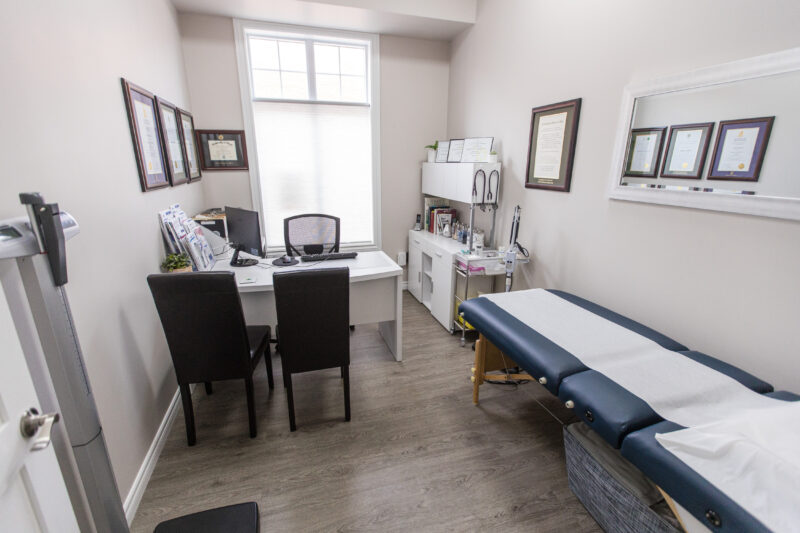
Book a Naturopathic Appointment for Perimenopause Support
Naturopathic appointments are available in person at our Stoney Creek clinic as well as by telemedicine throughout Ontario.
Hudson Integrative Healthcare
7 King St. East, Stoney Creek, Ontario
Book an appointment with one of our naturopathic doctors to discuss your menstrual cycles, perimenopause symptoms, hormone testing and treatment options.
This article is for educational purposes only and does not replace individualized medical advice. Menstrual changes and symptoms associated with perimenopause can have other causes and should be appropriately assessed. Hormone therapy, botanical medicines and supplements should be individualized based on your medical history, medications and personal risk factors.